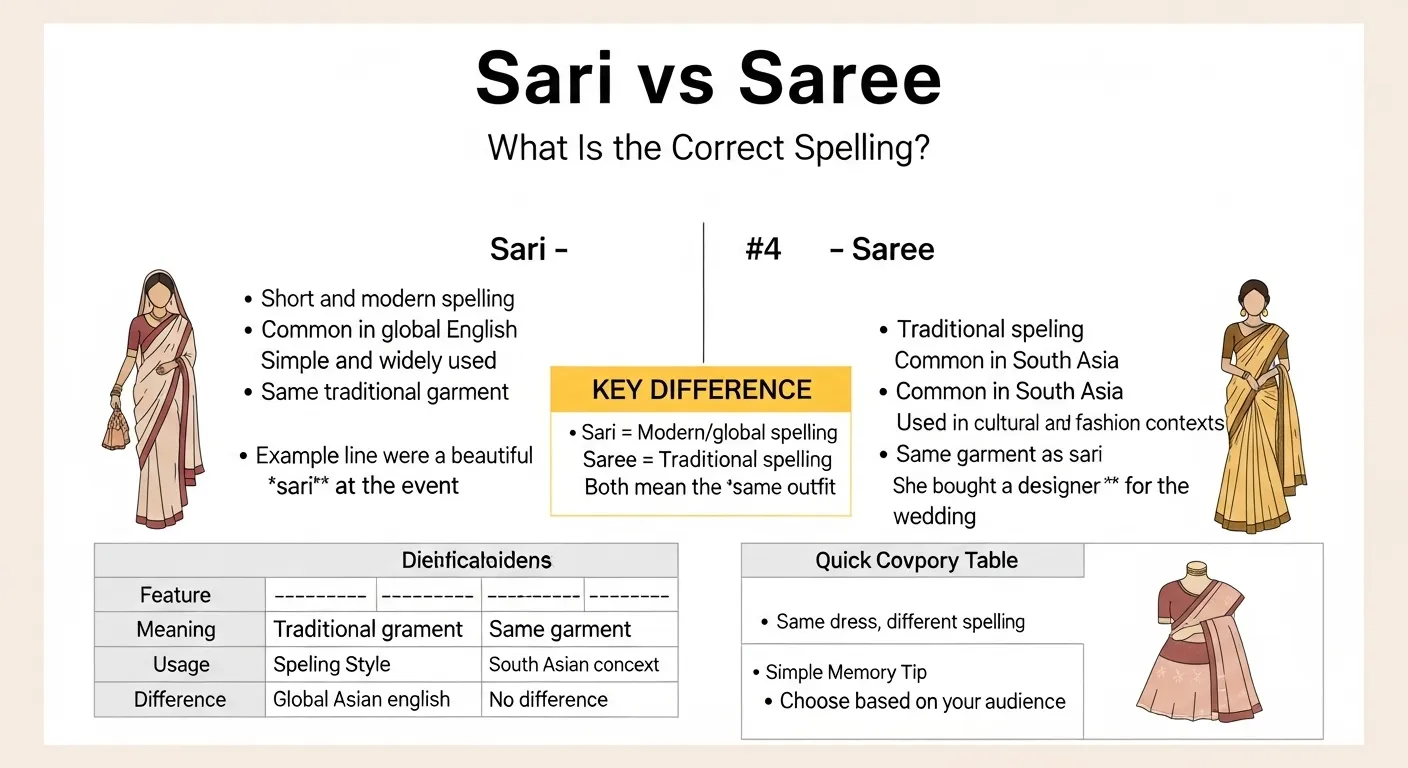
Sari and saree are two spellings of the same traditional garment worn in South Asia.
Both words refer to a long piece of cloth draped in different styles, mainly by women in countries like India, Pakistan, and Bangladesh.
Many people search “sari or saree” because they are confused about the correct spelling in English.
Queries like “sari vs saree difference,” “how to spell saree,” and “sari meaning” are very common online.
This guide explains the meaning, origin, spelling differences and popular search trends to help you use the correct word with confidence.
⚡ Sari or Saree: Quick Answer
Sari and saree mean the same thing. The difference is only in spelling.
- Sari → Short and widely used in modern English
- Saree → Traditional spelling, often used in South Asia
Simple Examples
- “She wore a beautiful sari at the wedding.”
- “She bought a silk saree for the festival.”
Quick Comparison Table
| Word | Meaning | Usage |
| Sari | Traditional dress | Modern/global spelling |
| Saree | Traditional dress | Traditional/Indian spelling |
Both words describe the same outfit.
📘 Definition of Sari or Saree
What Is a Sari? 👗
A sari is a long piece of cloth, usually 5 to 9 yards, draped around the body in a graceful style.
It is worn with:
- A blouse
- A petticoat
Example sentence:
“She wore a red sari at the cultural event.”
What Is a Saree? 🌸
A saree is the same garment as a sari. The spelling “saree” reflects a more phonetic or traditional way of writing the word.
Example sentence:
“The bride looked stunning in a gold saree.”
🌍 The Origin of Sari or Saree
History of the Word
The word comes from the Sanskrit term “śāṭī,” meaning a strip of cloth.
Over time, it evolved into:
- Sari
- Saree
The garment has been worn for thousands of years in South Asia.
Cultural Importance
The sari is not just clothing. It is part of tradition, culture, and identity.
It is worn at:
- Weddings
- Festivals
- Religious events
Different regions have different draping styles and fabrics.
🇺🇸🇬🇧 British English vs American English Spelling
Both sari and saree are accepted spellings in English.
There is no strict rule between British and American usage.
Spelling Comparison Table
| Word | American English | British English |
| Sari | Common | Common |
| Saree | Also used | Also used |
Both spellings are correct worldwide.
🎯 Which Version Should You Use?
The choice depends on audience and context.
Use “Sari” When
- Writing for global readers
- Using modern English
- Writing short, simple text
Use “Saree” When
- Writing for South Asian audience
- Referring to traditional context
- Writing in fashion or cultural topics
Quick Guide
| Audience | Best Choice |
| Global | Sari |
| India/Pakistan | Saree |
| Fashion blogs | Saree |
| General writing | Sari |
Both are correct, so choose based on your readers.
Sari or Saree: Correct Spelling & Common Variations
Many users search different forms like “is it saree or sari,” “correct spelling of saree,” or “sari or saree which is correct.”
The answer stays simple: both spellings are correct, but usage depends on context and audience.
Here are some commonly searched spelling variations explained clearly:
- saree correct spelling → both saree and sari are correct
- sari spelling → S-A-R-I (modern/global usage)
- saree spelling in English → S-A-R-E-E (traditional usage)
- how to spell saree / sari → both accepted in English
- is it sari or saree → both are correct
- sari or saree correct spelling → depends on audience
- saree English spelling → commonly written as saree in South Asia
Common misspellings to avoid:
- sadi spelling / sadi ki spelling → incorrect for English writing
- saari spelling → informal variation, not standard English
- saree ke spelling / saree ka spelling → search-style queries, correct form is saree
Plural Forms & Usage: Sari vs Saree in Sentences
Another common confusion is plural forms and sentence usage, such as “plural of sari,” “saree plural in English,” or “how do you spell sarees.”
Correct plural rules:
- sari → saris
- saree → sarees
Examples:
- She owns many beautiful saris.
- The shop sells designer sarees.
Related query clarifications:
- plural of sari → saris
- plural of saree → sarees
- how do you spell sarees → S-A-R-E-E-S
- sarees spelling → correct plural form
- sari plural → saris
Usage based queries explained:
- sari vs saree spelling difference → only spelling, meaning same
- difference between sari and saree → no difference in meaning
- sari meaning → traditional South Asian garment
- sari mean → refers to same clothing item
- sari vs saree → interchangeable words
⚠️ Common Mistakes with Sari or Saree
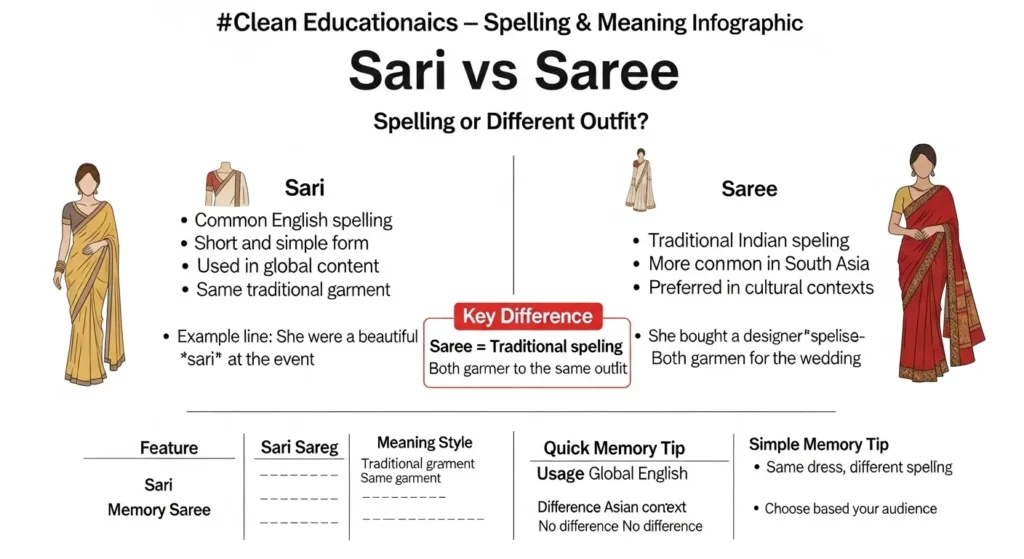
Mistake 1 : Thinking They Are Different Clothes
❌ Sari and saree are different outfits.
✔ Both words describe the same garment.
Mistake 2 : Using Wrong Spelling for Audience
Using “sari” in traditional Indian content may feel less natural.
Mistake 3 : Incorrect Plural Form
❌ Sarees’s
✔ Sarees
❌ Saries
✔ Saris
Mistake 4 : Confusing with Other Dresses
A sari is not the same as:
- Lehenga
- Salwar kameez
Each is a different outfit.
💬 Sari or Saree in Everyday Examples
Email Example
“Please wear a traditional sari for the event.”
News Example
“The actress appeared in a designer saree at the festival.”
Social Media Example
“Loving this silk saree look!”
Formal Writing Example
“The sari remains an important cultural garment in South Asia.”
📊 Sari or Saree : Google Trends & Usage Data
Many people search this keyword due to spelling confusion.
Trending Search Queries
Popular searches include:
- sari vs saree
- how to spell saree
- sari meaning
- saree design ideas
- silk saree styles
- bridal saree trends
Search Interest by Region
| Country | Popular Spelling |
| India | Saree |
| Pakistan | Saree |
| United States | Sari |
| United Kingdom | Both |
📊 Keyword Variation Table
| Search Query | Meaning |
| sari vs saree | Spelling comparison |
| saree meaning | Definition |
| sari dress | General description |
| silk saree | Fabric type |
| bridal saree | Wedding wear |
❓ FAQs About Sari or Saree
1. What is the correct spelling, sari or saree?
Both are correct. The difference is only in spelling.
2. Are sari and saree the same?
Yes. They refer to the same traditional garment.
3. Which spelling is more common?
“Sari” is common globally. “Saree” is common in South Asia.
4. What is a sari made of?
Saris can be made of silk, cotton, chiffon, or synthetic fabrics.
5. How long is a sari?
A sari is usually 5 to 9 yards long.
6. Is saree formal wear?
Yes. It is often worn at weddings and formal events.
7. Why are there two spellings?
Different transliterations from Indian languages created multiple spellings.
🏁 Conclusion
The phrase sari or saree often confuses people, but the answer is simple. Both words refer to the same traditional garment worn widely across South Asia. The only difference lies in spelling, not meaning.
“Sari” is a shorter and more modern spelling commonly used in global English, while “saree” reflects a more traditional and phonetic style often preferred in India and nearby regions.
This variation exists because the word comes from Sanskrit and has been adapted into English in different ways over time.
Understanding this distinction helps writers, students, and fashion enthusiasts use the correct term based on their audience.
There is no right or wrong choice, only context. If your audience is global, “sari” is usually a safe option. If your content focuses on culture or tradition, “saree” may feel more appropriate.
Both spellings are widely accepted and understood. By choosing carefully, you can communicate clearly and respectfully in any context.
Discover More Articals!
Grammar Rule: Lent vs Lended Explained Clearly
Tearing or Taring: What Is the Difference?
Sow or Sew: Which One Is Correct and When to Use Each?

thinkaora.com is my English grammar comparison website where I simplify confusing words, spelling differences, and usage rules through clear explanations and examples. My goal is to help learners, writers, and students understand English easily and use correct grammar with confidence.