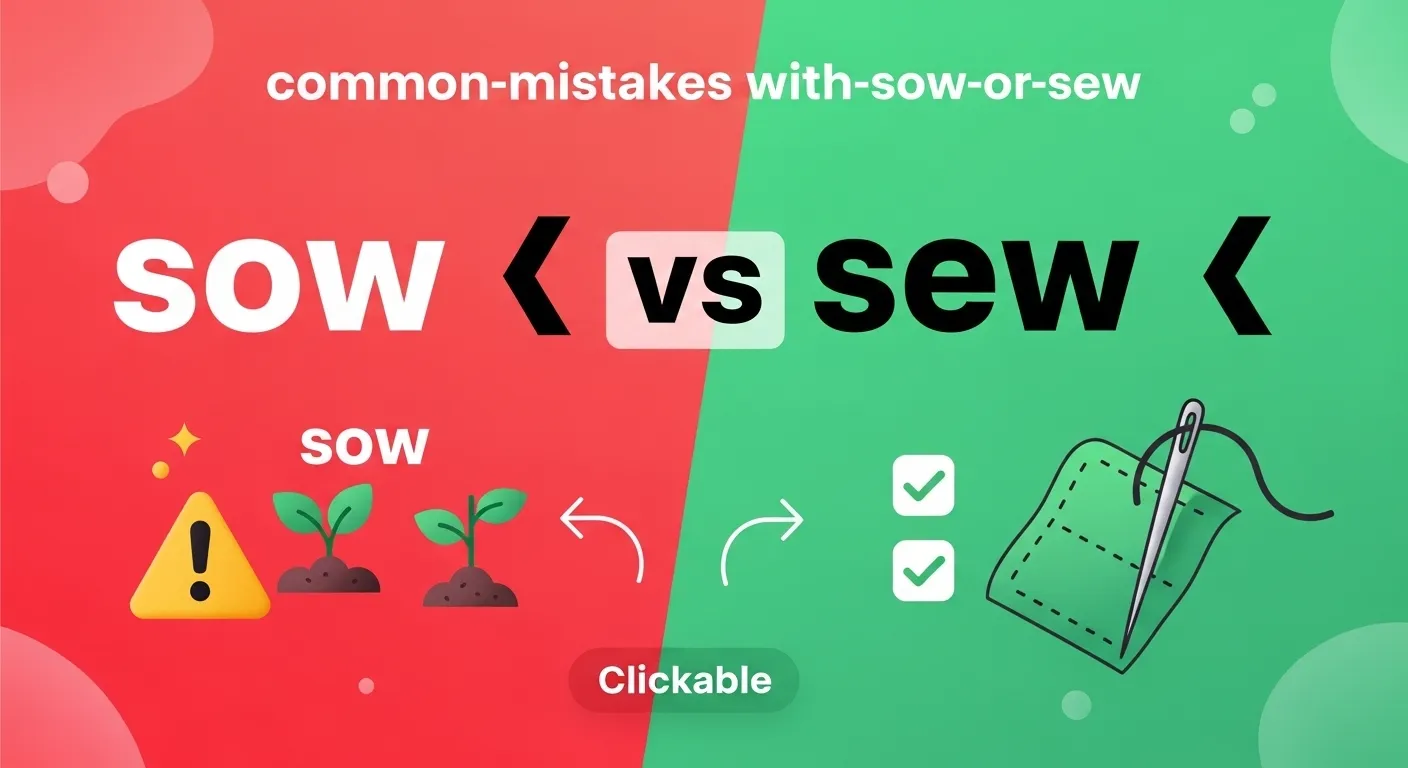
The words sow and sew sound the same but have very different meanings. Sow means to plant seeds in the ground.
Sew means to join fabric with a needle and thread. People often confuse these words because they sound alike.
Knowing which one to use is important in writing, emails, and everyday communication. This guide explains the difference, shows examples, and helps you avoid mistakes.
By the end, you will understand the correct usage and the origin of each word, plus tips for British and American English.
Sow or Sew: Quick Answer
- Sow → To plant seeds. Example: “Farmers sow wheat every spring.”
- Sew → To stitch fabric. Example: “I will sew a button on my shirt.”
Quick tip: If it involves plants or seeds, use sow. If it involves needlework or clothing, use sew.
The Origin of Sow and Sew
Sow comes from Old English sāwan, meaning “to plant seeds.” It has been used for centuries in farming and agriculture. The spelling has remained mostly the same in both British and American English.
Sew comes from Old English siwian, meaning “to stitch or join with thread.” Over time, spelling variations existed, but the modern form sew became standard.
Both words sound the same due to a linguistic feature called homophones. Homophones are words that sound identical but have different meanings and spellings. This is why people often mix them up in writing.
British English vs American English Spelling
Both sow and sew have the same spelling in British and American English. There are no regional differences for these words.
| Word | British English | American English | Meaning |
| Sow | sow | sow | Plant seeds |
| Sew | sew | sew | Stitch fabric |
Even though other words like color/colour differ, sow and sew are consistent worldwide.
Which Spelling Should You Use?
- United States: Use sow for seeds, sew for stitching.
- United Kingdom & Commonwealth: The same rules apply.
- Global English: Follow the context. If writing internationally, the key is meaning, not regional spelling.
Tip: Always ask yourself, “Am I talking about planting or stitching?” This simple check avoids mistakes.
Common Mistakes with Sow or Sew
- Incorrect: “I will sow a dress tonight.”
Correct: “I will sew a dress tonight.” - Incorrect: “Farmers need to sew the fields in spring.”
Correct: “Farmers need to sow the fields in spring.” - Incorrect: “Sewing seeds takes time.”
Correct: “Sowing seeds takes time.” - Incorrect: “She sowed the patch on my jacket.”
Correct: “She sewed the patch on my jacket.” - Incorrect: “We must sew carrots for harvest.”
Correct: “We must sow carrots for harvest.”
Always remember: sow → plants, sew → fabric.
Sow or Sew in Everyday Examples
Emails:
- Correct: “I will sew the uniform by tonight.”
- Correct: “Please sow the seeds before Monday.”
News Articles:
- Correct: “Farmers sow corn over large fields.”
- Correct: “Tailors sew garments for the fashion show.”
Social Media:
- Correct: “Learning how to sew is fun!”
- Correct: “Time to sow some flowers in the garden.”
Formal Writing:
- Correct: “The community will sow vegetables in the new allotment.”
- Correct: “The designer sewed a custom suit for the event.”
By using context, you can easily pick the right word every time.
Sow or Sew: Google Trends & Usage Data
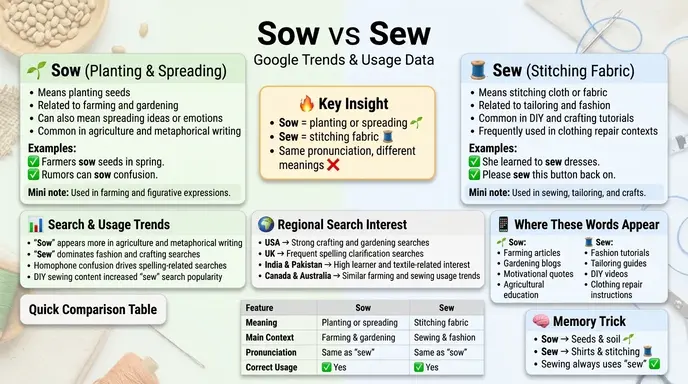
Worldwide, sew is searched more by hobbyists and fashion enthusiasts. Sow is searched mainly by gardeners and farmers.
Top countries for “sew” searches:
- United States
- United Kingdom
- Canada
Top countries for “sow” searches:
- India
- Australia
- United Kingdom
People often confuse these words in English-speaking countries, making this guide very useful.
Comparison Table: Sow vs Sew
| Aspect | Sow | Sew |
| Meaning | Plant seeds | Stitch fabric |
| Verb Type | Action with plants | Action with thread |
| Example | “We sow tomatoes in spring.” | “I sew my clothes at home.” |
| Spelling | Same in US & UK | Same in US & UK |
| Common Error | Used for sewing | Used for planting |
| Usage Context | Farming, gardening | Clothing, textiles |
FAQs
1. Can you use sow and sew interchangeably?
No. Sow is for planting. Sew is for stitching. Using them interchangeably is always wrong.
2. Why do sow and sew sound the same?
They are homophones. Homophones are words that sound alike but have different meanings.
3. Is sow used in British English differently than American English?
No. Both use sow for planting seeds.
4. How do I remember the difference?
Think: sow → soil (plants), sew → stitch (fabric). Linking words makes it easier.
5. Can “sow” mean anything else?
Yes, sow can also mean “to spread ideas or emotions.” Example: “He sowed doubt among the team.”
6. Can “sew” have other meanings?
No, sew primarily means stitching fabric. Idioms like “sew up a deal” exist, meaning to finalize something.
7. Are there any related words?
Yes. For sow: sowing, sower. For sew: sewing, sewed, sewn, sewer (person who sews).
Conclusion
Knowing the difference between sow and sew is simple if you focus on the meaning. Sow is always about planting seeds or spreading ideas.
Sew is always about stitching fabric or clothing. These words are homophones, so they sound the same but should never be mixed in writing.
In emails, social media, or formal writing, using the correct word shows professionalism. Always ask yourself the context: is it about plants or fabric? Following this rule avoids confusion.
Both words have remained the same in British and American English, making spelling simple.
Use sow for agriculture and sew for sewing projects. By practicing these simple tips, you can write with confidence and clarity.
Discovers More Posts!
Focused vs Focussed: Easy Guide for English Learners 🌟
Grammar Rule: Lent vs Lended Explained Clearly
Tearing or Taring: What Is the Difference?

I am Sophia Martinez.I am an ESL grammar coach. I specialize in teaching English to non native speakers. My content focuses on commonly confused words like affect vs effect, their vs there, and verb tense comparisons. Sophia writes in a friendly, supportive tone designed to build confidence in learners.