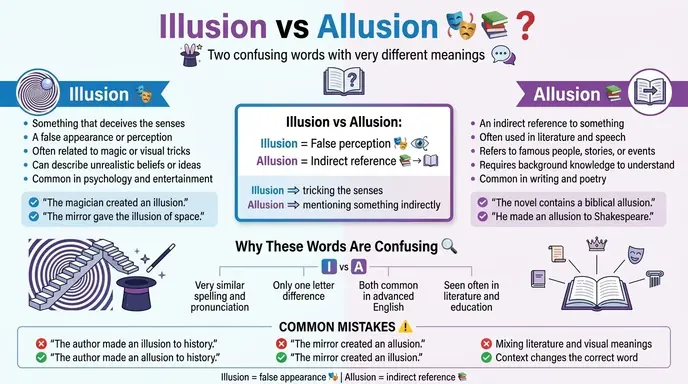
“Illusion” and “allusion” are two different English words with very different meanings, even though they look and sound somewhat similar.
“Illusion” relates to false appearances or deception, while “allusion” means an indirect reference to something.
Strong rule:
Illusion = false impression | Allusion = indirect reference
People often search: “illusion vs allusion,” “difference between illusion and allusion,” “how to remember illusion or allusion,” and “is allusion related to literature.” The confusion happens because both words have similar spelling and pronunciation patterns.
This article explains the meanings, pronunciation, grammar, examples, literary usage, psychological usage, and memory tricks to help you easily understand the difference.
Illusion or Allusion: Quick Answer ✅
“Illusion” means something deceptive or unreal, while “allusion” means an indirect mention or reference.
✔ Main Difference:
- Illusion → false appearance or trick
- Allusion → indirect reference or hint
📌 Examples:
- ✔ The magician created an illusion.
- ✔ The novel contains an allusion to Greek mythology.
👉 Simple rule:
Illusion tricks the mind | Allusion references something indirectly
What Does “Illusion” Mean? 🎭
An illusion is:
- something that appears real but is not
- a false perception
- a visual or mental trick
📌 Examples:
- The mirror created an optical illusion.
- The magician used illusion techniques.
- His sense of control was an illusion.
Types of Illusions 🧠✨
1. Optical Illusion
Visual trick confusing the eyes.
2. Psychological Illusion
False belief or misunderstanding.
3. Magic Illusion
Stage tricks performed by magicians.
What Does “Allusion” Mean? 📚
An allusion is:
- an indirect reference
- a hint toward another subject
- a literary or cultural mention
📌 Examples:
- The poem makes an allusion to the Bible.
- Her speech included an allusion to Shakespeare.
- The movie contains historical allusions.
Allusion in Literature 📚
Writers use allusions to:
- connect ideas
- add deeper meaning
- reference famous stories or history
Reference concept:
\text{Indirect reference} = \text{allusion}
Illusion vs Allusion: Core Difference 📚⚖️
📊 Comparison Table:
| Feature | Illusion | Allusion |
| Main Meaning | False appearance | Indirect reference |
| Topic | Perception/deception | Literature/communication |
| Function | Tricks or misleads | Hints or references |
| Common Usage | Psychology, magic | Writing, speeches |
| Example | Optical illusion | Literary allusion |
Why People Confuse These Words 🧠
1. Similar Spelling
Both words end with:
- “-lusion”
2. Similar Pronunciation
The beginning sounds are close:
- illusion
- allusion
3. Academic Vocabulary
Both appear often in:
- literature
- education
- advanced English writing
How to Pronounce Illusion and Allusion 🔊
Illusion Pronunciation
/ɪˈluː.ʒən/
Allusion Pronunciation
/əˈluː.ʒən/
👉 The starting vowel sound changes slightly.
Illusion in Psychology and Science 🔬
Illusions are studied in:
- psychology
- neuroscience
- visual science
📌 Example:
- Optical illusions reveal how the brain processes images.
Allusion in Literature and Writing 📚
Allusions commonly reference:
- mythology
- religion
- famous books
- historical events
- pop culture
📌 Example:
- Calling someone a “Romeo” is an allusion to Romeo.
Famous Examples of Illusions 🎭
📌 Examples:
- magic tricks
- mirages
- visual puzzles
- fake appearances
Sentence Example:
- The desert mirage was an illusion.
Famous Examples of Allusions 📚
📌 Examples:
- biblical references
- Greek mythology references
- movie references
- historical references
Sentence Example:
- The speech made an allusion to the French Revolution.
Everyday Examples 💬📱
🏠 Daily Life
- The reflection created an illusion.
- His joke contained an allusion to a famous movie.
📱 Social Media
- This photo creates an optical illusion 👀
📚 School Writing
- The author uses biblical allusions throughout the novel.
💼 Professional Writing
- The presentation included subtle political allusions.
Common Mistakes with Illusion and Allusion ❌⚠️
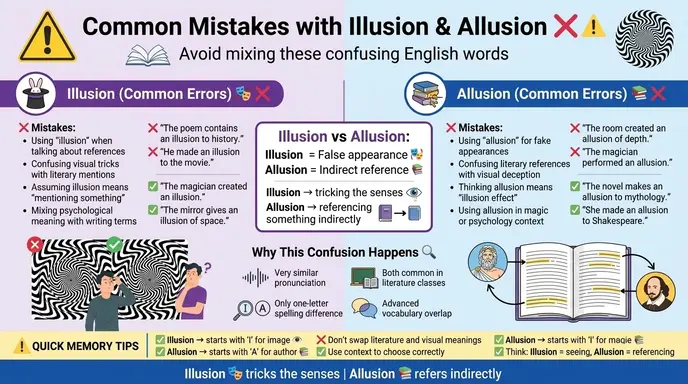
1. Using “Illusion” Instead of “Allusion”
❌ The poem contains an illusion to history.
✔ The poem contains an allusion to history.
2. Confusing Reference with Deception
✔ Allusion = reference
✔ Illusion = false appearance
3. Pronunciation Confusion
✔ Similar sounds cause frequent mistakes.
4. Mixing Literary and Visual Concepts
✔ They belong to different idea categories.
Memory Tricks to Remember Easily 🧠✨
👉 Trick 1: Allusion = “Allude”
If you allude to something:
- you reference it indirectly
✔ allusion = reference
👉 Trick 2: Illusion = Illogical Appearance
An illusion tricks perception.
✔ illusion = false image
👉 Trick 3: Literature vs Vision
- allusion → literature/writing
- illusion → seeing/perception
British vs American English Usage 🌍
📌 Key Point:
Both British and American English use:
- illusion
- allusion
with the same meanings and spellings.
📊 Comparison Table:
| Word | British English | American English |
| Illusion | Same | Same |
| Allusion | Same | Same |
👉 No major regional spelling differences exist.
Comparison Table ⚖️
| Feature | Illusion | Allusion |
| Meaning | False appearance | Indirect reference |
| Main Topic | Perception | Communication |
| Common Field | Psychology, magic | Literature, speeches |
| Verb Relation | Illude (rare) | Allude |
| Example | Optical illusion | Literary allusion |
Common User Queries 🔍
- What is the difference between illusion and allusion?
- Is allusion related to literature?
- What is an optical illusion?
- How do you remember illusion vs allusion?
- What does allusion mean?
- What does illusion mean?
- Why do these words sound similar?
- What are examples of allusions?
- Are illusion and allusion pronounced differently?
- How are illusions used in psychology?
FAQs ❓
1. What does illusion mean?
✔ False appearance or deception
2. What does allusion mean?
✔ Indirect reference or hint
3. Is allusion used in literature?
✔ Very commonly
4. Are illusions visual only?
❌ No, they can also be mental or emotional
5. Which word relates to references?
✔ Allusion
6. Which word relates to deception?
✔ Illusion
7. Easy rule?
✔ Illusion tricks, allusion references
Conclusion 🧾
“Illusion” and “allusion” are commonly confused words because they look and sound similar, but their meanings are completely different. “Illusion” refers to something deceptive, unreal, or misleading, while “allusion” refers to an indirect reference or hint, especially in literature and communication.
Understanding the distinction becomes easier when you remember their core functions: illusions affect perception, while allusions connect ideas through references.
These words appear frequently in education, writing, psychology, literature, and media, making it important to use them correctly in both speaking and writing.
👉 Final takeaway: Illusion creates false appearances, while allusion indirectly references something else.
Discover More Articles!
Himself or Hisself: Which Word Is Correct?With In 30 Seconds
Period or Pregnant: What’s the Difference? With In 30 Seconds
Kindergarten or Kindergarden: Which Spelling Is Correct? In 2026

I am Sophia Martinez.I am an ESL grammar coach. I specialize in teaching English to non native speakers. My content focuses on commonly confused words like affect vs effect, their vs there, and verb tense comparisons. Sophia writes in a friendly, supportive tone designed to build confidence in learners.