EMT and paramedic are not the same; a paramedic has more training and can give advanced medical care.
Many people mix up these two terms. Both work in ambulances. Both save lives. So the confusion is normal.
People search this query because they want to know who treats them in an emergency. Some want to join this career. Others just want clear facts. The main difference is training level, skills, and responsibility.
In this guide, you will get a quick answer, detailed comparison, common mistakes, and real examples. Everything is simple and clear.
🚨 EMT vs Paramedic: Quick Answer
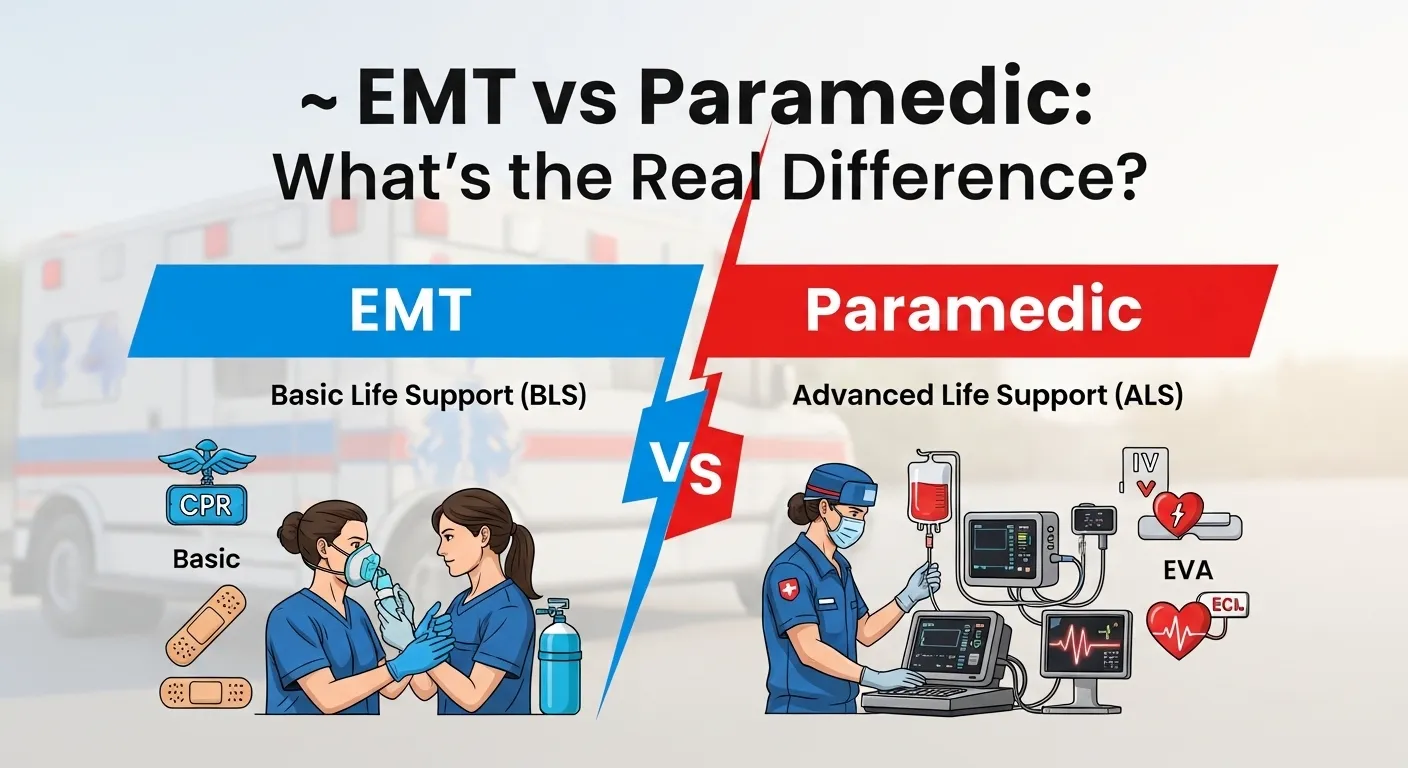
An EMT (Emergency Medical Technician) gives basic emergency care.
A paramedic gives advanced emergency care.
EMT:
- Basic life support (BLS)
- CPR
- Oxygen
- Bandaging wounds
- Splinting broken bones
- Basic airway help
Paramedic:
- Advanced life support (ALS)
- IV fluids
- Medications
- Intubation
- Cardiac monitoring
- Defibrillation
- Advanced airway control
Simple example:
If someone faints, an EMT checks vital signs and gives oxygen.
If someone has cardiac arrest, a paramedic can give life-saving drugs and use advanced equipment.
Paramedics have more training. They have more authority. They handle critical cases.
📚 The Origin of Paramedic or EMT
EMT
The term Emergency Medical Technician started in the 1960s in the United States. Ambulance services improved after reports showed poor emergency care. Training programs were created. The EMT role became official.
EMTs were trained to give basic care before reaching a hospital. This reduced deaths from trauma and heart attacks.
Paramedic
The word “paramedic” means “alongside medicine.” It comes from:
- “Para” = beside
- “Medic” = medical worker
Paramedics were created to provide advanced treatment outside hospitals. The role expanded in the 1970s. Today, paramedics are highly skilled emergency professionals.
There are no spelling differences between countries. Both terms are spelled the same worldwide.
📚 EMT or Paramedic – Origin and Definition
EMT or paramedic origin: EMT started in 1960s as basic care; paramedics developed later for advanced emergency care.
🏥 EMT Origin
EMT emerged in the 1960s in the US.
Purpose: provide basic care during transport.
Definition Reminder:
EMT = basic emergency medical technician.
💉 Paramedic Origin
“Paramedic” means “alongside medicine.”
Created in the 1970s to provide advanced treatment outside hospitals.
Definition Reminder:
Paramedic = highly trained emergency responder for advanced life support.
🌍 British English vs American English Spelling
There is no spelling difference between British and American English for EMT or paramedic. Both countries use the same terms.
However, job titles can differ slightly.
In the UK, you may see:
- Emergency Care Assistant
- Ambulance Technician
- Paramedic
In the US, you may see:
- EMT-B (Basic)
- EMT-Intermediate
- Paramedic
Comparison Table
| Term | United States | United Kingdom | Canada | Australia |
| EMT | Yes | Rarely used | Sometimes | Rare |
| Paramedic | Yes | Yes | Yes | Yes |
| Spelling Difference | None | None | None | None |
The spelling stays the same. Only training systems differ.
🎯 Which Term Should You Use?
Use the correct term based on training level.
- Say EMT if the person provides basic emergency care.
- Say paramedic if the person provides advanced emergency care.
For US Audience:
Use EMT and paramedic clearly. People understand both.
For UK/Commonwealth:
Paramedic is common. EMT is less common.
For Global Audience:
Use paramedic if unsure. It is widely recognized.
Always match the title to the skill level.
❌ Common Mistakes with EMT and Paramedic
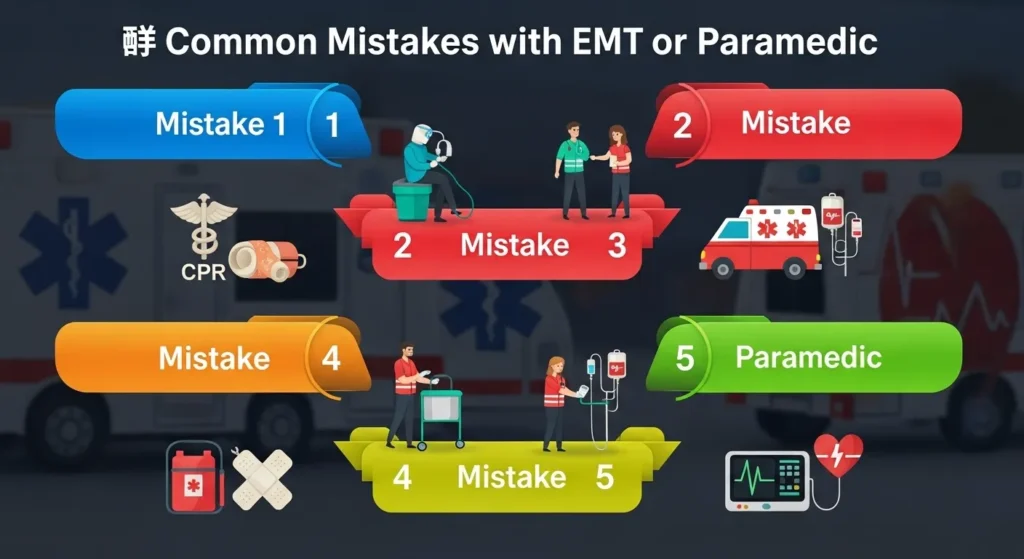
Here are frequent errors:
Mistake 1: Thinking They Are the Same
Wrong: EMT and paramedic are equal.
Correct: Paramedics have more training.
Mistake 2: Calling Every Ambulance Worker a Paramedic
Not all ambulance workers are paramedics. Some are EMTs.
Mistake 3: Assuming EMTs Can Give All Medications
EMTs can give limited medications. Paramedics can give many more.
Mistake 4: Believing Paramedics Are Doctors
Paramedics are not doctors. They are licensed emergency professionals.
Mistake 5: Thinking Training Time Is the Same
EMT training: Often 3–6 months.
Paramedic training: 1–2 years or more.
Understanding these differences prevents confusion.
📝 EMT or Paramedic in Everyday Examples
Email Example
“The EMT arrived first and checked his pulse.”
“The paramedic gave medication in the ambulance.”
News Example
“Paramedics responded to a car crash.”
“An EMT provided first aid at the scene.”
Social Media Example
“Thank you to the EMTs who helped my mom.”
“The paramedic saved his life.”
Formal Writing Example
“Paramedics administered advanced cardiac life support.”
“EMTs stabilized the patient before transport.”
Using the right word shows accuracy.
📊 EMT or Paramedic – Usage Data & Popularity
Search data shows high interest in:
- EMT vs paramedic
- EMT salary
- Paramedic training
- How to become a paramedic
The United States has the highest search volume. Canada, the UK, and Australia also show strong interest.
Why do people search this topic?
- Career planning
- Salary comparison
- Training requirements
- Emergency awareness
Paramedic searches are slightly higher because of advanced skills and higher pay.
Both roles are respected worldwide.
📋 EMT vs Paramedic Comparison Table
| Feature | EMT | Paramedic |
| Training Length | Shorter | Longer |
| Skill Level | Basic | Advanced |
| IV Access | No (usually) | Yes |
| Medication | Limited | Many types |
| Intubation | No | Yes |
| Cardiac Monitoring | Basic | Advanced |
| Salary | Lower | Higher |
| Responsibility | Moderate | High |
This table gives a clear overview.
❓ FAQs About EMT or Paramedic
1. Is a paramedic higher than an EMT?
Yes. A paramedic has more training and skills.
2. Can an EMT become a paramedic?
Yes. Many start as EMTs and continue training.
3. Who earns more?
Paramedics usually earn more than EMTs.
4. Who handles serious emergencies?
Paramedics handle critical and life-threatening cases.
5. Are both licensed?
Yes. Both must pass exams and maintain certification.
6. Do both work in ambulances?
Yes. Both respond to emergency calls.
7. Is paramedic school harder?
Yes. It requires deeper medical knowledge and longer training.
🏥 Career Path Differences
EMT is often the first step. Many use it to enter healthcare.
Paramedics study:
- Anatomy
- Pharmacology
- Cardiology
- Trauma care
They handle:
- Stroke
- Heart attack
- Severe injuries
- Respiratory failure
EMTs focus on stabilization.
Paramedics focus on advanced treatment.
Both roles save lives. Both are important.
🏁 Conclusion
EMT and paramedic are both emergency professionals, but they are not equal in training or responsibility. EMTs provide basic life support.
They control bleeding, give oxygen, and perform CPR. Paramedics go further. They give IV medications, manage airways, and handle critical cases like cardiac arrest.
Training time is different. Salary is different. Skill level is different. But both roles work as a team. In many emergencies, EMTs arrive first and start care. Paramedics then provide advanced treatment.
If you are choosing a career, think about your goals. EMT training is shorter and faster to enter. Paramedic training takes longer but offers more responsibility and higher pay.
In simple words, EMTs stabilize. Paramedics treat at an advanced level. Both are heroes in emergency care.
Discover More Posts!
Encorporate or Incorporate: Which One Is Correct?📚
Sargeant or Sergeant: Which Spelling Is Correct?📚
Sees or See’s: Which One Is Correct?📝
Nickel or Nickle: Which Spelling Is Correct?📚
✅Companies or Company’s: Which One Is Correct ?

My name is James Whitmore.I am a language research writer. I explore the history and evolution of English words. I write detailed comparisons explaining why spellings change over time and how British and American English diverged. My articles add depth and credibility to grammar comparison topics.