Laminate and vinyl are two popular flooring options, but they have important differences in durability, water resistance, and cost.
Many homeowners search for “laminate or vinyl” when they want to choose the best flooring for their home renovation or new construction project.
Both materials look similar at first glance because they can imitate hardwood, tile, or stone. However, the way they are made and how they perform in daily use can be quite different.
Laminate flooring is known for its strong surface layer and realistic wood appearance, making it a popular choice for living rooms and bedrooms.
Vinyl flooring, especially luxury vinyl plank (LVP), is famous for its water resistance and flexibility, which makes it ideal for kitchens, bathrooms, and basements.
Because both flooring types offer attractive designs at lower prices than real hardwood, many people compare them before making a decision.
Understanding the difference between laminate vs vinyl flooring can help homeowners choose the right material for their needs, budget, and lifestyle.
In this guide, you will learn how laminate and vinyl flooring work, their advantages and disadvantages, and when each option may be the better choice.
📖 What is Vinyl or Laminate? (Definition)
🪵 Laminate Flooring Definition
Laminate flooring is a multi-layer synthetic flooring product designed to look like natural materials such as wood or stone.
It usually has four layers:
- Wear layer (protective surface)
- Design layer (printed pattern)
- Core layer (dense fiberboard)
- Backing layer (stability layer)
Example use
Laminate flooring is often used in living rooms, bedrooms, and hallways where a wood-like appearance is desired.
💧 Vinyl Flooring Definition
Vinyl flooring is made primarily from synthetic plastic materials such as PVC. It is flexible and highly resistant to water.
Common types include:
- Luxury Vinyl Plank (LVP)
- Luxury Vinyl Tile (LVT)
- Sheet vinyl flooring
Example use
Vinyl flooring works well in kitchens, bathrooms, and basements because it handles moisture better.
⚡ Laminate or Vinyl: Quick Answer
The main difference between laminate and vinyl flooring is water resistance and material composition.
| Feature | Laminate | Vinyl |
| Material | Wood-based fiberboard | Plastic (PVC) |
| Water resistance | Moderate | High |
| Durability | Strong surface | Flexible and durable |
| Best areas | Living rooms, bedrooms | Kitchens, bathrooms |
| Cost | Affordable | Affordable to moderate |
Simple explanation:
- Laminate → Best for dry areas with a wood look
- Vinyl → Best for moisture-prone spaces
🕰️ The Origin of Laminate or Vinyl Flooring
Laminate Flooring History
Laminate flooring was first developed in the late 1970s in Europe. It became popular in the 1990s as an affordable alternative to hardwood flooring.
Its layered design made it easier to install and maintain.
Vinyl Flooring History
Vinyl flooring was introduced in the 1930s as a durable synthetic flooring material. Over time, technology improved its appearance and performance.
Modern products like Luxury Vinyl Plank (LVP) now closely resemble real wood or stone.
🌍 Design and Appearance Differences
Both laminate and vinyl can look like natural materials.
Appearance Comparison Table
| Feature | Laminate | Vinyl |
| Wood appearance | Very realistic | Also realistic |
| Texture | Hard surface | Slightly softer |
| Variety | Many wood designs | Wood, tile, and stone looks |
Laminate is often preferred for authentic wood-like visuals, while vinyl offers more design flexibility.
🏡 Which Flooring Should You Choose?
The best choice depends on your room, lifestyle, and budget.
Choose Laminate If You Want
- A realistic wood appearance
- Flooring for dry areas
- A scratch-resistant surface
Choose Vinyl If You Want
- Waterproof or water-resistant flooring
- Installation in kitchens or bathrooms
- A softer, quieter surface
Many homeowners choose vinyl for moisture areas and laminate for living spaces.
⚠️ Common Mistakes with Laminate or Vinyl
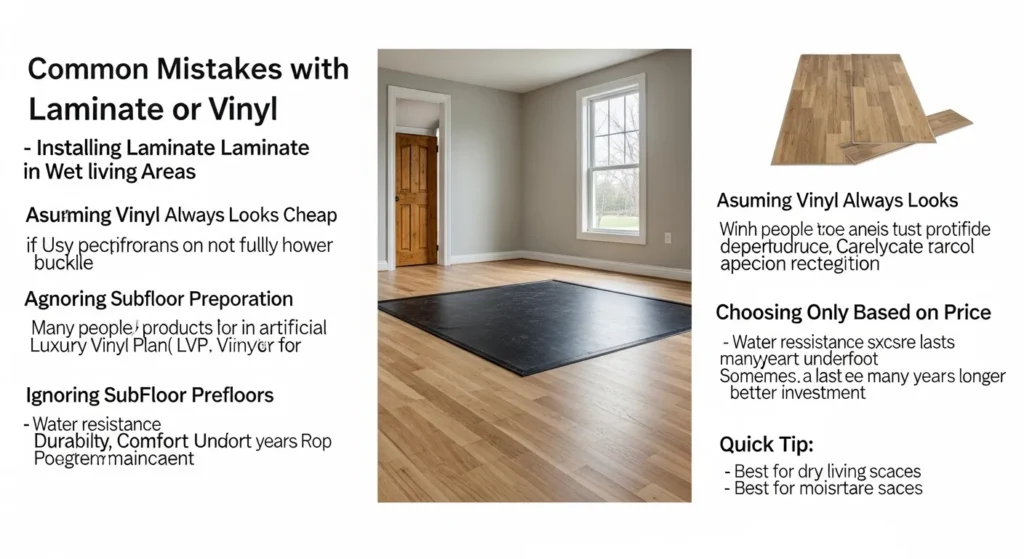
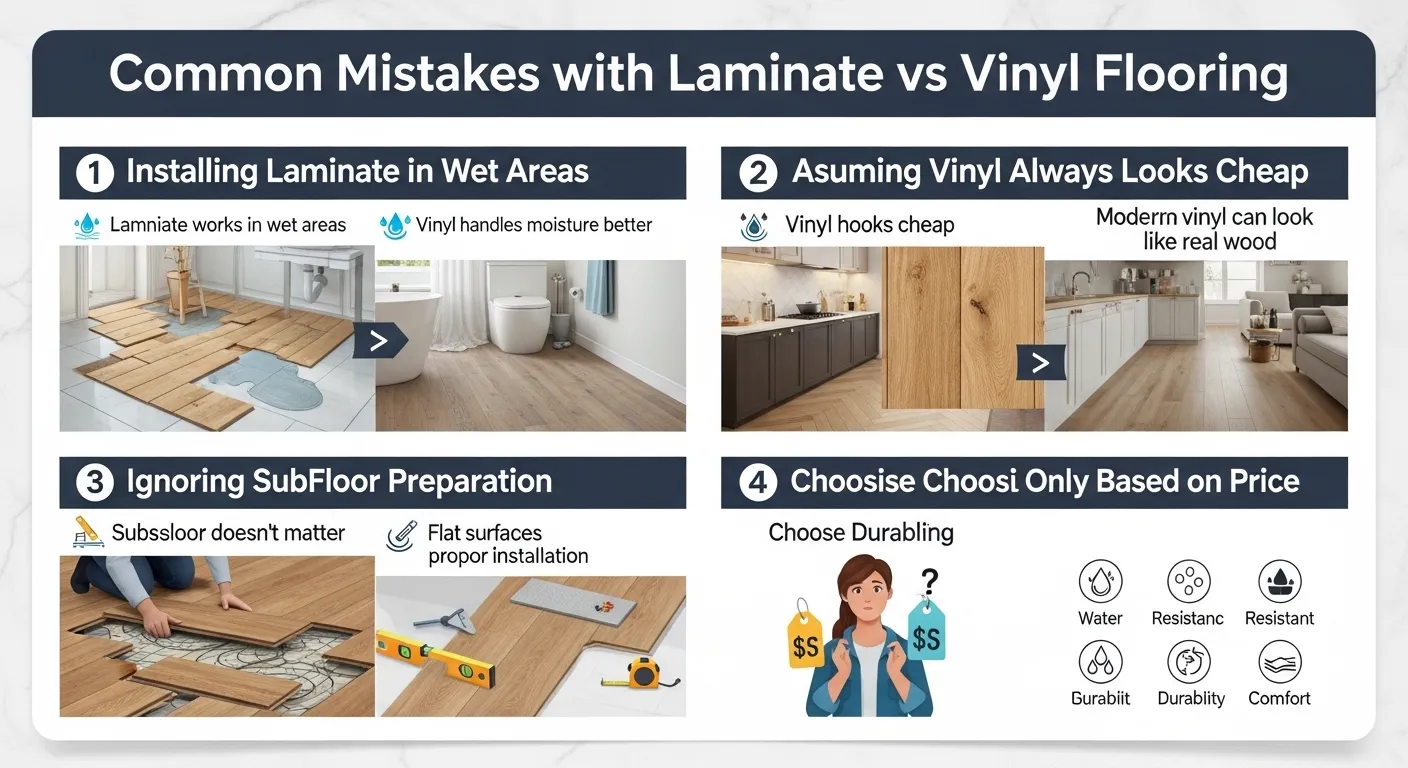
❌ Installing laminate in wet areas
Laminate can swell if exposed to too much water.
❌ Assuming vinyl always looks cheap
Modern vinyl, especially LVP, can look very similar to real hardwood.
❌ Ignoring subfloor preparation
Both flooring types require a flat and clean surface.
❌ Choosing only based on price
Performance and durability should also be considered.
💬 Laminate or Vinyl in Everyday Examples
📧 Home renovation discussion
“I’m deciding between laminate or vinyl flooring for my living room.”
📰 Home improvement article
“Experts compare laminate vs vinyl flooring for modern homes.”
📱 Social media
“Luxury vinyl plank is trending for kitchens and bathrooms.”
🏠 Contractor consultation
A contractor might say:
“Vinyl is better if your room has moisture or spills.”
📊 Laminate or Vinyl: Market Usage Trends
Both flooring types are popular because they are affordable and durable.
| Feature | Laminate | Vinyl |
| Popular use | Living spaces | Wet areas |
| Price range | Low to medium | Low to medium |
| Installation | Click-lock systems | Click or glue-down |
Popular search queries
| Keyword Variation | Meaning |
| laminate vs vinyl flooring | Direct comparison |
| vinyl or laminate for kitchen | Room-based decision |
| laminate or vinyl cost | Budget comparison |
| best flooring laminate or vinyl | Overall evaluation |
❓ FAQs About Laminate or Vinyl
Is laminate better than vinyl?
It depends on the room and moisture levels.
Which flooring is more waterproof?
Vinyl flooring is more water-resistant than laminate.
Which flooring lasts longer?
Both can last 10 :25 years depending on quality and maintenance.
Is laminate cheaper than vinyl?
Sometimes laminate is slightly cheaper, but prices can be similar.
Which is better for pets?
Vinyl is often better because it handles moisture and scratches well.
Can laminate look like real wood?
Yes. Modern laminate flooring has very realistic wood designs.
Is vinyl comfortable to walk on?
Yes. Vinyl is usually softer and quieter underfoot.
Conclusion
The decision between laminate or vinyl flooring depends largely on where the flooring will be installed and what features are most important to the homeowner.
Both materials provide attractive designs that mimic natural wood or stone, and both are more affordable than traditional hardwood flooring.
Laminate flooring is known for its durable top layer and highly realistic wood appearance. It works well in living rooms, bedrooms, and hallways where moisture is not a major concern.
Vinyl flooring, especially luxury vinyl plank, offers excellent water resistance and flexibility, making it a better option for kitchens, bathrooms, basements, and other areas where spills or humidity are common.
When choosing between laminate and vinyl, homeowners should consider factors such as water exposure, comfort, durability, and style preferences.
By understanding the differences between these two flooring types, it becomes easier to select the option that fits both the home’s design and the household’s daily needs.
Discover More Articals!
Concave or Convex: Meaning, Differences and Easy Examples
Mathew or Matthew: Which Spelling Is Correct?
Sympathy or Empathy: What’s the Difference?With In 30 Minutes

My name is James Whitmore.I am a language research writer. I explore the history and evolution of English words. I write detailed comparisons explaining why spellings change over time and how British and American English diverged. My articles add depth and credibility to grammar comparison topics.