Both “apologize” and “apologise” are correct spellings the difference depends on If you use American or British English.
Many people search this keyword because they see both forms in emails, essays, and online content and feel unsure which one to use. This confusion is very common in exams, professional writing, and daily communication.
Some writers think one spelling is wrong, while others mix both forms in the same text. That creates inconsistency and weak writing.
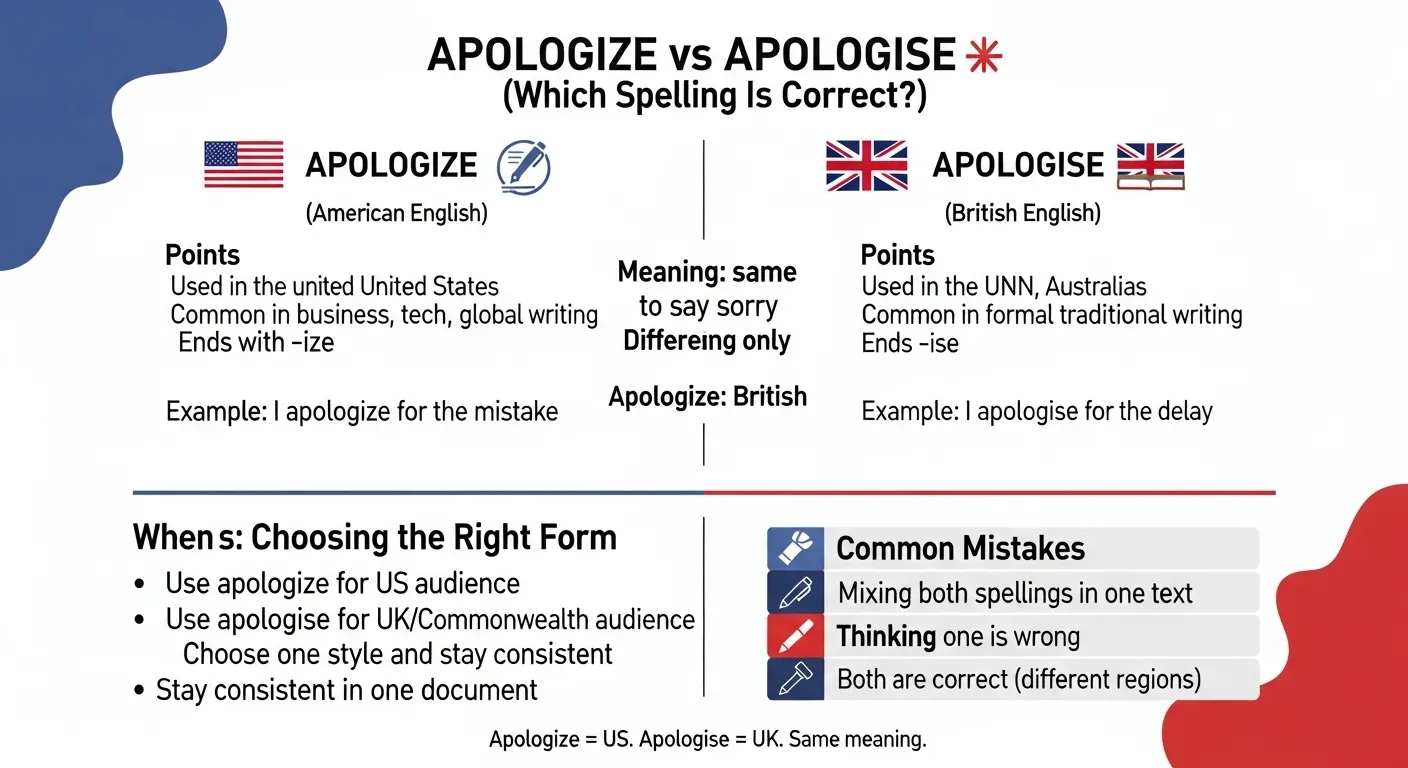
👉 Both “apologize” and “apologise” are correct spellings. American English uses “apologize,” while British English uses “apologise.”
This article gives you a clear and simple answer. You will learn the difference, correct usage, examples, and easy rules. By the end, you will know exactly which spelling to use in every situation.
Apologize or Apologise: Quick Answer ✅⚡
✔ Main Difference:
- Apologize → American English spelling 🇺🇸
- Apologise → British English spelling 🇬🇧
📌 Examples:
- ✔ I apologize for the mistake. (American English)
- ✔ I apologise for the delay. (British English)
- ✔ She apologized/apologised to her teacher.
👉 Both mean the same: to say sorry
Apologize or Apologise: Definitions with Examples 📖✍️
Both words have the same meaning: to express regret or say sorry for a mistake.
📌 Examples in sentences:
- He apologized for being late.
- She apologised to her friend.
- They apologized for the confusion.
- I apologise for any inconvenience caused.
👉 These examples show that only spelling changes, not meaning.
🟡 Simple Meaning
- Say sorry
- Admit a mistake
- Show regret
The Origin of Apologize or Apologise 📜⏳
The word comes from the Greek word “apologia,” which means a speech in defense or explanation. Over time, it entered English and changed in spelling based on region.
Why two spellings exist:
- British English kept -ise
- American English changed to -ize
👉 This pattern is common in many words:
- organise / organize
- realise / realize
- recognise / recognize
👉 The same rule applies to many verbs ending in “-ise/-ize,” so learning this helps beyond just this word.
Apologize or Apologise: British vs American English 🌍🇬🇧🇺🇸
📌 Key Difference:
| Form | Region | Example Sentence |
| Apologize | American English | I apologize for the error. |
| Apologise | British English | I apologise for the delay. |
👉 The pronunciation is the same. Only spelling changes.
Which Spelling Should You Use? 🎯📝
✔ Use “Apologize” When:
- Writing for an American audience
- Using US English in school or work
- Writing blogs, emails, or business content for the US
✔ Use “Apologise” When:
- Writing for the UK or Commonwealth countries
- Following British English rules
- Writing academic or formal UK-style content
🌍 Global Tip:
👉 Choose one style and stay consistent
👉 Do not mix both in the same document
Common Mistakes with Apologize or Apologise ❌⚠️
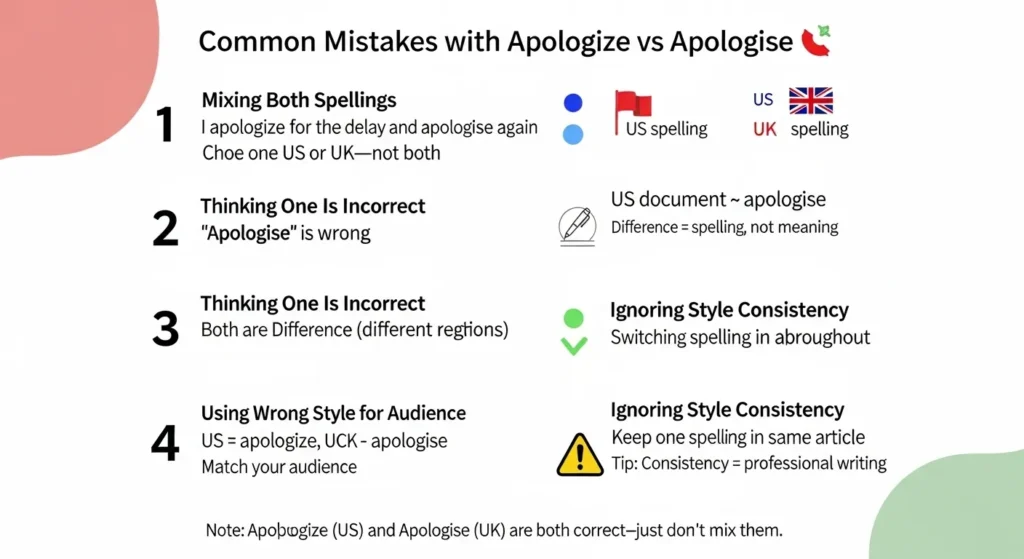
1. Mixing Both Spellings
❌ I apologize and apologise for the mistake.
✔ Use one style only
2. Thinking One Is Wrong
❌ Apologise is incorrect
✔ Both are correct
3. Wrong Context Usage
❌ Using British spelling in US exam
✔ Match your audience
4. Spelling Confusion
❌ apolagize
✔ apologize / apologise
Apologize or Apologise in Everyday Examples 💬📱
📧 Emails
- I apologize for the delay in response.
- I apologise for the inconvenience caused.
📱 Social Media
- Sorry guys, I apologize for the confusion!
- I apologise for posting late today.
📚 School Writing
- The student apologized to the teacher.
- He apologised in front of the class.
💼 Professional Writing
- We apologize for the service issue.
- We apologise for any inconvenience caused.
Apologize or Apologise: Usage Trends & Popularity 📊📈
Modern usage clearly shows a pattern:
- USA → “apologize” is standard
- UK → “apologise” is standard
- Global online content → “apologize” is slightly more common
📌 Trend Insight:
Shorter -ize forms are widely used in digital and global communication.
👉 However, both forms are fully correct depending on region.
Comparison Table 📋⚖️
| Feature | Apologize | Apologise |
| Correct | Yes | Yes |
| Region | USA | UK |
| Style | Modern global | Traditional British |
| Meaning | Same | Same |
| Usage | More global | Regional |
Common User Queries 🔍🔥
- Which is correct: apologize or apologise?
- Is apologise wrong spelling?
- What is the difference between apologize and apologise?
- Which spelling should I use in exams?
- Is apologize American English?
- Is apologise British English?
- Do both words have the same meaning?
- Can I use both in one sentence?
- Why are there two spellings?
- Which is more common worldwide?
FAQs ❓💡
1. Are both spellings correct?
✔ Yes, both are correct
2. Which is more common?
✔ “Apologize” globally
3. Do they mean different things?
❌ No, same meaning
4. Should I use both together?
❌ No, stay consistent
5. Which is better for students?
✔ Use based on your exam system (US or UK)
6. Is one more formal than the other?
✔ No, both are equally formal
7. Easy rule to remember?
✔ “-ize” = American, “-ise” = British
Conclusion 🧾📌
Both “apologize” and “apologise” are correct spellings with the same meaning, but the difference depends on regional English.
American English uses “apologize,” while British English uses “apologise.” Understanding this simple rule removes confusion and helps you write clearly in any situation.
For most global and online writing, “apologize” is slightly more common because American English dominates digital content.
However, if you are writing for a UK audience or following British English rules, “apologise” is the better choice.
The most important thing is consistency. Do not mix both spellings in the same article, email, or assignment. Choose one based on your audience and stick with it throughout your writing.
In simple terms: both are correct, but your choice should match your audience. Once you follow this rule, your writing will look clean, professional, and confident.
Discover More Articals!
Portland, OR or Portland Protests : What’s the Difference?
Jail or Prison: What Is the Difference?
Oahu or Maui: Complete Guide In 30 Seconds

My name is James Whitmore.I am a language research writer. I explore the history and evolution of English words. I write detailed comparisons explaining why spellings change over time and how British and American English diverged. My articles add depth and credibility to grammar comparison topics.