Urban areas are cities with large populations and modern infrastructure, while rural areas are countryside regions with smaller populations and more open land.
Many people search for “urban and rural” when they want to understand the differences between city life and countryside living.
These terms are commonly used in geography, population studies, government planning, and everyday discussions about where people live.
Urban and rural environments offer very different lifestyles. Cities often provide more job opportunities and access to hospitals, schools, and entertainment.
Rural areas, on the other hand, are known for quieter surroundings, natural landscapes, and agricultural activities.
Because of these differences, people often compare urban and rural areas when deciding where to live, work, or invest.
Understanding the difference between urban or rural areas helps explain how communities develop, how resources are distributed, and how lifestyle choices vary between locations.
In this guide, you will learn what urban and rural areas mean, their characteristics, major differences, and real world examples of how these environments affect daily life.
📖 What is Rural or Urban? (Definition)
🌆 Urban Definition
An urban area refers to a city or town with a high population density and developed infrastructure.
Urban areas usually have:
- Tall buildings and housing complexes
- Public transportation systems
- Hospitals, schools, and shopping centers
- Many businesses and offices
Example
Cities like New York, London, and Tokyo are considered urban areas.
People living in urban areas often work in offices, industries, or service jobs.
🌾 Rural Definition
A rural area refers to the countryside or regions with low population density and large open spaces.
Rural areas usually include:
- Farms and agricultural land
- Small towns or villages
- Natural landscapes such as forests and fields
- Fewer buildings and businesses
Example
Farming communities or villages located far from major cities are considered rural areas.
People in rural areas often work in agriculture, forestry, or local trades.
⚡ Urban or Rural: Quick Answer
The main difference between urban and rural areas is population density and infrastructure development.
| Feature | Urban | Rural |
| Population | High | Low |
| Infrastructure | Highly developed | Limited development |
| Jobs | Business, technology, services | Agriculture, farming |
| Lifestyle | Fast paced | Quiet and slower |
| Environment | Buildings and roads | Natural landscapes |
Simple explanation:
- Urban → Cities and developed areas
- Rural → Countryside and villages
🕰️ The Origin of Urban or Rural
Urban History
The word urban comes from the Latin word “urbanus,” which means belonging to a city.
Urban areas began developing thousands of years ago when people formed large settlements and trading centers.
Rural History
The word rural comes from the Latin word “ruralis,” meaning related to the countryside or farming areas.
Historically, rural regions were where most people lived and worked in agriculture.
🌍 Urban vs Rural Lifestyle Differences
People experience very different lifestyles depending on where they live.
Lifestyle Comparison Table
| Feature | Urban Lifestyle | Rural Lifestyle |
| Transportation | Public transit and heavy traffic | Personal vehicles |
| Housing | Apartments and dense housing | Houses with larger land |
| Environment | Busy and crowded | Quiet and peaceful |
| Services | Many hospitals, schools, malls | Limited services |
Urban areas provide more convenience, while rural areas offer more space and natural surroundings.
🏡 Which Environment Should You Choose?
The choice between urban or rural living depends on personal needs and preferences.
Choose Urban Living If You Want
- More job opportunities
- Access to modern services
- Entertainment and nightlife
- Public transportation
Choose Rural Living If You Want
- A quiet and peaceful environment
- More space and nature
- Lower population density
- A slower lifestyle
Some people prefer suburban areas, which combine elements of both.
⚠️ Common Mistakes with Urban or Rural
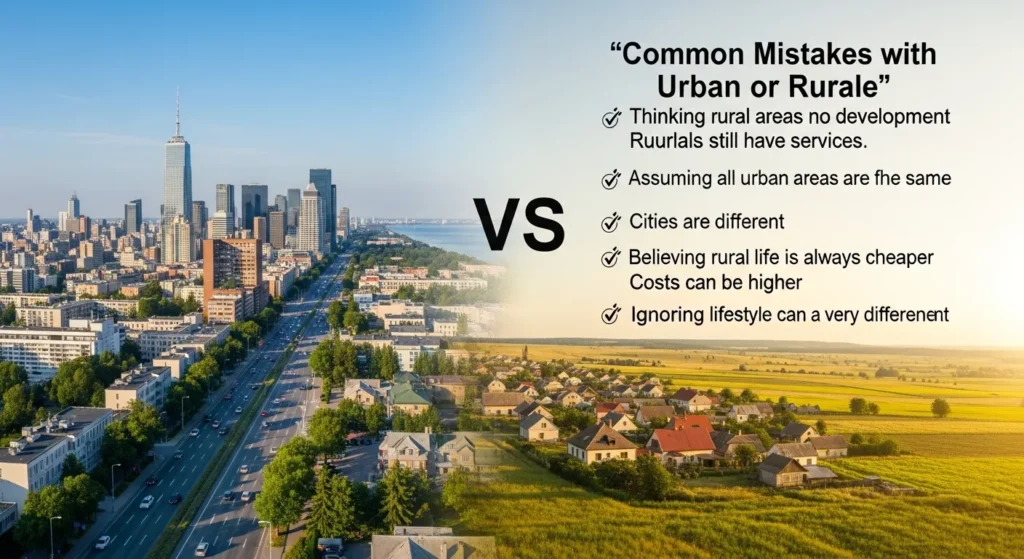
❌ Thinking rural areas have no development
Many rural areas still have schools, healthcare, and businesses.
❌ Assuming all urban areas are the same
Cities vary greatly in size, culture, and infrastructure.
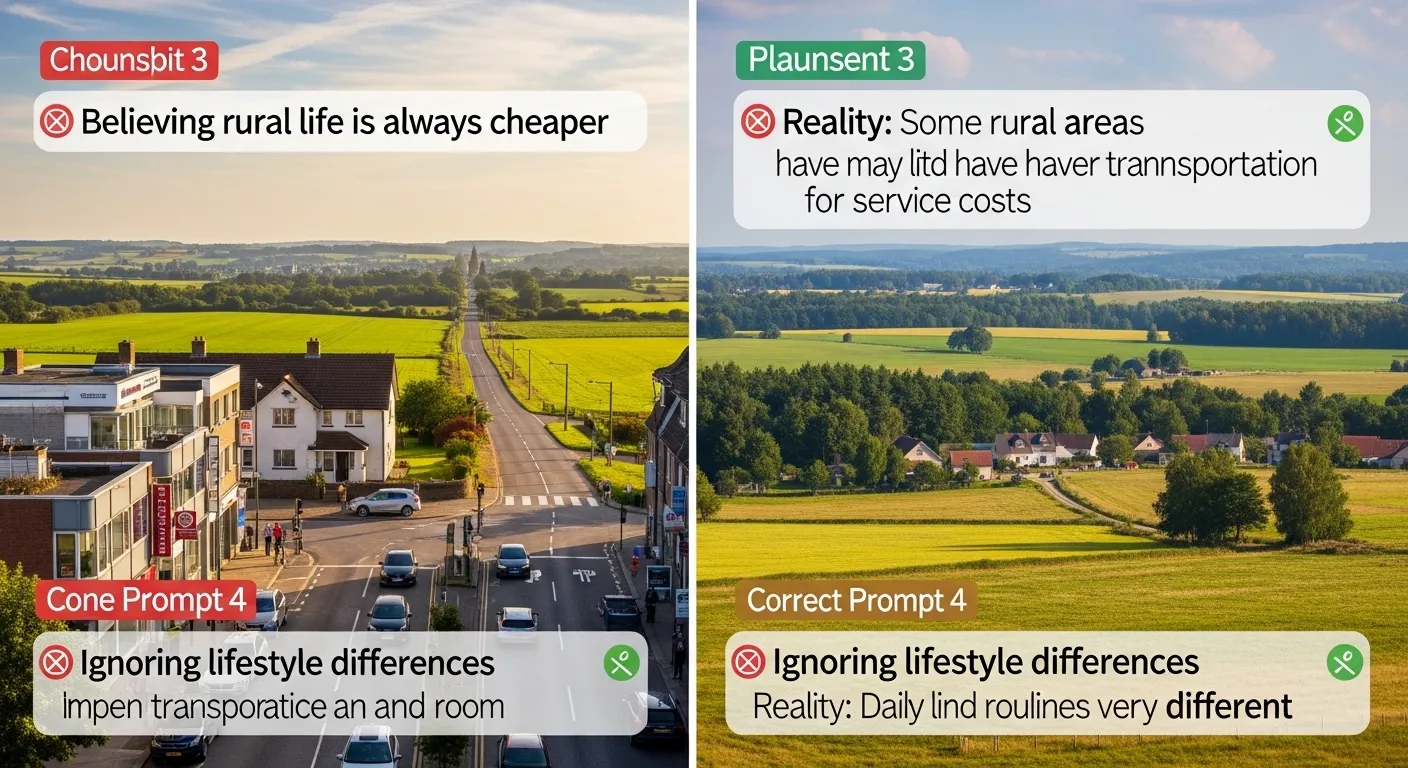
❌ Believing rural life is always cheaper
Some rural locations may have higher transportation or service costs.
❌ Ignoring lifestyle differences
Daily routines and community life can be very different in each environment.
💬 Urban or Rural in Everyday Examples
📧 Survey question
“Do you currently live in an urban or rural area?”
📰 News report
“Population growth is increasing in urban areas while some rural communities are shrinking.”
📱 Social media
“Some people prefer rural life because it is quieter and closer to nature.”
🏫 Education example
Schools often ask students to classify regions as urban or rural in geography lessons.
📊 Urban or Rural: Population Trends
Globally, more people now live in urban areas.
| Region | Urban Population Trend |
| North America | Highly urbanized |
| Europe | Mostly urban |
| Asia | Rapid urban growth |
| Africa | Increasing urbanization |
Despite this trend, rural areas remain important for agriculture, natural resources, and food production.
❓ FAQs
What is the difference between urban and rural?
Urban areas are cities with large populations, while rural areas are countryside regions with fewer people.
Which areas have more job opportunities?
Urban areas usually offer more job opportunities.
Are rural areas quieter than urban areas?
Yes. Rural areas are generally quieter and less crowded.
Do rural areas have fewer services?
Often yes, but many rural communities still have essential services.
Is urban living more expensive?
In many places, urban living costs more due to housing and services.
Can someone move from urban to rural areas easily?
Yes, but lifestyle changes and job opportunities should be considered.
Why are cities called urban areas?
Because the term urban refers to places with dense populations and developed infrastructure.
Conclusion
The comparison between urban vs rural areas highlights the differences in population, lifestyle, and development between cities and countryside regions.
Urban areas are known for their large populations, advanced infrastructure, and wide range of job opportunities.
They offer access to transportation systems and entertainment, making them attractive for people seeking career growth and modern conveniences.
Rural areas, on the other hand, provide a quieter environment with more open land and natural surroundings. Many rural communities rely on agriculture, forestry, and small local businesses.
While services may be more limited compared to cities, rural living can offer a peaceful lifestyle and a stronger connection to nature.
Choosing between urban and rural living depends on personal preferences, career needs, and lifestyle goals.
Some people prefer the energy and opportunities of city life, while others value the calm and space found in rural areas.
By understanding the key differences between urban and rural environments, individuals can make more informed decisions about where they live, work, and build their future.
Discover More Articals!
Colum or Column: How Should You Use It?
Hybrid or Gas: Which Car Should You Choose?
Concave or Convex: Meaning, Differences and Easy Examples

thinkaora.com is my English grammar comparison website where I simplify confusing words, spelling differences, and usage rules through clear explanations and examples. My goal is to help learners, writers, and students understand English easily and use correct grammar with confidence.