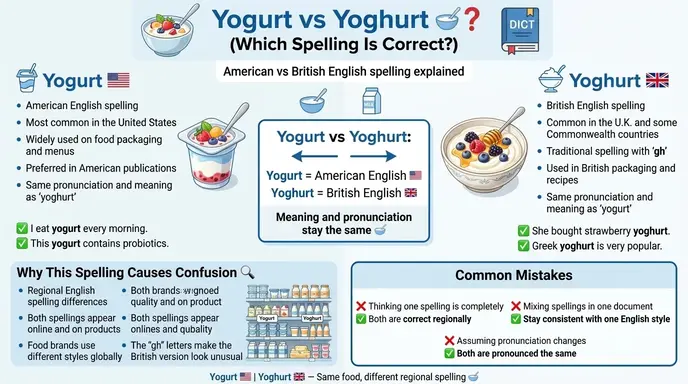
Both “yogurt” and “yoghurt” are correct spellings, but the preferred version depends on the type of English being used.
“Yogurt” is more common in American English, while “yoghurt” is traditionally preferred in British English and some Commonwealth countries.
👉 Strong rule:
Use “yogurt” in American English and “yoghurt” in British English.
People often search: “yogurt vs yoghurt,” “which spelling is correct,” “difference between yogurt and yoghurt,” and “why does British English spell yoghurt differently.” The confusion happens because both spellings refer to the exact same food.
This article explains the meanings, pronunciation, history, spelling differences, nutrition facts, global usage, and memory tricks so you can confidently use the correct spelling.
Yogurt or Yoghurt : Quick Answer ✅
Both spellings are correct. “Yogurt” is American English, while “yoghurt” is British English.
✔ Main Difference:
- Yogurt → American English spelling
- Yoghurt → British English spelling
📌 Examples:
- 🇺🇸 I eat yogurt every morning.
- 🇬🇧 She bought strawberry yoghurt.
👉 Simple rule:
US English = yogurt | UK English = yoghurt
What Does Yogurt/Yoghurt Mean? 🥣📖
Yogurt (or yoghurt) is:
- a dairy food made by fermenting milk with bacteria
- creamy, tangy, and often eaten as a snack or breakfast food
📌 Examples:
- Greek yogurt is high in protein.
- Natural yoghurt contains probiotics.
How Yogurt Is Made 🥛🧫
Yogurt production involves:
- milk
- bacterial cultures
- fermentation
Fermentation concept:
\text{Milk} + \text{bacterial fermentation} = \text{yogurt/yoghurt}
Yogurt vs Yoghurt: Core Difference ⚖️
📊 Comparison Table:
| Feature | Yogurt | Yoghurt |
| English Type | American English | British English |
| Meaning | Same | Same |
| Pronunciation | Same | Same |
| Correctness | Correct | Correct |
| Region | USA | UK/Commonwealth |
👉 The food itself is exactly the same.
Why Are There Two Spellings? 📜⏳
The word entered English from Turkish and passed through different language systems over time.
Original Turkish Word:
- yoğurt
Different English-speaking regions later adopted slightly different spellings.
How to Pronounce Yogurt and Yoghurt 🔊
Common Pronunciation:
/ˈjoʊ.ɡɚt/
or
/ˈjɒɡ.ət/
👉 Pronunciation varies slightly by accent, but both spellings sound very similar.
Different Types of Yogurt ✨
1. Greek Yogurt
Thicker and higher in protein.
2. Frozen Yogurt
A dessert similar to ice cream.
3. Flavored Yogurt
Contains fruit or sweeteners.
4. Plant-Based Yogurt
Made from:
- almond milk
- coconut milk
- soy milk
Yogurt in Nutrition 🧠🥛
Yogurt often contains:
- protein
- calcium
- probiotics
- vitamins
Health Concept
Probiotic support:
\text{Probiotics} \rightarrow \text{gut health support}
Yogurt in Everyday Examples 💬📱
🏠 Daily Life
- I had yogurt with fruit for breakfast.
📱 Social Media
- This yoghurt bowl looks amazing 😍
📚 Educational Context
- Yogurt is produced through fermentation.
💼 Restaurant/Menu Usage
- The dish comes with garlic yoghurt sauce.
British vs American English Usage 🌍
🇺🇸 American English
Usually prefers:
✔ yogurt
🇬🇧 British English
Traditionally prefers:
✔ yoghurt
📊 Comparison Table:
| Word | British English | American English |
| Yogurt | Sometimes used | Preferred |
| Yoghurt | Preferred | Less common |
👉 Both spellings are understood internationally.
Global Yogurt Culture 🌎🥣
Yogurt is popular in many regions including:
- the Middle East
- Europe
- South Asia
- North America
Popular Uses:
- breakfast
- sauces
- desserts
- drinks
- cooking
Common Mistakes with Yogurt and Yoghurt ❌⚠️
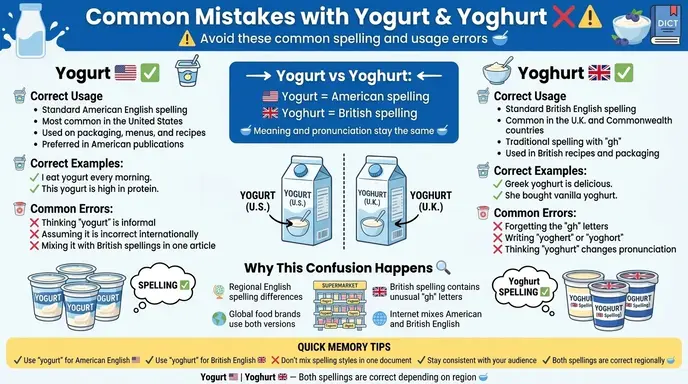
1. Thinking One Spelling Is Wrong
✔ Both are correct regionally.
2. Mixing Spellings in One Document
✔ Stay consistent in writing style.
3. Confusing Pronunciation and Spelling
✔ Different accents pronounce it differently.
4. Assuming Yogurt Is Only Dairy
✔ Plant-based versions also exist.
Memory Tricks to Remember Easily ✨
👉 Trick 1: British English Likes Extra Letters
Examples:
- colour
- flavour
- yoghurt
👉 Trick 2: American English Simplifies
Examples:
- color
- flavor
- yogurt
👉 Trick 3: Think Geography
🇺🇸 US → yogurt
🇬🇧 UK → yoghurt
History of Yogurt 📜🥛
Yogurt has existed for thousands of years and became popular through:
- Central Asian cultures
- Middle Eastern cuisine
- Mediterranean food traditions
Comparison Table 📋
| Feature | Yogurt | Yoghurt |
| Meaning | Fermented milk food | Fermented milk food |
| Region | American English | British English |
| Correctness | Correct | Correct |
| Pronunciation | Similar | Similar |
| Popularity | Higher globally | Common in UK/Commonwealth |
Common User Queries 🔍
- Is yogurt or yoghurt correct?
- What is the difference between yogurt and yoghurt?
- Is yoghurt British spelling?
- Is yogurt American spelling?
- How is yogurt made?
- Is Greek yogurt healthy?
- Why are there two spellings?
- How do you pronounce yoghurt?
- Are yogurt and yoghurt the same food?
- Which spelling should I use?
FAQs ❓💡
1. Which spelling is correct?
✔ Both are correct
2. Is yogurt American English?
✔ Yes
3. Is yoghurt British English?
✔ Yes
4. Do they mean different foods?
❌ No
5. Which spelling is more common globally?
✔ Yogurt is slightly more common internationally
6. Are pronunciation differences large?
❌ Usually not
7. Easy rule?
✔ US = yogurt, UK = yoghurt
Conclusion 🧾
“Yogurt” and “yoghurt” are both correct spellings of the same fermented dairy food. The difference comes from regional English preferences: American English typically uses “yogurt,” while British English commonly uses “yoghurt.”
The pronunciation, meaning, nutrition, and usage remain essentially identical regardless of spelling. If discussing breakfast foods, probiotics, or cooking ingredients, both forms are widely understood worldwide.
The most important thing is consistency. Match the spelling style to your audience or writing system.
👉 Final takeaway: Both spellings are correct—use “yogurt” in American English and “yoghurt” in British English.
Discover More Articles!
Illusion or Delusion: What’s the Difference? With Examples 2026
Skiis or Skis: Which Spelling Is Correct? With Examples 2026
Esthetic or Aesthetic: What’s the Difference?With Examples

My name is James Whitmore.I am a language research writer. I explore the history and evolution of English words. I write detailed comparisons explaining why spellings change over time and how British and American English diverged. My articles add depth and credibility to grammar comparison topics.