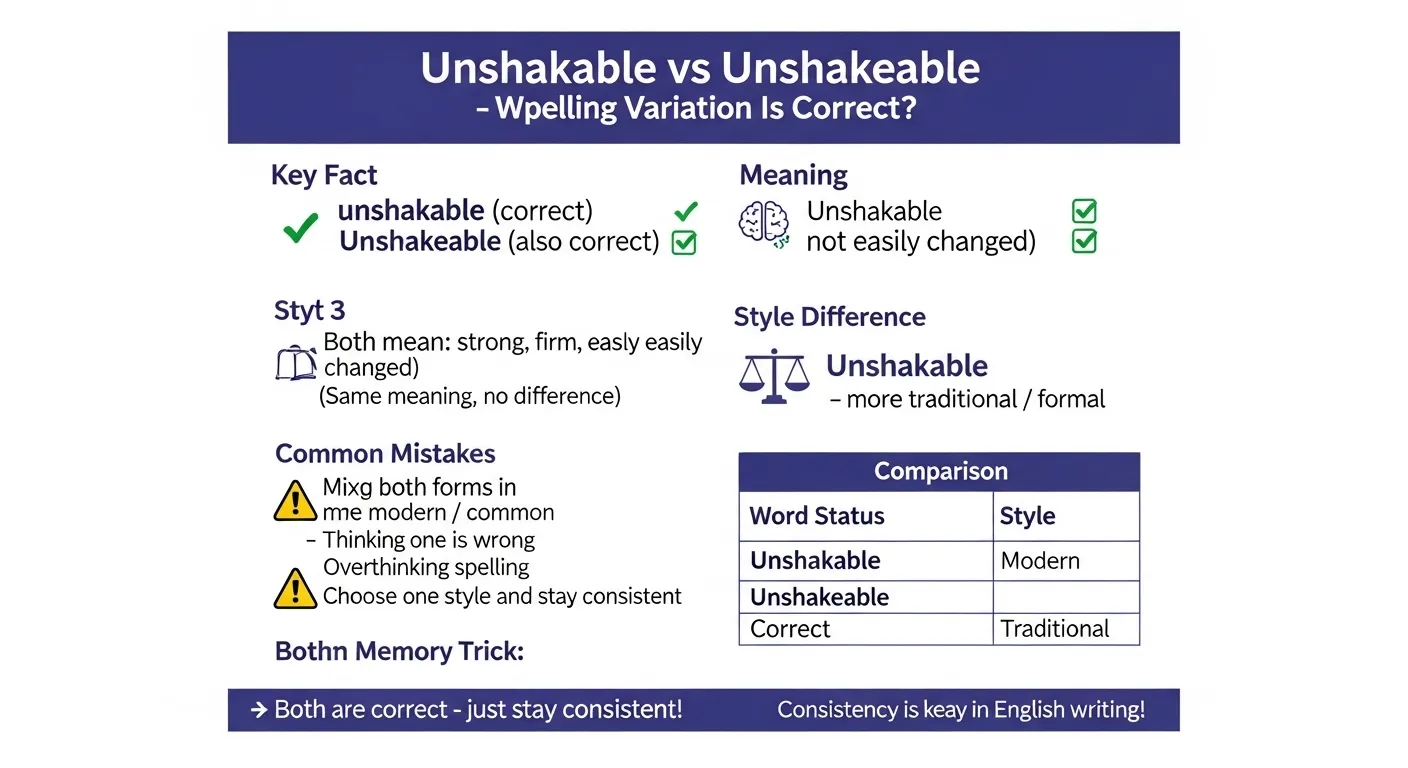
Both “unshakable” and “unshakeable” are correct, but modern English prefers the shorter form “unshakable.”
This confusion is common because both spellings appear in books, quotes, and online writing.
Many learners are unsure which one to use in exams, essays, or professional content. Some assume one is wrong, while others mix both forms by mistake.
This guide explains the meaning, difference, and correct usage in a simple way so you can write confidently without confusion.
Unshakeable or Unshakable: Quick Answer ✅⚡
✔ Main Difference:
- Unshakable → Shorter, modern, more commonly used ✅
- Unshakeable → Longer, traditional, still correct ✔
📌 Examples:
- ✔ She has unshakable confidence.
- ✔ His belief is unshakable.
- ✔ They showed unshakeable courage.
👉 Both are correct, but the shorter form is preferred in most modern writing.
Definitions with Examples 📖✍️
🟢 Unshakable (Definition)
It means being strong, firm, and not easily changed or affected by anything.
📌 Examples:
- ✔ It means being strong, firm, and not easily changed or affected by anything.
- He has unshakable faith in success.
- Her support is unshakable.
- Their determination is unshakable.
🔵 Unshakeable (Definition)
It has the same meaning, only with a longer spelling.
📌 Examples:
- ✔ It has the same meaning, only with a longer spelling.
- His courage is unshakeable.
- She showed unshakeable trust.
🟡 Simple Meaning
- Strong and steady
- Not easily changed or broken
The Origin of the Word 📜⏳
This word is made from three parts:
- Un = not
- Shake = move or disturb
- Able = capable
👉 Together it means: not able to be shaken
Over time, English moved toward shorter spellings. That is why the modern form is more widely used today.
British English vs American English Usage 🌍🇬🇧🇺🇸
📌 Key Point:
Both spellings are accepted worldwide.
📊 Usage Table:
| Region | Preferred Form | Also Used |
| USA | unshakable | unshakeable |
| UK | unshakable | unshakeable |
| Pakistan | unshakable | unshakeable |
| Global | unshakable | unshakeable |
👉 The shorter form is more common in modern writing everywhere.
Which Spelling Should You Use? 🎯📝
✔ Use “Unshakable” When:
- Writing blogs or articles
- Social media posts
- Exams and assignments
- Modern professional communication
✔ Use “Unshakeable” When:
- Writing in formal or traditional style
- Matching older literature or quotes
🧠 Memory Trick (Easy)
👉 Short = Strong = Modern → Unshakable
👉 Long = Old Style → Unshakeable
📌 Usage Tip (Very Important) 🧠✨
- Both spellings are correct
- Choose one style and stay consistent
- Do not mix both in the same paragraph
📌 Examples:
- ✔ His belief is unshakable.
- ✔ Her courage is unshakeable.
- ❌ Mixing both forms in one text
Common Mistakes unshakeable or unshakable
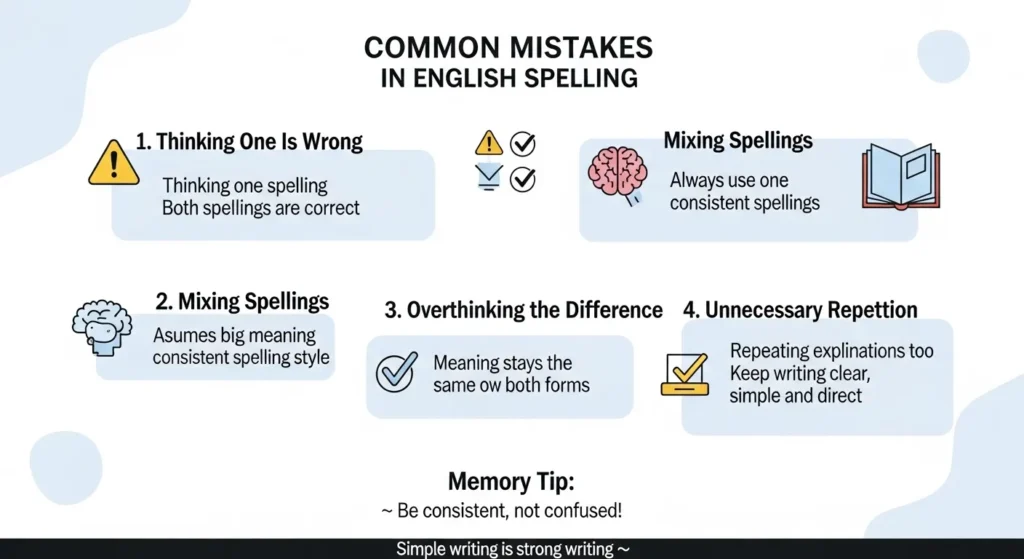
1. Thinking One Is Wrong
✔ Both are correct
2. Mixing Spellings
✔ Always use one consistent form
3. Overthinking the Difference
✔ Meaning stays the same
4. Unnecessary Repetition
✔ Keep explanations clear and simple
Unshakeable or Unshakable in Everyday Examples 💬📱
🏠 Daily Life
- She has unshakable confidence.
- His trust is strong and steady.
📱 Social Media
- Stay unshakable 💪🔥
- Build an unshakeable mindset
📚 School
- He showed unshakable determination.
💼 Work
- They have unshakable commitment.
Usage Trends & Popularity 📊📈
Modern English prefers shorter forms because they are easier to read and write. That is why “unshakable” is more commonly used in blogs, digital content, and everyday communication. The longer form still appears in older texts and formal writing.
📌 Trend Summary:
- Short form → modern usage
- Long form → traditional usage
👉 Both forms mean exactly the same thing.
Comparison Table 📋⚖️
| Feature | Unshakable | Unshakeable |
| Length | Short | Long |
| Style | Modern | Traditional |
| Usage | More common | Less common |
| Meaning | Same | Same |
Common User Queries 🔍🔥
- What is the correct spelling, unshakable or unshakeable?
- Is unshakeable a correct English word?
- What does unshakable mean in simple English?
- What is the difference between unshakable and unshakeable?
- Which spelling is more commonly used today?
- Can I use both unshakable and unshakeable in writing?
- Is unshakeable British or American English spelling?
- Which spelling should I use in exams or assignments?
- What is an easy way to remember unshakable spelling?
- Why are there two spellings for unshakable/unshakeable?
FAQs ❓💡
1. Are both spellings correct?
✔ Yes
2. Which one is more common?
✔ The shorter form
3. Do they have different meanings?
❌ No, meaning is the same
4. Should I mix both spellings?
❌ No
5. Which is better for modern writing?
✔ Unshakable
6. Is unshakeable wrong?
❌ No, it is still correct
7. Easy way to remember?
✔ Short = modern style
Conclusion 🧾📌
Both “unshakable” and “unshakeable” are correct, but modern English clearly prefers the shorter form. The meaning is the same in both cases, so the choice depends on style, not correctness.
For most writing, “unshakable” is the better option because it is simpler, more natural, and widely used in modern communication. The longer form is still valid, but it is less common and feels more traditional.
The most important rule is consistency. Once you choose a spelling, use it throughout your writing without mixing both forms. This keeps your content clear, clean, and professional.
Discover More Articals!
Dieing or Dying: Which One Is Correct? In 30 Seconds!
Aging or Ageing: Which One Is Correct? In 30 Seconds
Naive or Nieve: Which One Is Correct? (2026)

My name is James Whitmore.I am a language research writer. I explore the history and evolution of English words. I write detailed comparisons explaining why spellings change over time and how British and American English diverged. My articles add depth and credibility to grammar comparison topics.