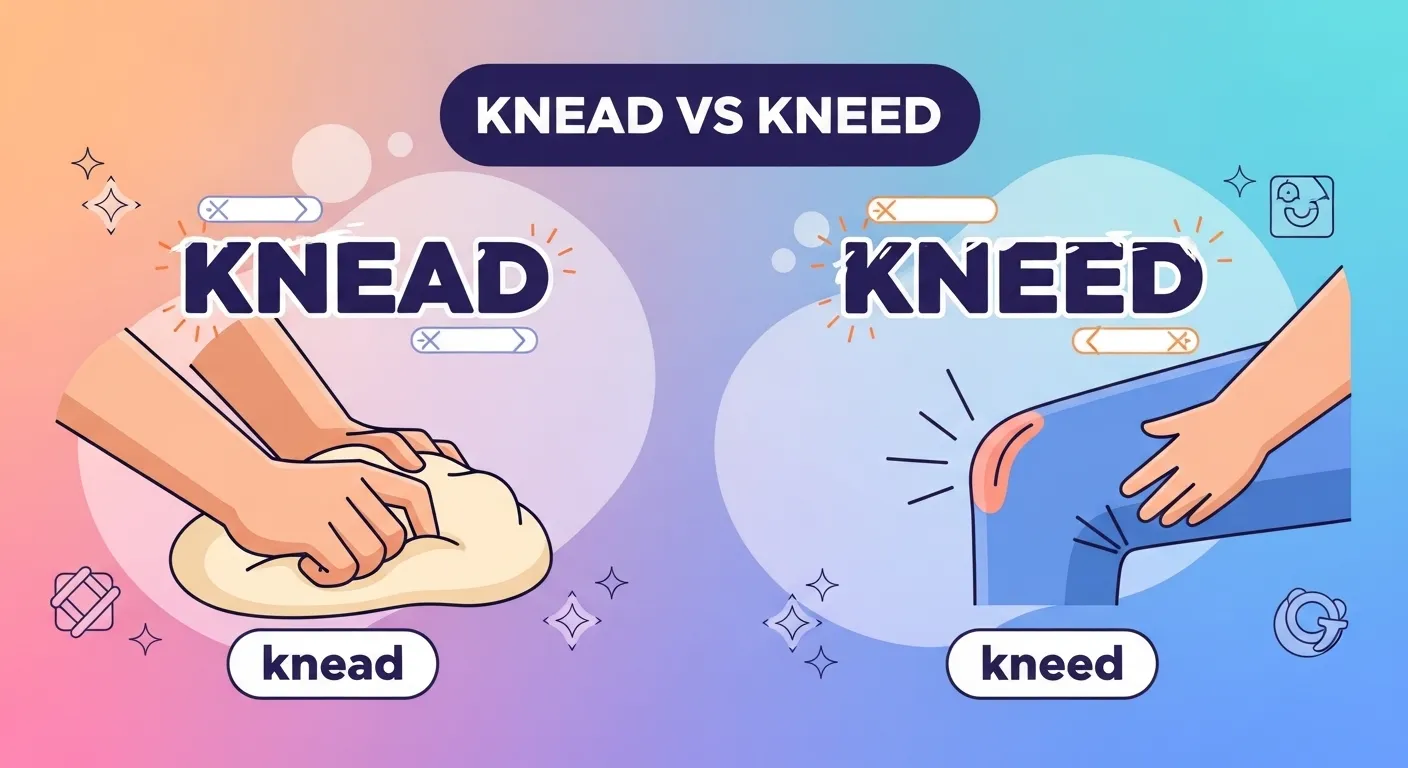
The correct word is “knead” when talking about working dough with your hands. People often confuse it with “kneed,” which means someone hit something with their knee.
This confusion appears often in writing and online searches. Understanding the difference will improve your grammar and make your writing precise.
In this guide, you will learn the proper use of knead and kneed, their origins, differences between British and American spelling, common mistakes, and realworld examples. By the end, you’ll never mix them up again.
Knead or Kneed: Quick Answer
- Knead → To work dough, clay, or similar material with your hands.
Example: She needs to knead the bread for ten minutes. - Kneed → Past tense of “knee,” meaning to hit with the knee.
Example: He accidentally kneed the table while standing up.
Quick tip: If it involves dough or pressing with hands, use knead. If it involves your knee, use kneed.
The Origin of Knead or Kneed
The word “knead” comes from Old English “cnedan,” meaning to press or squeeze. It has been used in baking and crafting for centuries.
On the other hand, “kneed” is simply the past tense of the verb “knee,” which comes from Old English “cnéow.” Over time, spelling differences caused confusion because both words sound almost the same in casual speech.
The overlap happens because English has many words with similar pronunciation but different spelling and meaning, like “reed” vs “read.” Knowing their roots helps you remember the correct usage.
British English vs American English Spelling
Both knead and kneed are spelled the same in British and American English. The difference lies in usage rather than spelling.
| Word | Meaning | Example (UK) | Example (US) |
| Knead | Work dough/clay with hands | She kneads the bread slowly. | He kneads the pizza dough well. |
| Kneed | Hit with the knee | He kneed the chair by accident. | She kneed the soccer ball hard. |
Key note: There’s no spelling change between UK and US English. Only the context decides which word fits.
Which Spelling Should You Use?
If you are writing for a UK audience, US audience, or global readers, the rule is simple:
- Knead → For cooking, baking, or crafting. Always correct.
- Kneed → For actions involving the knee. Always correct.
Example for emails:
- Correct: Please knead the dough before baking.
- Correct: He kneed the door by accident.
For formal writing, avoid using the wrong word, as it can confuse readers. Bloggers, writers, and students often make this mistake.
Common Mistakes with Knead or Kneed
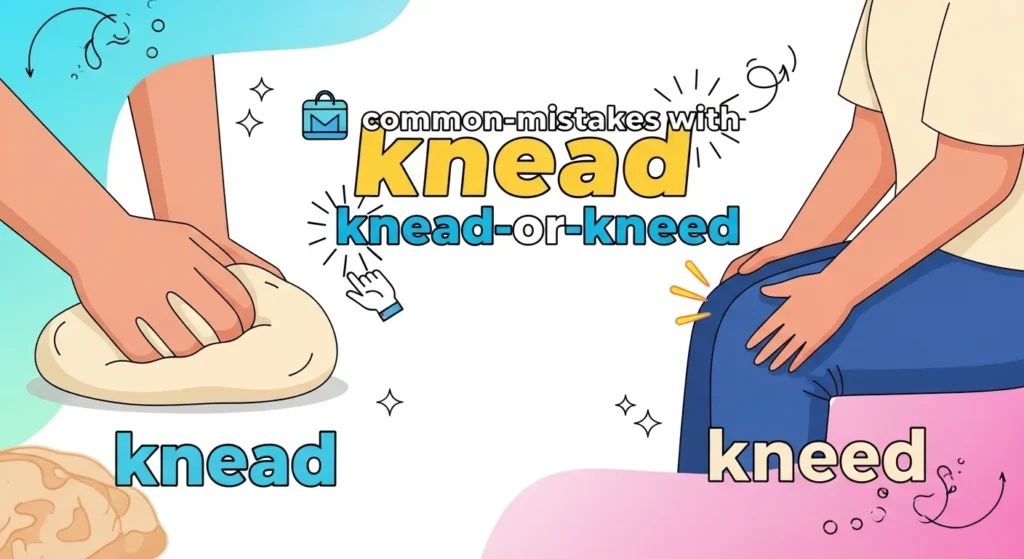
Many writers mix these words because they sound alike. Here are frequent errors:
- Incorrect: She kneed the bread for ten minutes.
Correct: She kneads the bread for ten minutes. - Incorrect: He kneads the soccer ball accidentally.
Correct: He kneed the soccer ball accidentally. - Incorrect: I will kneed the dough tonight.
Correct: I will knead the dough tonight. - Incorrect: The child kneads his friend during the game.
Correct: The child kneed his friend during the game.
Tip: Always check the context. Dough → knead, knee → kneed.
Knead or Kneed in Everyday Examples
1. Emails
- Knead: Please knead the clay before shaping it.
- Kneed: He accidentally kneed the table while stretching.
2. News Articles
- Knead: Local bakery demonstrates how to knead dough properly.
- Kneed: Player kneed the opponent during the match.
3. Social Media
- Knead: I love kneading bread at home! 🍞
- Kneed: Ouch! I kneed my shin by mistake 😫
4. Formal Writing
- Knead: The artist kneads the clay to prepare the sculpture.
- Kneed: The suspect kneed the officer during the struggle.
Knead or Kneed: Google Trends & Usage Data
Based on recent search data:
- Knead is more searched in baking, cooking, and DIY crafts.
- Kneed appears more in sports, accidents, and medical contexts.
Countrywise popularity:
- USA: Knead searches high among food bloggers.
- UK: Kneed and knead searches almost equal, depending on context.
- Australia: Knead dominates baking searches; kneed is niche.
Observation: Most confusion happens in online content and forums, where writers type phonetically.
Comparison Table: Knead vs Kneed
| Feature | Knead | Kneed |
| Meaning | Work dough/clay with hands | Hit with the knee |
| Verb Form | Base verb: knead | Past tense: kneed |
| Example | She kneads the pizza dough | He kneed the soccer ball |
| Common Usage Context | Baking, cooking, crafting | Sports, accidents, injuries |
| Spelling Difference | None | None |
| Confusion Likely Because | Sounds similar to kneed | Sounds similar to knead |
FAQs About Knead or Kneed
1. Can I use “kneed” for dough?
No. Dough is kneaded, not kneed. “Kneed” only involves the knee.
2. Is “knead” a British or American word?
It is used in both. No spelling difference exists.
3. Why do people confuse knead and kneed?
They sound almost the same, especially in casual speech.
4. What is the easiest way to remember?
If hands are involved → knead. If knees are involved → kneed.
5. Are there any other words similar to knead/kneed?
Yes. Examples: read/reed, meet/meat. English has many homophones.
6. Can “knead” be used metaphorically?
Yes. Example: Life sometimes kneads us like dough, shaping character.
7. Is “kneed” only past tense?
Yes. It is the past tense of “knee.”
Conclusion
Understanding knead or kneed is easy if you focus on context. Use knead when working dough, clay, or other materials with your hands.
Use kneed when an action involves your knee. Remember, spelling does not change in British or American English, but meaning does.
Confusion is common because both words sound alike. Writing carefully avoids mistakes. Proofreading your text ensures correct usage. Writers, students, and content creators benefit from this knowledge.
Real life examples, emails, news, and social media posts often misuse these words. Applying this guide helps you write professionally. Remember the simple rule: hands → knead, knee → kneed.
Google Trends confirms “knead” is more popular in food contexts, while “kneed” appears in sports and accidents. Using the correct word builds credibility.
By following this guide, you can confidently use knead or kneed in any writing. Short sentences, simple words, and context clarity are your best tools. Mastering this will make your English precise and polished.
Related Posts!
Focused vs Focussed: Easy Guide for English Learners 🌟
Does or Do: Meaning, Usage, Rules, and Clear Examples
Feel or Feal: Which Spelling Is Correct?

My name is James Whitmore.I am a language research writer. I explore the history and evolution of English words. I write detailed comparisons explaining why spellings change over time and how British and American English diverged. My articles add depth and credibility to grammar comparison topics.