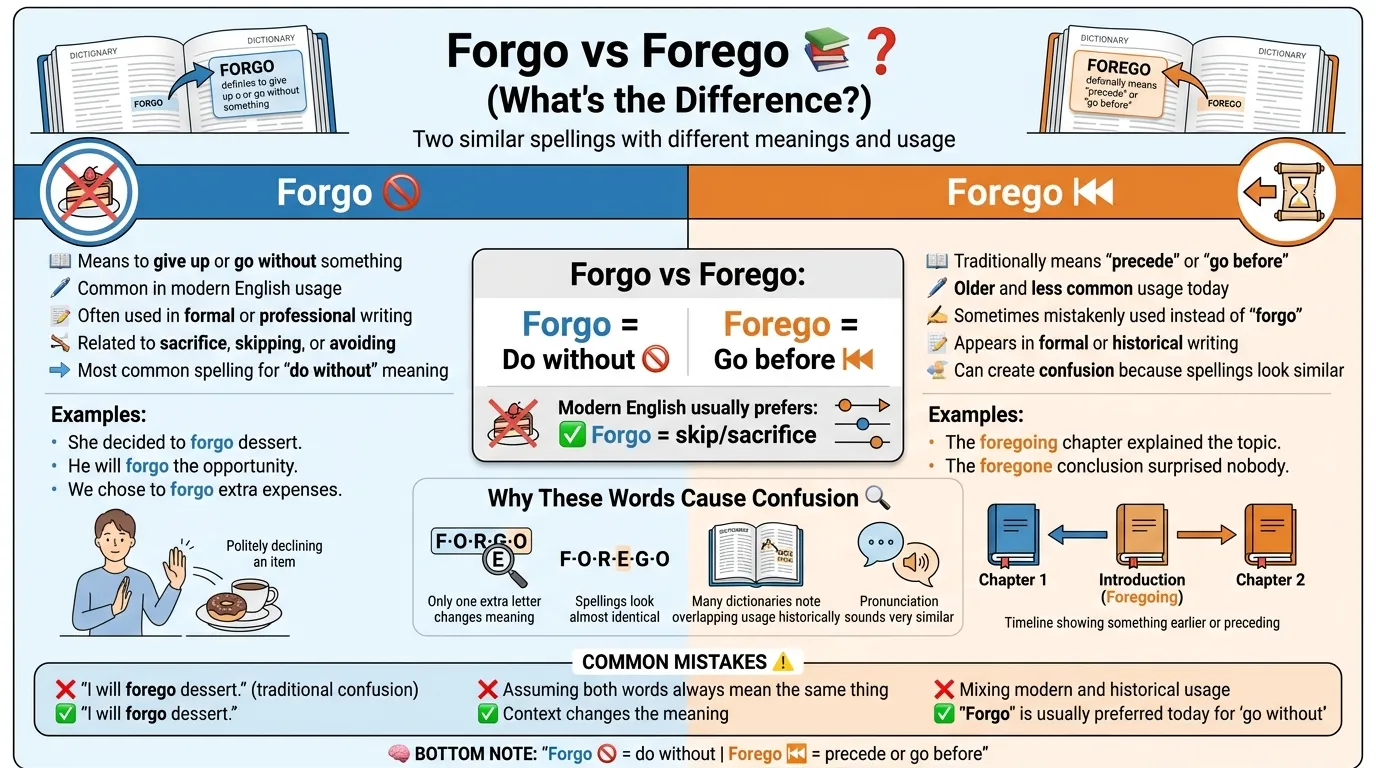
“Forgo” and “forego” are real English words, but they have different meanings and are often confused because they sound similar.
“Forgo” means to give up or do without something, while “forego” traditionally means to go before or precede.
Strong rule:
Forgo = give up | Forego = come before
People often search: “forgo vs forego,” “difference between forgo and forego,” “is forego the same as forgo,” and “which spelling is correct.”
The confusion happens because many modern writers use “forego” when they actually mean “forgo.”
This article explains the meanings, grammar, history, pronunciation, examples, and memory tricks to help you use the correct word confidently.
Forgo or Forego: Quick Answer ✅⚡
“Forgo” means to give something up, while “forego” traditionally means to come before something.
✔ Main Difference:
- Forgo → do without or sacrifice
- Forego → precede or go before
📌 Examples:
- ✔ She decided to forgo dessert.
- ✔ The introduction will forego the main discussion.
👉 Simple rule:
Forgo = sacrifice | Forego = precede
What Does “Forgo” Mean? 📖
“Forgo” means:
- to give up
- to choose not to have
- to do without something
📌 Examples:
- He chose to forgo the vacation.
- Many athletes forgo unhealthy foods.
- She decided to forgo payment.
Sacrifice concept:
What Does “Forego” Mean? ➡️
“Forego” traditionally means:
- to come before
- to precede
It relates to:
✔ “fore-” meaning before
📌 Examples:
- The foregone chapters explain the topic.
- The opening remarks forego the debate.
Sequence concept:
Forgo vs Forego: Core Difference 📚
📊 Comparison Table:
| Feature | Forgo | Forego |
| Main Meaning | Give up | Precede |
| Usage Frequency | Very common | Less common |
| Topic | Sacrifice | Sequence/order |
| Example | Forgo dessert | Forego discussion |
| Modern Confusion | Often confused | Often misused |
Why People Confuse Forgo and Forego 🧠⚠️
1. Similar Pronunciation
The words sound almost identical in modern speech.
2. Similar Spelling
Only one letter separates them:
- forgo
- forego
3. Modern Usage Changes
Many people incorrectly use:
✔ forego
when they mean:
✔ forgo
Some dictionaries now acknowledge this confusion in informal usage.
How to Pronounce Forgo and Forego 📖
Forgo Pronunciation
/fɔːrˈɡoʊ/
Forego Pronunciation
/fɔːrˈɡoʊ/
👉 They are commonly pronounced the same way.
History of Forgo 📜⏳
“Forgo” developed from older English forms meaning:
- refrain from
- abstain
It became strongly associated with:
- sacrifice
- voluntary avoidance
History of Forego 📜➡️
“Forego” comes from:
✔ “fore” meaning before
It originally meant:
- to go ahead of
- to precede
Prefix concept:
Modern Usage Trends 🌍
Today:
- “forgo” is far more common
- “forego” is relatively rare in its original sense
Because of confusion:
- some people now use “forego” incorrectly to mean “give up”
Forgo in Everyday Examples 💬📱
🏠 Daily Life
- I’ll forgo coffee tonight.
📱 Social Media
- Trying to forgo junk food this month 💪
📚 Academic Writing
- Participants agreed to forgo compensation.
💼 Business Usage
- The company chose to forgo expansion plans.
Forego in Everyday Examples ➡️
📚 Formal Writing
- The foregone discussion introduced key ideas.
📖 Literary Usage
- The foregone chapters prepared readers for the conclusion.
⚠️ Modern Rarity
This meaning is less common in everyday conversation.
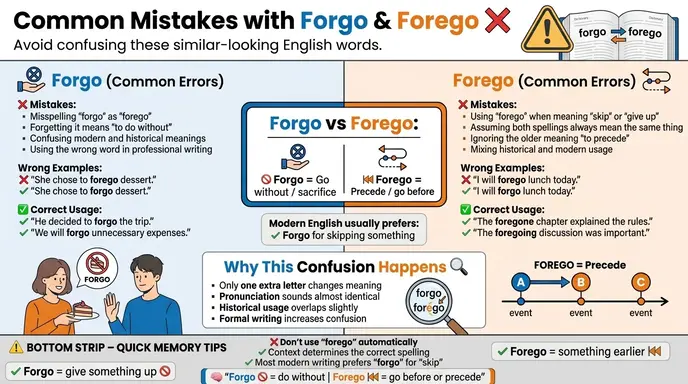
Common Mistakes with Forgo and Forego ❌⚠️
1. Using Forego Instead of Forgo
❌ I’ll forego dessert.
✔ I’ll forgo dessert.
2. Assuming Both Mean the Same Thing
✔ Traditionally they differ.
3. Ignoring Historical Meaning
✔ Forego originally means “precede.”
4. Confusing “Fore-” Prefix
✔ “Fore-” usually means before.
Memory Tricks to Remember Easily ✨
👉 Trick 1: Forgo = Forget/Give Up
Think:
✔ giving something up
👉 Trick 2: Forego = Before
“Fore” means:
✔ ahead or before
👉 Trick 3: Forehead Starts at the Front
✔ fore = front/before
British vs American English Usage 🌍
📌 Key Point:
Both British and American English recognize:
- forgo
- forego
However:
✔ “forgo” is much more common in modern usage.
📊 Comparison Table:
| Word | British English | American English |
| Forgo | Very common | Very common |
| Forego | Less common | Less common |
Comparison Table ⚖️
| Feature | Forgo | Forego |
| Meaning | Give up | Go before |
| Frequency | High | Lower |
| Common Modern Use | Yes | Rare |
| Related Idea | Sacrifice | Sequence |
| Prefix Meaning | None | Before |
Common User Queries 🔥
- What is the difference between forgo and forego?
- Which spelling means give up?
- Is forego incorrect?
- What does forgo mean?
- What does forego mean?
- Why are these words confusing?
- Are forgo and forego pronounced the same?
- Which word is more common?
- Can forego mean sacrifice?
- How can I remember the difference?
FAQs ❓
1. Which word means give up?
✔ Forgo
2. What does forego traditionally mean?
✔ To precede or go before
3. Are the words pronounced differently?
❌ Usually no
4. Is forego commonly used today?
✔ Less commonly
5. Why do people confuse them?
✔ Similar spelling and pronunciation
6. Is forgo more common?
✔ Yes
7. Easy rule?
✔ Forgo = give up, forego = go before
Conclusion 🧾
“Forgo” and “forego” are similar-looking words with different traditional meanings. “Forgo” means to give something up or do without it, while “forego” means to go before or precede.
Although modern usage sometimes mixes the two, understanding the historical distinction helps improve clarity and grammar accuracy.
Remembering that “fore-” relates to “before” makes the difference easier to recognize.
Final takeaway: Use “forgo” for giving something up and “forego” for something that comes before another thing.
Discover More Articles!
Alumnus or Alumni: What’s the Difference? In 2026
DO or MD: What’s the Difference? In 30 Seconds 2026
Eagles or Chiefs: What’s the Difference? In 30 Seconds

My name is James Whitmore.I am a language research writer. I explore the history and evolution of English words. I write detailed comparisons explaining why spellings change over time and how British and American English diverged. My articles add depth and credibility to grammar comparison topics.