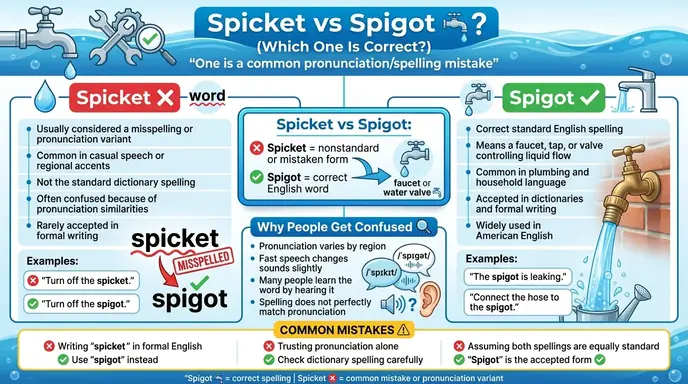
“Spigot” is the standard and correct English word for a faucet, tap, or valve that controls the flow of liquid. “Spicket” is usually considered a dialect variation, regional pronunciation, or common misspelling of “spigot.”
Strong rule:
Use “spigot” in standard English writing.
People often search: “spicket vs spigot,” “is spicket a real word,” “difference between spicket and spigot,” and “how do you spell spigot.”
The confusion happens because some regions pronounce the word differently, making “spicket” sound natural in conversation.
This article explains the meanings, pronunciation, regional usage, plumbing context, spelling rules, examples, and memory tricks to help you use the correct term confidently.
Spicket or Spigot: Quick Answer ✅⚡
“Spigot” is the standard correct word. “Spicket” is usually a regional variation or misspelling.
✔ Main Difference:
- Spigot → standard English term
- Spicket → nonstandard/regional variation
📌 Examples:
- ✔ Turn off the outdoor spigot.
- ✔ The hose connects to the water spigot.
- ❌ Turn on the spicket. (nonstandard in formal writing)
👉 Simple rule:
Use “spigot” for correct standard English.
What Does “Spigot” Mean? 🚰📖
A spigot is:
- a faucet
- a tap
- a valve controlling liquid flow
It is commonly used for:
- water
- hoses
- barrels
- plumbing systems
📌 Examples:
- The garden hose attaches to the spigot.
- Water leaked from the spigot.
- Please close the outdoor spigot tightly.
Flow control concept:
What Does “Spicket” Mean? 📖❓
“Spicket” is generally:
- a dialect pronunciation
- a regional variation
- a misspelling of “spigot”
Some speakers naturally say:
✔ spicket
especially in certain American regional accents.
However:
❌ it is usually avoided in formal writing.
Spigot vs Spicket: Core Difference 📚⚖️
📊 Comparison Table:
| Feature | Spigot | Spicket |
| Standard English | Yes | Usually no |
| Dictionary Acceptance | Yes | Limited/regional |
| Plumbing Usage | Common | Informal/regional |
| Formal Writing | Correct | Usually avoided |
| Example | Water spigot | Regional speech |
Why People Say “Spicket” 🧠⚠️
1. Regional Pronunciation
Some dialects naturally transform:
- spigot → spicket
2. Sound Similarity
The ending sounds can blend in fast speech.
3. Learned Speech Patterns
People often use the pronunciation they heard growing up.
How to Pronounce Spigot 🔊📖
Standard Pronunciation
/ˈspɪɡ.ət/
👉 Sounds like:
- SPI-gut
Where Spigot Is Commonly Used 🚰🌍
1. Outdoor Water Faucets
- Connect the hose to the spigot.
2. Beverage Containers
Large drink dispensers may use:
✔ spigots
3. Industrial Plumbing
Used in:
- tanks
- pipes
- liquid systems
Spigot in Everyday Examples 💬📱
🏠 Daily Life
- The kitchen spigot is leaking.
📱 Social Media
- Don’t forget to shut off the spigot before winter ❄️
🏡 Gardening
- Attach the hose to the outdoor spigot.
💼 Maintenance Context
- The plumber replaced the broken spigot.
Plumber profession example:
Plumber
Regional Language and Dialects 🌎🗣️
Language changes across regions:
- some people say spicket
- others say spigot
This is common in spoken English.
Similar Regional Variations Include:
- wash → warsh
- creek → crick
- probably → probly
Common Mistakes with Spicket and Spigot ❌⚠️
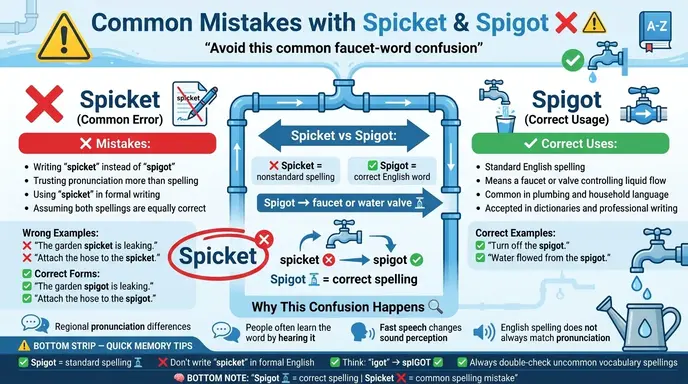
1. Writing “Spicket” Formally
❌ Replace the spicket.
✔ Replace the spigot.
2. Assuming Spicket Is the Standard Form
✔ Spigot is standard English.
3. Spelling by Pronunciation
People often spell words how they hear them.
4. Confusing Spigot with Faucet
✔ They are closely related terms.
Difference Between Spigot and Faucet 🚿⚖️
Spigot
Usually refers to:
- outdoor taps
- hose connections
- valves
Faucet
Often refers to:
- indoor sinks
- kitchen fixtures
- bathroom water controls
Water outlet comparison:
Memory Tricks to Remember Easily 🧠✨
👉 Trick 1: Spigot Has “Go” Like Water Flow
✔ spigot → water goes out
👉 Trick 2: Plumbing Stores Use “Spigot”
Formal labels almost always say:
✔ spigot
👉 Trick 3: Think Standard English
✔ spigot = dictionary form
British vs American English Usage 🌍
📌 Key Point:
“Spigot” is standard in American English.
British English more commonly uses:
- tap
📊 Comparison Table:
| Term | American English | British English |
| Spigot | Common | Less common |
| Tap | Common | Very common |
| Spicket | Regional/nonstandard | Rare |
Comparison Table ⚖️
| Feature | Spigot | Spicket |
| Correct Standard Spelling | Yes | Usually no |
| Regional Usage | Standard | Dialect |
| Formal Writing | Recommended | Avoided |
| Plumbing Term | Yes | Informal variation |
| Dictionary Status | Strong | Limited |
Common User Queries 🔍
- Is it spicket or spigot?
- What does spigot mean?
- Is spicket a real word?
- Why do people say spicket?
- How do you spell spigot correctly?
- What is a water spigot?
- Is spicket slang?
- What is the difference between faucet and spigot?
- Why are these words confusing?
- How do you pronounce spigot?
FAQs ❓
1. Which spelling is correct?
✔ Spigot
2. Is spicket wrong?
✔ Usually nonstandard in formal English
3. What is a spigot?
✔ A valve or faucet controlling liquid flow
4. Why do people say spicket?
✔ Regional pronunciation differences
5. Is spigot used in plumbing?
✔ Very commonly
6. Is spigot the same as faucet?
✔ Similar, though usage varies slightly
7. Easy rule?
✔ Use spigot in standard English writing
Conclusion 🧾📌
“Spigot” is the correct and standard English word for a faucet or valve controlling water flow. “Spicket” is generally considered a regional pronunciation or nonstandard variation rather than the preferred formal spelling.
The confusion mainly comes from spoken dialects and pronunciation differences, but standard dictionaries and plumbing terminology strongly favor “spigot.”
If discussing gardening, plumbing, outdoor faucets, or water systems, “spigot” is the safest and most widely accepted choice.
Final takeaway: Use “spigot” in formal and standard English, while “spicket” is mainly a regional spoken variation.
Discover More Articles!
Alumnus or Alumni: What’s the Difference? In 2026
DO or MD: What’s the Difference? In 30 Seconds 2026
Eagles or Chiefs: What’s the Difference? In 30 Seconds

My name is James Whitmore.I am a language research writer. I explore the history and evolution of English words. I write detailed comparisons explaining why spellings change over time and how British and American English diverged. My articles add depth and credibility to grammar comparison topics.