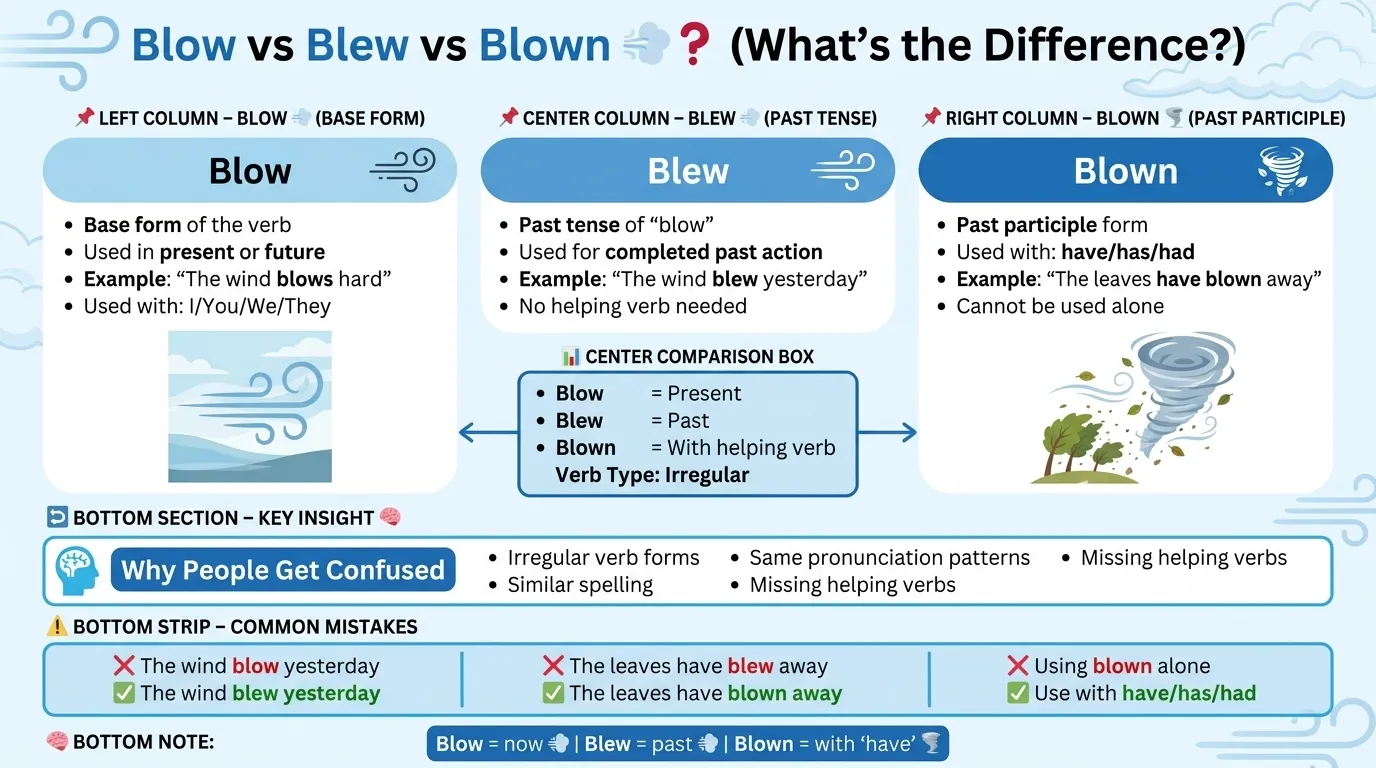
“Blow” is present, “blew” is past, and “blown” is used with helping verbs.
This is a very common confusion in English grammar. Many learners mix these forms and say things like “I have blew it” instead of “I have blown it.”
👉 Quick rule: Blow = present, Blew = past, Blown = with have/has/had.
People often search: “blow vs blew vs blown,” “when to use blown,” “is I have blew correct,” and “past tense of blow.”
This article gives a clear and simple explanation. You will learn meanings, grammar rules, examples, and common mistakes so you can use all three forms correctly in speaking and writing.
Blow, Blew, or Blown: Quick Answer ✅
All three come from the verb “blow,” but they are used in different tenses.
✔ Main Difference:
- Blow → present tense
- Blew → past tense
- Blown → past participle (used with helping verbs)
📌 Examples:
- ✔ The wind blows strongly.
- ✔ The wind blew last night.
- ✔ The wind has blown all day.
👉 Simple rule:
Blow = now | Blew = past | Blown = with helper
Blow, Blew, or Blown : Definitions with Examples 📖
🟢 Blow (Definition)
Base form used for present tense or general actions.
📌 Examples:
- The wind blows every evening.
- Please blow out the candles.
- He likes to blow balloons.
🔵 Blew (Definition)
Past tense of “blow,” used for completed actions.
📌 Examples:
- The wind blew very hard yesterday.
- She blew out the candles.
- He blew the whistle.
🟣 Blown (Definition)
Past participle used with helping verbs like have, has, or had.
📌 Examples:
- The wind has blown all night.
- She has blown the dust away.
- They had blown the opportunity.
🟡 Simple Meaning
- Blow → present
- Blew → past
- Blown → with have/has/had
The Origin of Blow, Blew, or Blown 📜
These forms come from Old English “blāwan,” meaning to blow or breathe air.
Development:
- Blow → base form
- Blew → past tense
- Blown → past participle
Why confusion happens:
- Similar sounding forms
- Irregular verb pattern
- Learners forget helping verbs
👉 That’s why mistakes like “I have blew it” happen.
British English vs American English Usage 🌍
📌 Key Point:
There is no difference between UK and US usage.
📊 Comparison Table:
| Form | UK Usage | US Usage | Function |
| Blow | Same | Same | Present |
| Blew | Same | Same | Past |
| Blown | Same | Same | Past participle |
👉 The difference is grammar-based, not regional.
Which Form Should You Use? 🎯
✔ Use “Blow” When:
- Talking about present or general actions
- Giving instructions
✔ Use “Blew” When:
- Talking about something that already happened
- No helping verb is used
Use “Blown” When:
- Using have / has / had
- Talking about completed actions
🧠 Memory Trick (Easy)
👉 Blown = needs a helper
👉 Blew = already happened
👉 Blow = now
Common Mistakes with Blow, Blew, or Blown ❌⚠️
1. Using “Blew” with Helping Verb
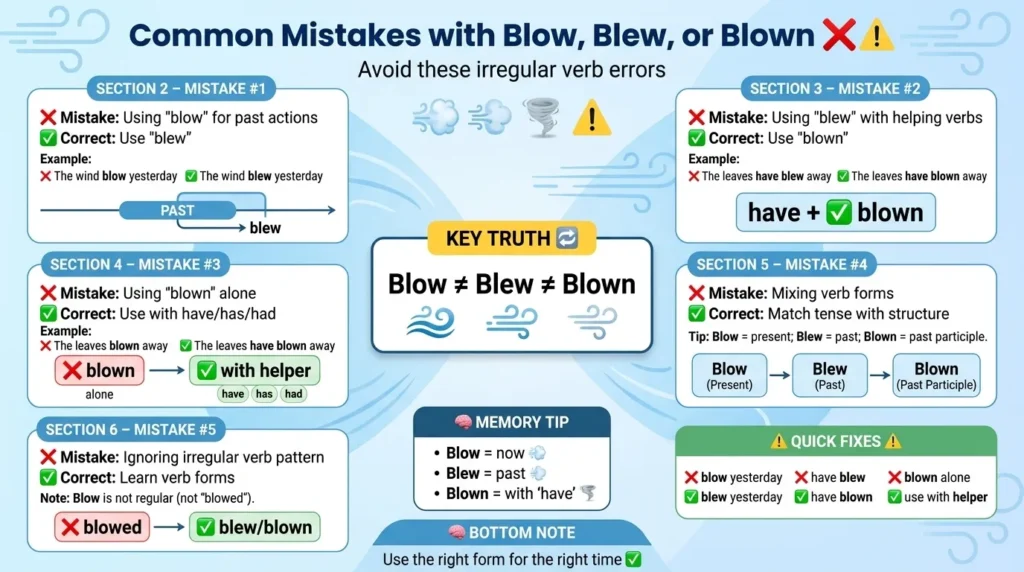
❌ I have blew it.
✔ I have blown it.
2. Using “Blown” Without Helper
❌ The wind blown yesterday.
✔ The wind blew yesterday.
3. Mixing All Forms
❌ He has blew the whistle.
✔ He has blown the whistle.
4. Forgetting Irregular Pattern
✔ Remember: blow → blew → blown
Blow, Blew, or Blown in Everyday Examples 💬
🏠 Daily Life
- The wind blows in winter.
- The wind blew last night.
- The wind has blown strongly today.
📱 Social Media
- Candles blown out 🎂
- He blew his chance!
📚 School Writing
- Air blows through the pipe.
- The storm blew the roof away.
- The wind has blown debris around.
💼 Professional Writing
- The system blows air continuously.
- Strong winds blew across the region.
- The storm has blown power lines down.
Blow, Blew, or Blown: Usage Trends & Popularity 📊
📌 Trend Insight:
- Blow → used in present or instructions
- Blew → common in storytelling (past)
- Blown → used in perfect tenses
📊 Key Observation:
Mistakes like “have blew” are common but incorrect.
👉 Correct usage improves clarity and professionalism.
Comparison Table 📋⚖️
| Feature | Blow | Blew | Blown |
| Verb Form | Base | Past | Past participle |
| Time | Present | Past | Completed (with helper) |
| Needs Helper? | No | No | Yes |
| Example | Blow air | Blew air | Has blown air |
Common User Queries 🔍
- What is the difference between blow, blew, and blown?
- Is “I have blew” correct?
- What is the past tense of blow?
- When should I use blown?
- What is the past participle of blow?
- How to use blew in a sentence?
- Can I say “the wind blown”?
- Why is “have blown” correct?
- How to remember blow vs blew vs blown?
- Are these forms irregular verbs?
FAQs ❓
1. What is the past tense of blow?
✔ Blew
2. What is the past participle?
✔ Blown
3. Is “I have blew” correct?
❌ No
4. What is correct?
✔ I have blown
5. Does “blown” need a helping verb?
✔ Yes
6. Can “blew” be used with have?
❌ No
7. Easy rule?
✔ Blow = now, Blew = past, Blown = helper
Conclusion 🧾📌
“Blow,” “blew,” and “blown” are different forms of the same verb, but they are used in different grammatical situations.
“Blow” is the base form used in the present tense. “Blew” is the past tense used for actions that already happened. “Blown” is the past participle and must be used with helping verbs like “have,” “has,” or “had.”
The most common mistake is mixing “blew” and “blown,” especially in sentences with helping verbs. For example, saying “I have blew it” is incorrect. The correct form is “I have blown it.”
There is no difference between British and American English usage. The rules are the same everywhere, so once you understand the pattern, you can use it confidently in any context.
👉 Simple takeaway: Blow = present, Blew = past, Blown = with have/has/had.
Discover More Articals!
Starring or Staring: What’s the Difference? (2026)
Send or Sent: What’s the Difference? In 30 Seconds
Recognise or Recognize: Which Spelling Is Correct?

I am Sophia Martinez.I am an ESL grammar coach. I specialize in teaching English to non native speakers. My content focuses on commonly confused words like affect vs effect, their vs there, and verb tense comparisons. Sophia writes in a friendly, supportive tone designed to build confidence in learners.