
Aspirin and ibuprofen are both pain relieving medications, but they work differently. Aspirin is an older drug, often used for heart health, while ibuprofen is a newer NSAID for pain and inflammation.
Many people search for this comparison to know which is safe for headaches, fever, or chronic conditions. Confusion arises because both relieve pain but have different side effects and dosages.
This guide explains the differences, origins, proper use, and common mistakes. By the end, you will clearly know when to use aspirin or ibuprofen safely for different situations.
Ibuprofen or Aspirin: Quick Answer
- Aspirin: Reduces pain, inflammation, and fever. Prevents blood clots. Best for heart protection.
- Ibuprofen: Reduces pain, inflammation, and fever. Ideal for headaches, arthritis, and muscle pain.
Example:
- Aspirin: 81 mg daily to reduce heart attack risk.
- Ibuprofen: 200 :400 mg for headache or joint pain.
Both are NSAIDs, but aspirin affects platelets, making it unique for cardiovascular use. Ibuprofen is preferred for general pain and inflammation.
Aspirin vs Ibuprofen: Common Search Questions Explained
Many people search phrases like “aspirin vs ibuprofen,” “ibuprofen vs aspirin,” or “difference between aspirin and ibuprofen” because they want a quick, clear comparison.
A very common question is: Are aspirin and ibuprofen the same thing?
The answer is no.
While both belong to the NSAID (nonsteroidal anti-inflammatory drug) family, they work differently in the body.
For example:
- People often ask “is ibuprofen aspirin?” or “is ibuprofen the same as aspirin?”
→ Ibuprofen is not aspirin. They are separate medications with different effects. - Another frequent query is “aspirin or ibuprofen for headaches?”
→ Ibuprofen is usually preferred for headaches because it reduces inflammation more effectively. - Some also compare brand names like “Advil vs aspirin” or “Motrin vs aspirin.”
→ Advil and Motrin are brand names for ibuprofen, not aspirin. - Medical comparisons like “acetylsalicylic acid vs ibuprofen” also appear in searches.
→ Acetylsalicylic acid is the scientific name for aspirin.
Simple takeaway:
Aspirin is mainly used for heart health and blood thinning, while ibuprofen is better for pain and inflammation relief.
The Origin of Aspirin vs Ibuprofen
- Aspirin: Discovered in 1897 by Felix Hoffmann (Bayer). Derived from willow bark (salicin). Initially used for pain and fever. Later approved for heart disease prevention.
- Ibuprofen: Developed in 1961 by Stewart Adams. Became widely available in the 1970s. Designed to reduce inflammation with fewer stomach side effects than aspirin.
Aspirin has a long history in medicine. Ibuprofen was designed to be safer and more versatile for daily pain relief.
British English vs American English Spelling
Both words are spelled the same in British and American English. Brand names may vary slightly.
| Term | British | American |
| Aspirin | Aspirin | Aspirin |
| Ibuprofen | Ibuprofen | Ibuprofen |
| Paracetamol | Paracetamol | Acetaminophen |
| Analgesic | Analgesic | Analgesic |
| Dosage | Dosage | Dosage |
No alternate spellings exist, so writing is consistent globally.
Which Spelling Should You Use?
Use aspirin and ibuprofen the same worldwide.
- United States: Aspirin, ibuprofen
- UK/Commonwealth: Aspirin, ibuprofen
- Global: Standard spelling is recommended
Incorrect forms like “ibuprofin” or “asprin” should be avoided for credibility and clarity.
Common Mistakes with Aspirin or Ibuprofen
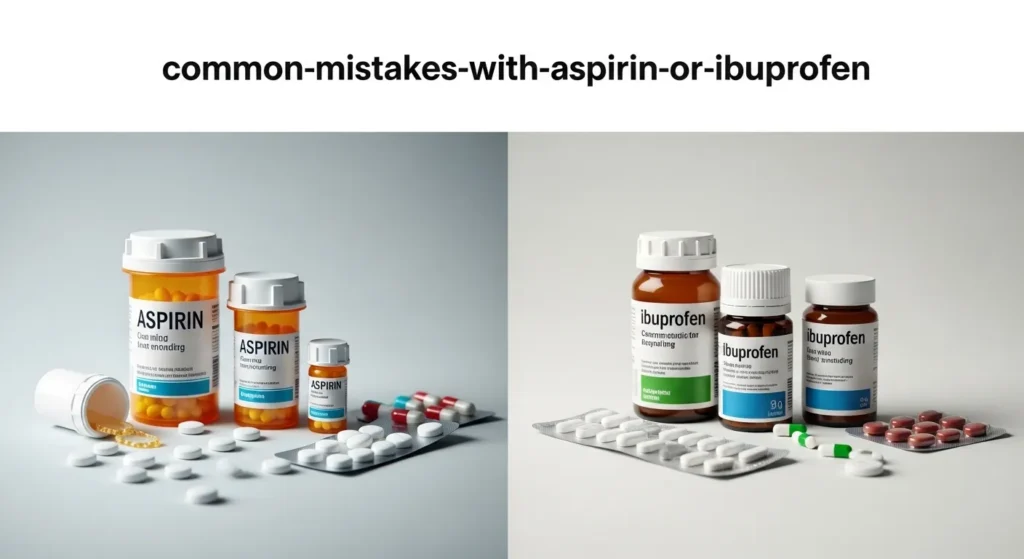
- Mixing purposes: Taking aspirin for general pain instead of heart protection.
- Overuse: Exceeding daily limits, causing stomach bleeding.
- Ignoring allergies: Some people are allergic to NSAIDs.
- Drug interactions: Aspirin interacts with blood thinners; ibuprofen may affect kidneys.
- Confusing dosage: Adults vs children dosing is different.
Tips:
- Always read labels carefully.
- Consult a doctor if taking other medications.
- Avoid combining NSAIDs unless advised by a professional.
Aspirin or Ibuprofen in Everyday Examples
Emails:
- “Take ibuprofen 200 mg for headache relief.”
- “Daily low dose aspirin helps prevent heart attacks.”
News:
- “Aspirin reduces risk of heart attack in at-risk adults.”
- “Ibuprofen is effective for joint inflammation and muscle pain.”
Social Media:
- Instagram: “Ibuprofen works wonders for cramps! #PainRelief”
- Twitter: “Low-dose aspirin daily may protect your heart. #HealthTips”
Formal Writing:
- “Aspirin inhibits platelet aggregation, while ibuprofen reduces inflammation by blocking COX enzymes.”
Aspirin or Ibuprofen: Google Trends & Usage Data
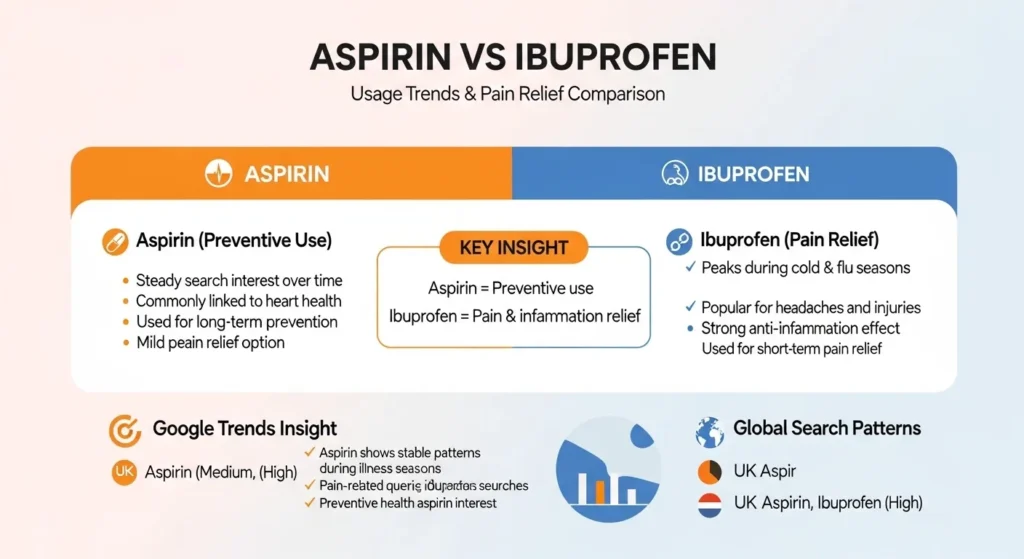
- Aspirin: Steady searches, often linked to heart health.
- Ibuprofen: Peaks during cold/flu season, headache, or sports injuries.
Popularity by Country:
| Country | Aspirin Searches | Ibuprofen Searches |
| USA | Medium | High |
| UK | Medium | High |
| India | Low | High |
| Australia | Medium | Medium |
Aspirin is more preventive; ibuprofen is more reactive for pain and inflammation.
Aspirin or Ibuprofen Comparison Table
| Feature | Aspirin | Ibuprofen |
| Drug Type | NSAID | NSAID |
| Strength | Moderate | Moderate |
| Prescription | OTC | OTC |
| Primary Use | Heart protection, pain, fever | Pain, inflammation, fever |
| Typical Dose | 81 :325 mg daily (heart) | 200 :400 mg per dose |
| Side Effects | Stomach bleeding, allergy | Stomach upset, kidney issues |
| Pediatric Use | Usually avoided | Safe under guidance |
| Blood Thinning | Yes | No |
Ibuprofen or Aspirin: Meaning, Differences & Usage Clarified
Search queries like “aspirin versus ibuprofen,” “aspirin or ibuprofen,” or “nsaid aspirin vs ibuprofen” often come from people trying to understand real-world usage.
Here’s a clearer breakdown:
- “Is aspirin different than ibuprofen?”
→ Yes. Aspirin affects blood clotting, while ibuprofen mainly targets pain and inflammation. - “Is ibuprofen like aspirin?”
→ They are similar in category (NSAIDs) but not identical in function. - “Aspirin vs ibuprofen for headache”
→ Ibuprofen is generally more effective for short-term pain like headaches. - “Aspirin or Advil — which is better?”
→ Depends on the need:- Heart protection → Aspirin
- Pain relief → Ibuprofen (Advil)
- “Is aspirin the same as Advil or Motrin?”
→ No. Advil and Motrin are ibuprofen-based, not aspirin.
In simple terms:
- Aspirin = long-term protection (especially heart-related)
- Ibuprofen = short-term relief (pain, fever, inflammation)
FAQs:
1. Can I take aspirin and ibuprofen together?
Not usually. Ibuprofen may reduce aspirin’s heart benefits. Consult a doctor.
2. Which is better for headache?
Ibuprofen is generally more effective for acute pain.
3. Can children take aspirin or ibuprofen?
Ibuprofen is safe for children; aspirin is avoided due to Reye’s syndrome risk.
4. Can I take aspirin daily?
Low-dose aspirin is safe for heart protection under doctor supervision.
5. Is ibuprofen safe for long-term use?
Long-term use may affect kidneys or stomach. Consult a doctor.
6. Which is better for fever?
Both work, but ibuprofen may reduce fever faster.
7. Can aspirin cause stomach bleeding?
Yes, especially at high doses or with alcohol.
Conclusion
Aspirin and ibuprofen are both effective medications but serve different purposes. Aspirin is unique for heart protection and blood thinning. Ibuprofen is preferred for general pain, inflammation, and fever.
Both belong to the NSAID family but act differently. Proper dosing, awareness of side effects, and consulting a doctor are essential.
Aspirin should not be used in children due to Reye’s syndrome risk, while ibuprofen is safe with guidance.
Always use sunscreen if outdoors while taking NSAIDs for inflammation, as some can make skin more sensitive. Understanding these differences helps prevent misuse and improves safety.
Correct spelling ensures clarity in emails, social media, and formal writing. Use aspirin for heart and mild pain, ibuprofen for acute pain or inflammation.
With proper use, both drugs can safely relieve pain, reduce inflammation, and protect health. Knowing when to choose aspirin or ibuprofen ensures effective, safe, and confident use in everyday life.
Discover More Posts!
Were or We’re: Understanding the Difference and Correct Usage📚
Sow or Sew: Which One Is Correct and When to Use Each?
Sari or Saree: What Is the Correct Spelling?

My name is James Whitmore.I am a language research writer. I explore the history and evolution of English words. I write detailed comparisons explaining why spellings change over time and how British and American English diverged. My articles add depth and credibility to grammar comparison topics.