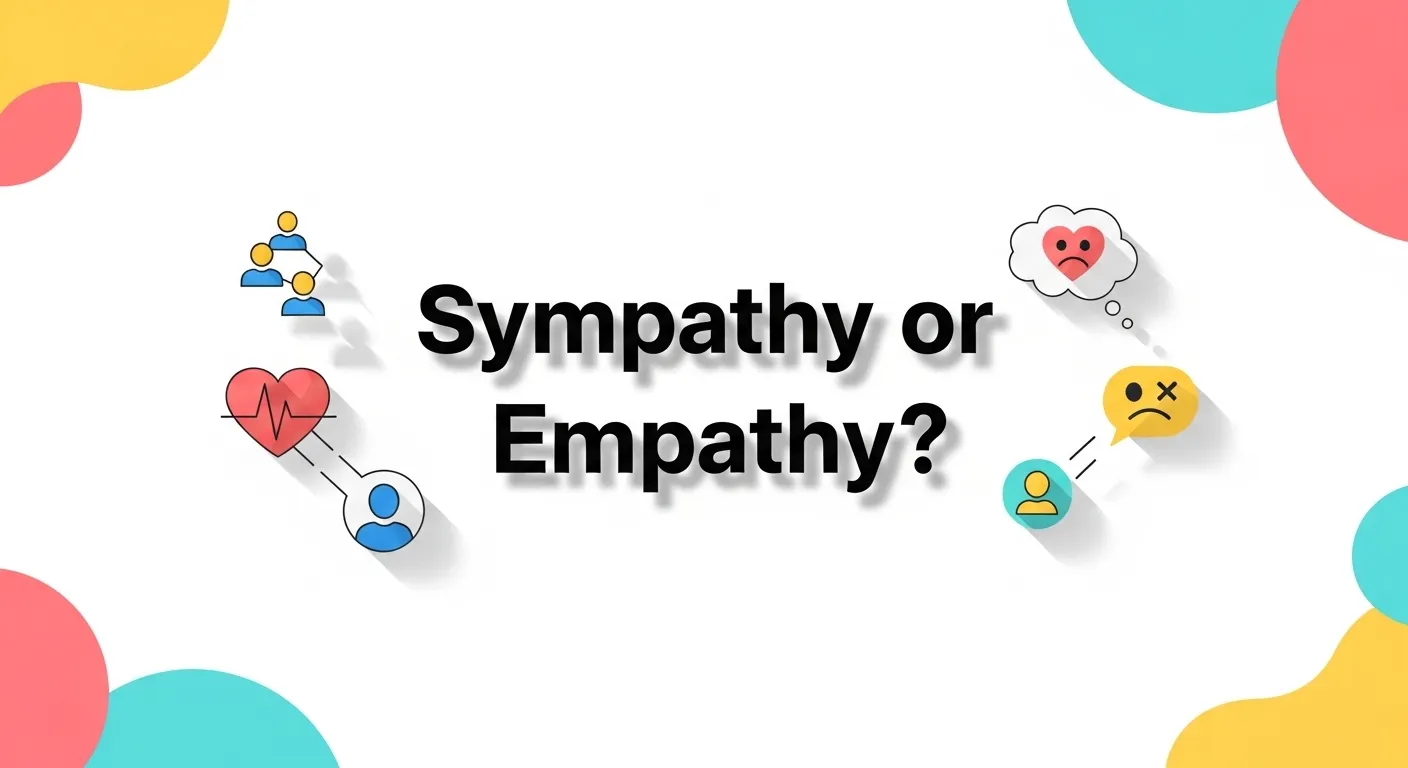
Sympathy and empathy are often confused. Sympathy is feeling care or concern for someone’s situation.
Empathy is understanding and sharing someone’s emotions. People search for this because they want to communicate feelings correctly.
Using the wrong word can make messages seem insensitive. If in writing, conversation, or therapy, knowing the difference matters.
This guide explains both words, their origins, differences in meaning, examples, common mistakes, and professional advice.
Sympathy or Empathy: Quick Answer
- Sympathy: Feeling pity or concern for someone’s misfortune.
- Empathy: Understanding and sharing someone’s emotions or experiences.
Example 1 : Sympathy:
- “I felt sympathy for her after she lost her job.”
Example 2 : Empathy:
- “I felt empathy because I also experienced losing a job.”
Quick Tip: Sympathy = care; Empathy = shared feeling.
The Origin of Sympathy and Empathy
- Sympathy comes from Greek “sympatheia”, meaning “fellow feeling.”
- Empathy comes from Greek “em-” (in) + “pathos” (feeling), meaning “feeling into.”
Sympathy has been used in English since the 1600s. Empathy entered English in the early 1900s, mainly in psychology and art criticism.
- Sympathy = caring from the outside
- Empathy = feeling from the inside
British English vs American English Usage
| Feature | British English | American English |
| Sympathy | Commonly used in everyday writing | Same meaning, frequently used |
| Empathy | Used in formal writing, education, psychology | Same meaning, widely used |
| Emotional Nuance | Sympathy = pity, compassion | Empathy = deep understanding |
| Examples | “I have sympathy for his loss.” | “I empathize with his struggle.” |
Tip: Both words are widely recognized in the US and UK, but empathy is more formal.
Which Word Should You Use?
- Emails and casual conversation: Use sympathy if you want to express concern.
- Therapy, counseling, or formal writing: Use empathy to show deep understanding.
- Social media posts: Empathy resonates more with readers who relate emotionally.
- Business or professional communication: Sympathy works for polite acknowledgment; empathy works for building connections.
Common Mistakes with Sympathy or Empathy
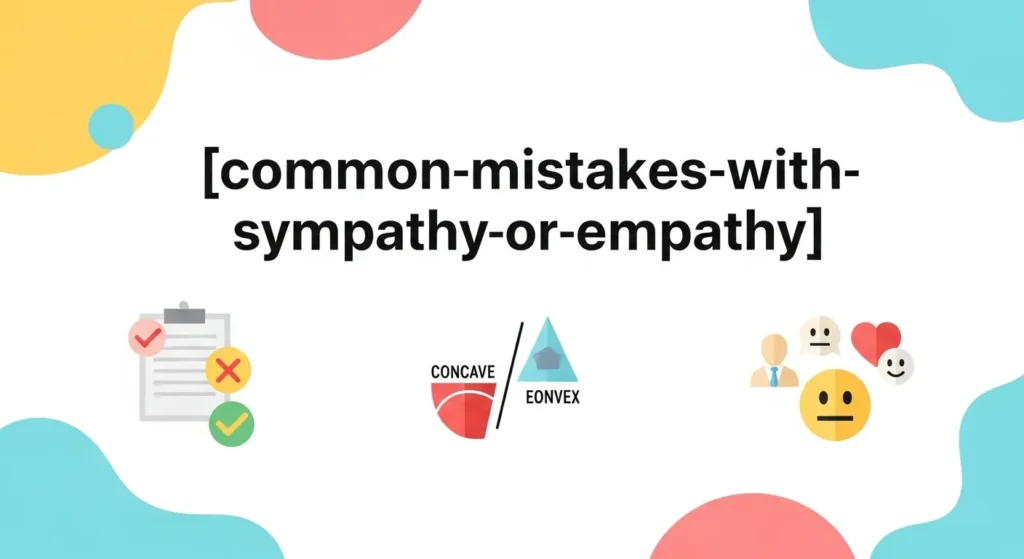
- Using sympathy when empathy is needed: “I feel sympathy” instead of “I empathize.”
- Thinking empathy means agreeing: Empathy is understanding, not necessarily agreeing.
- Overusing sympathy: Can sound pitying or distant.
- Mixing up verbs: “I sympathize with your joy” is incorrect; empathy fits better.
- Assuming one-size-fits-all: Context matters: personal vs professional tone.
Correct Examples:
- “I sympathize with your loss” ✅
- “I empathize with your struggles” ✅
- “I feel sympathy with your happiness” ❌
Sympathy or Empathy in Everyday Examples
Emails:
- Sympathy: “I am sorry to hear about your accident and send my sympathies.”
- Empathy: “I understand how stressful this situation must be for you.”
News:
- Sympathy: “The city expressed sympathy to families affected by the floods.”
- Empathy: “Volunteers showed empathy by helping families rebuild their homes.”
Social media:
- Sympathy: “Sending love and sympathy to all affected by the storm.”
- Empathy: “I understand your struggle and stand with you in this tough time.”
Formal writing:
- Psychology papers prefer empathy to show understanding of human emotions.
Sympathy or Empathy: Google Trends & Usage Data
- Sympathy is searched more by people looking for expressions of care.
- Empathy is trending in psychology, self-help, leadership, and education.
- Both terms spike during crises, disasters, or emotional events.
Insight:
- Use sympathy for polite concern.
- Use empathy for connection, understanding, and shared experiences.
Comparison Table: Sympathy vs Empathy
| Feature | Sympathy | Empathy |
| Meaning | Feeling concern or pity | Understanding and sharing feelings |
| Origin | Greek “sympatheia” | Greek “empathia” |
| Usage | Casual, polite | Emotional, deep, psychological |
| Verb Form | sympathize | empathize |
| Emotional Depth | External care | Internal understanding |
| Common Mistakes | Overuse, pity | Confusing with agreement |
| Example | “I feel sympathy for her loss.” | “I feel empathy because I experienced the same.” |
FAQs About Sympathy and Empathy
1. Can you feel both sympathy and empathy?
- Yes, you can care for someone (sympathy) and also understand their feelings (empathy).
2. Is empathy better than sympathy?
- Not better, but deeper. Empathy shows shared experience; sympathy shows concern.
3. Can sympathy feel fake?
- Yes, if it’s overused or not sincere. Empathy feels more genuine.
4. What is the verb form of empathy?
- Empathize.
5. Can children understand empathy?
- Children can feel empathy, but it develops fully with age and experience.
6. Which is more professional: sympathy or empathy?
- Empathy is more professional, especially in counseling, leadership, and therapy.
7. Can sympathy be negative?
- It can sound pitying or distant if overused.
Conclusion
Knowing the difference between sympathy and empathy is crucial for clear communication. Sympathy means care or concern, while empathy means understanding and sharing feelings.
Use sympathy in casual or polite situations. Use empathy in therapy, counseling, leadership, or emotional writing.
Always match the word to your audience: empathy resonates deeper, sympathy shows kindness. Avoid mixing them, especially in professional writing.
Use short, clear sentences to ensure readers immediately grasp your meaning. Correct usage avoids miscommunication and builds genuine connections.
If in emails, social media, or formal reports, knowing when to sympathize or empathize strengthens your writing and relationships.
Related More Posts!
Between or Among: What’s the Difference?

thinkaora.com is my English grammar comparison website where I simplify confusing words, spelling differences, and usage rules through clear explanations and examples. My goal is to help learners, writers, and students understand English easily and use correct grammar with confidence.