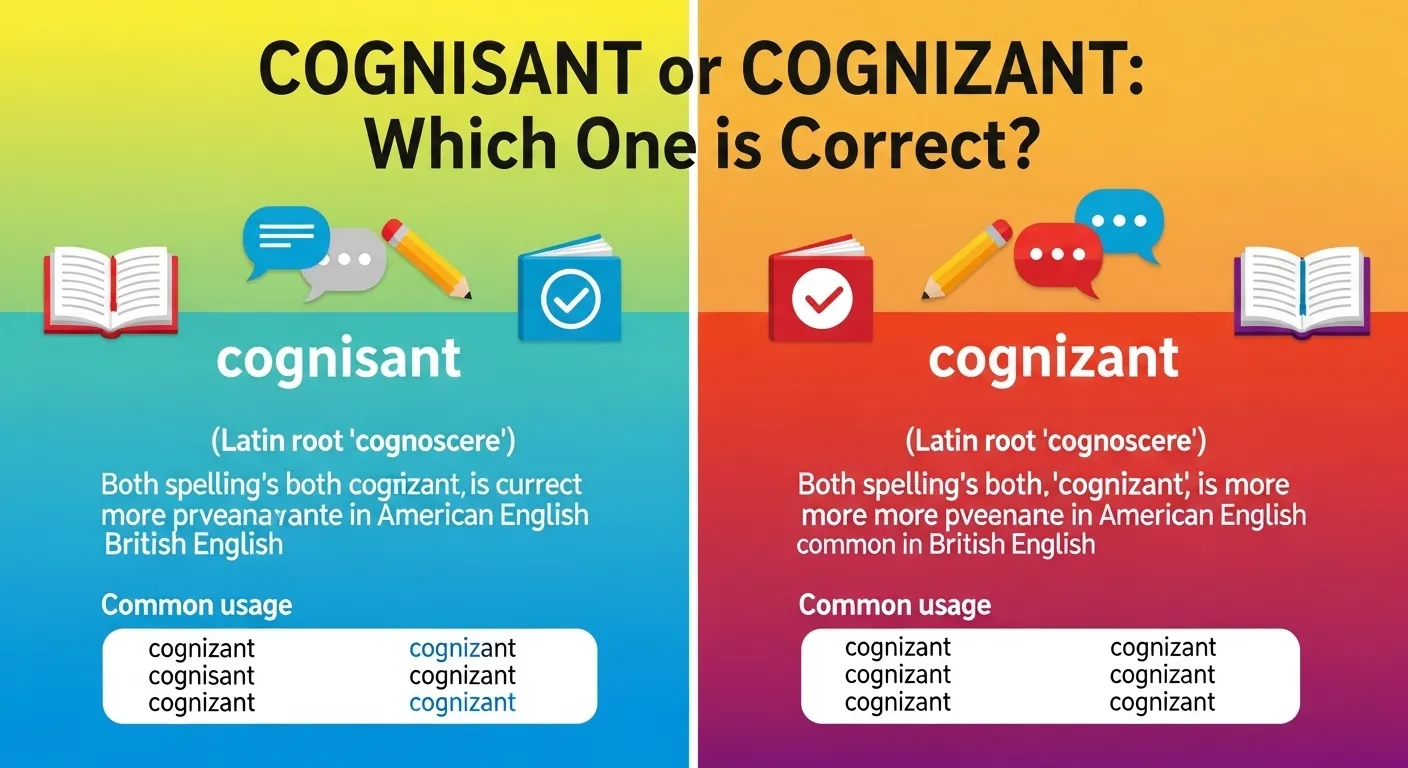
The correct spelling depends on where you are: “cognisant” is British English, while “cognizant” is American English.
Many people get confused between these two because they sound the same and share the same meaning being aware, informed, or conscious of something.
Understanding which spelling to use can prevent mistakes in writing, professional communication, and academic work.
People often search for this because they want to write confidently without worrying about appearing incorrect.
This guide explains the difference, origin, correct usage, common mistakes, and practical examples, so you’ll know exactly which form fits your audience and context.
Cognisant or Cognizant: Quick Answer
Both cognisant and cognizant mean “aware of” or “having knowledge of something.”
- Cognisant → British English
- Cognizant → American English
Examples:
- UK: She was fully cognisant of the risks involved.
- US: He was cognizant of his responsibilities at work.
Both forms are correct but must match the variety of English you are using. Using the wrong form can appear unprofessional in formal writing.
The Origin of Cognisant / Cognizant
The word comes from the Latin “cognoscere”, meaning “to know.” Over time, it entered Middle French as “cognosant”, and later English adopted it in two forms.
- Cognisant : Adopted by British English, retaining the “s” typical in words like “organise” or “realise.”
- Cognizant : Adopted by American English, replacing “s” with “z,” a common US spelling preference (e.g., “realize,” “organize”).
The difference is purely orthographic; the meaning and pronunciation remain almost identical.
British English vs American English Spelling
Spelling differences often confuse writers. Here’s how cognisant and cognizant fit into the rules:
| Feature | British English | American English |
| Spelling | cognisant | cognizant |
| Common Patterns | ise/ yse endings, s in words like realise, organise | ize/ yze endings, z in words like realize, organize |
| Usage Context | UK, Australia, New Zealand, India | USA, Canada (sometimes), other American influenced writing |
| Example Sentence | She was cognisant of her duties. | He remained cognizant of deadlines. |
Tip: If you write for a global audience, pick one version and stick to it consistently.
Which Spelling Should You Use?
1. Audience Based Advice
- US readers: Use cognizant.
- UK, Australia, India: Use cognisant.
- Global audience: If unsure, American English is often more widely recognized online, but British English works for formal or Commonwealth audiences.
2. Academic & Professional Writing
- Journals and companies in the US prefer cognizant.
- UK based institutions and publications prefer cognisant.
Consistency is key; mixing the two forms can confuse readers.
Common Mistakes with Cognisant / Cognizant
- Mixing forms in one text
❌ He was cognisant of deadlines and cognizant of risks.
✅ He was cognizant of deadlines and risks. (US) - Misspelling with extra letters
❌ cogniscent / cognizent
✅ cognisant / cognizant - Wrong audience usage
Using cognizant in UK targeted content may seem “Americanized,” though still understandable. - Incorrect plural or verb forms
This word is adjective only, never pluralized. - Confusing pronunciation with spelling
Both forms are pronounced roughly as /ˈkɒɡnɪzənt/.
Cognisant / Cognizant in Everyday Examples
Emails:
- I am cognizant of the issues you raised and will address them promptly.
News Articles:
- The government is cognisant of the public’s concerns regarding the new policy.
Social Media Posts:
- Just to be cognizant, make sure you back up your files today!
Formal Writing:
- The committee remained cognisant of the legal implications throughout the negotiation.
Pro Tip: This word is formal, so it fits professional, academic, or official contexts more than casual conversations.
Cognisant / Cognizant: Google Trends & Usage Data
According to language usage studies and search trends:
- Cognizant dominates searches in the United States, making up over 85% of online mentions.
- Cognisant is preferred in the UK, Australia, and India, especially in government, education, and formal communications.
- Both forms have seen a steady usage pattern over the last decade, indicating stable recognition and relevance.
Observation: Writers targeting international audiences often prefer cognizant, while UK publications maintain cognisant.
Comparison Table: Cognisant vs Cognizant
| Feature | Cognisant | Cognizant |
| Language | British English | American English |
| Meaning | Aware, conscious | Aware, conscious |
| Pronunciation | /ˈkɒɡ.nɪ.sənt/ | /ˈkɑːɡ.nɪ.zənt/ |
| Usage Region | UK, Australia, India | USA, Canada, global US influenced content |
| Common Context | Formal writing, academic, professional | Business emails, corporate writing, journalism |
| Example Sentence | She was fully cognisant of her responsibilities. | He was cognizant of the deadlines. |
FAQs about Cognisant or Cognizant
1. Can I use cognizant in the UK?
Yes, readers will understand, but cognisant is the preferred spelling for British English.
2. Are the meanings different?
No, both mean aware or conscious of something.
3. Is one more formal than the other?
They are equally formal; the difference is regional.
4. How do I pronounce cognisant and cognizant?
- Cognisant: /ˈkɒɡ.nɪ.sənt/
- Cognizant: /ˈkɑːɡ.nɪ.zənt/
5. Is it okay to mix both spellings in one document?
No, always stick to one version for consistency.
6. Can I use these words in casual writing?
It’s better for formal or professional contexts; in casual speech, “aware” is simpler.
7. What is the root of the word?
Both come from Latin “cognoscere”, meaning “to know.”
Conclusion
Choosing between cognisant and cognizant is straightforward once you consider your audience.
Use cognisant for British English contexts UK, India, Australia and cognizant for American English or global US focused audiences.
Both forms mean the same: being aware, informed, or conscious of something. Maintaining consistency in your text is critical to appear professional, especially in emails, reports, or academic writing.
Common mistakes include mixing forms, misspelling, or using the wrong version for your audience.
Remember, this word is formal, so it fits better in official communications than casual conversations.
Using real life examples from emails, news articles, social media, and formal documents can help you internalize the correct usage.
Understanding its origin Latin cognoscere and historical spelling evolution clarifies why British English retained the “s” while American English uses “z.”
With these insights, you can confidently write cognisant or cognizant, impressing readers and avoiding errors.
Stick to your chosen form, know your audience, and the word will enhance the clarity and professionalism of your writing.
Related More Posts!
Tires or Tyres: Examples and Correct Usage 📝

I am Sophia Martinez.I am an ESL grammar coach. I specialize in teaching English to non native speakers. My content focuses on commonly confused words like affect vs effect, their vs there, and verb tense comparisons. Sophia writes in a friendly, supportive tone designed to build confidence in learners.