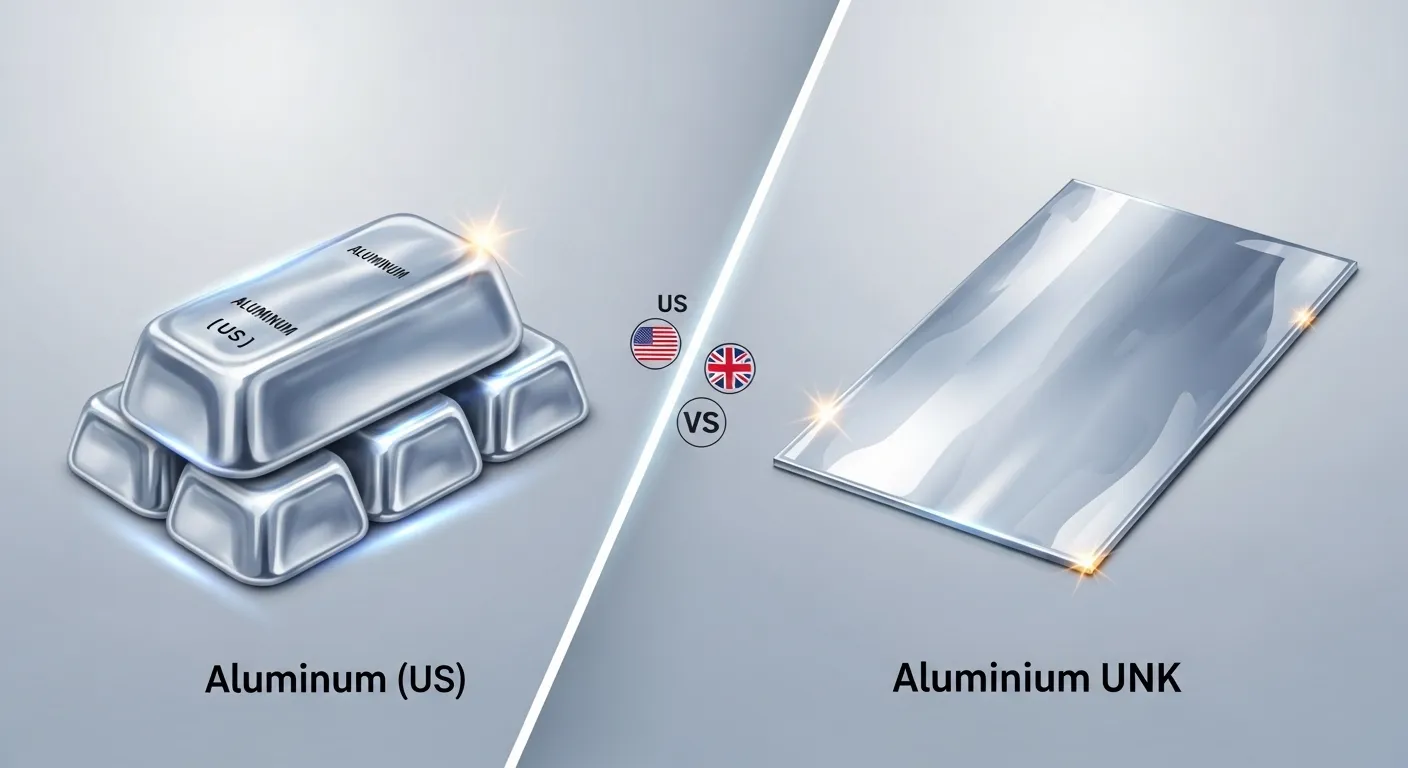
Aluminium and aluminum are two spellings of the same metal, and both are correct depending on where you are.
People often get confused because the spelling changes between British and American English.
Understanding the difference helps you write accurately in emails, articles, or reports. This guide will explain why the two spellings exist, when to use each, and how to avoid common mistakes.
By the end, you will know which spelling fits your audience and context, along with real-life examples and tips for using aluminium or aluminum confidently.
Aluminium or Aluminum: Quick Answer
Aluminium and aluminum refer to the same lightweight, silver-white metal used in aircraft, cans, foil, and construction.
- Aluminium → British English, Canadian English, Australian English.
- Aluminum → American English.
Example sentences:
- British English: “The plane is made of aluminium to reduce weight.”
- American English: “The soda can is made of aluminum.”
Both are chemically identical. The difference is only in spelling, not meaning or pronunciation.
The Origin of Aluminium
The word aluminium comes from alum, a chemical compound known since ancient times.
- In 1808, Sir Humphry Davy first isolated the metal.
- Davy initially called it alumium, then changed it to aluminum.
- By 1812, British chemists preferred aluminium to match other elements like sodium and potassium.
- American scientists continued using aluminum, and it became standard in the United States.
So, the spelling difference is historical and based on regional preferences.
British English vs American English Spelling
The main difference is simple:
| Feature | British English | American English |
| Spelling | aluminium | aluminum |
| Common usage countries | UK, Canada, Australia | USA |
| Example | “The aluminium foil is thin.” | “The aluminum foil is thin.” |
| Pronunciation | al-yoo-MIN-i-um | a-LOO-min-um |
Key point:
- If writing for a British audience, use aluminium.
- If writing for an American audience, use aluminum.
Which Spelling Should You Use?
The choice depends on your audience and location:
- United States → Always use aluminum.
- United Kingdom, Canada, Australia → Use aluminium.
- International / Global Audience → Consider your readers. Use aluminium for science papers or global English, but aluminum is acceptable for American readers.
Tip: When in doubt, check other documents or publications your audience reads to match the regional standard.
Common Mistakes with Aluminium or Aluminum
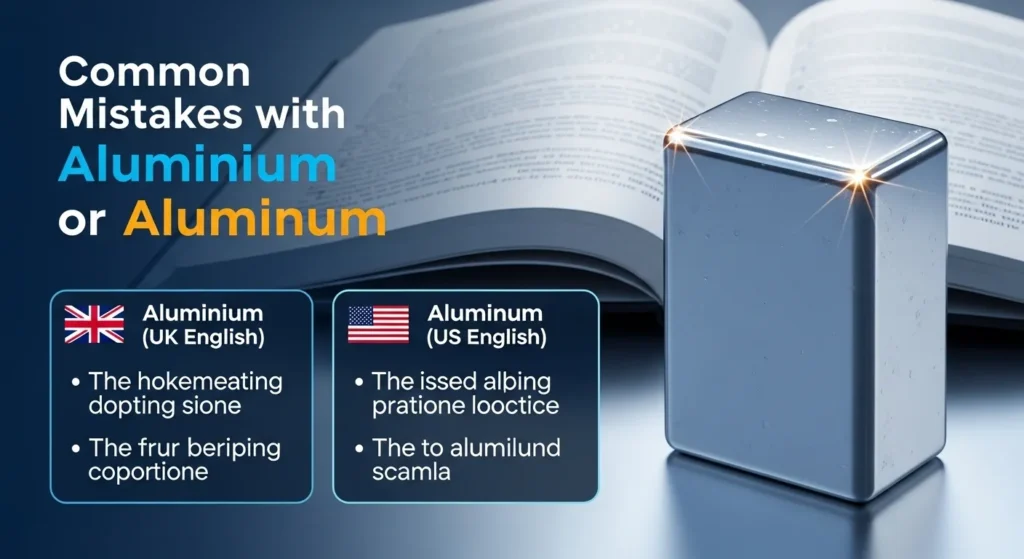
Many writers make simple mistakes with this word.
- Mixing spellings in the same document:
❌ “The aluminium can is made of aluminum.” → Confusing.
✅ “The aluminum can is lightweight.” - Incorrect plural forms:
❌ “Aluminums are strong.”
✅ “Sheets of aluminium are strong.” - Wrong pronunciation with wrong spelling:
❌ Saying al-LOO-min-i-um in the US spelling.
✅ Stick to al-LOO-min-um for American English and al-yoo-MIN-i-um for British English.
Pro tip: Pick one spelling and stick to it throughout your document.
Aluminium or Aluminum in Everyday Examples
Here’s how people use it in real life:
Emails & Workplace:
- “Please check the aluminium frames for the new windows.”
- “We need more aluminum sheets for production.”
News Articles:
- UK news: “The company recycles aluminium cans to save energy.”
- US news: “The plant produces aluminum for cars.”
Social Media Posts:
- Instagram: “DIY project using aluminium foil!”
- Twitter: “Lightweight aluminum bike frames are trending in the US.”
Formal Writing:
- Academic papers: Use the spelling that matches the style guide. UK journals → aluminium, US journals → aluminum.
Aluminium or Aluminum: Google Trends & Usage Data
Search trends show clear regional patterns:
- United States → “aluminum” is overwhelmingly searched.
- United Kingdom & Commonwealth countries → “aluminium” is preferred.
- Global audience → Both terms appear, but “aluminium” slightly leads in scientific contexts.
Observation: The spelling influences search results, technical articles, and product labeling.
Keyword Variations Comparison Table
| Term | Use Case / Region | Notes |
| Aluminium | UK, Canada, Australia, India | Standard British spelling |
| Aluminum | USA | Standard American spelling |
| Alumin(i)um | Academic / scientific writing | Either accepted; check style guide |
| Al foil | Informal / product labeling | Refers to sheets of the metal |
FAQs about Aluminium or Aluminum
1. Is aluminium or aluminum correct?
Both are correct. Use aluminium for British English and aluminum for American English.
2. Why do Americans say aluminum?
It follows the historical usage in the United States, which stuck with Sir Humphry Davy’s original “aluminum.”
3. Are they the same metal?
Yes, both refer to the same chemical element Al, atomic number 13.
4. How should I pronounce aluminium?
- British English: al-yoo-MIN-i-um
- American English: a-LOO-min-um
5. Can I mix the spellings in one document?
No. It looks unprofessional. Stick to one based on your audience.
6. Is aluminium more scientific?
Not necessarily. Both spellings are scientifically correct. British journals often prefer aluminium.
7. What is the plural form?
You don’t usually pluralize it. Say “sheets of aluminium” or “pieces of aluminum.”
Conclusion
Aluminium or aluminum is one of those words where the correct spelling depends entirely on your audience. In British English, aluminium is the standard, used in the UK, Canada, Australia, and other Commonwealth countries.
In American English, aluminum dominates. Both spellings refer to the same lightweight, durable metal with countless applications in construction, transportation, packaging, and everyday life.
Understanding the historical origin helps you remember why the difference exists. Sir Humphry Davy’s early naming and regional preferences caused the split that persists today.
To write professionally, choose your audience first: British readers expect aluminium, American readers expect aluminum, and global readers may accept either.
Avoid mixing spellings, check pronunciation, and follow style guides in formal documents. Using the right version shows attention to detail and enhances credibility.
If discussing materials in industry reports, writing news articles, or sharing DIY projects, the simple rule is: pick your audience, pick your spelling, and remain consistent. This way, you can confidently write about this versatile metal anywhere in the world.
Related More Posts!
Don’ts or Dont’s: Which One Is Correct and Why It Matters
Sargeant or Sergeant: Which Spelling Is Correct?📚
✅Companies or Company’s: Which One Is Correct ?

I am Sophia Martinez.I am an ESL grammar coach. I specialize in teaching English to non native speakers. My content focuses on commonly confused words like affect vs effect, their vs there, and verb tense comparisons. Sophia writes in a friendly, supportive tone designed to build confidence in learners.