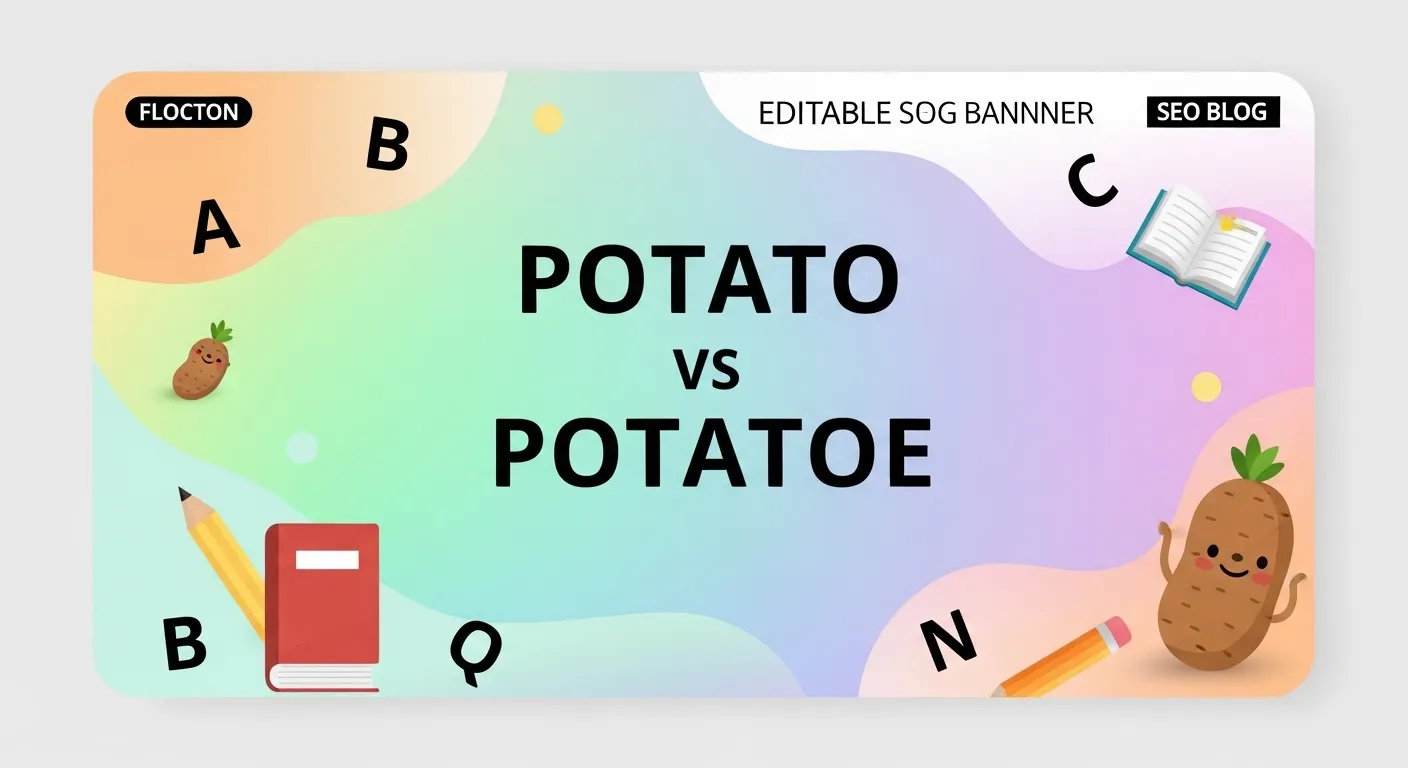
Potato is the correct spelling, not potatoe. Many people get confused between “potato” and “potatoe,” especially when typing quickly or recalling old spellings.
This confusion is common in emails, recipes, social media posts, and even educational contexts. People often wonder if “potatoe” is an alternative spelling or if it is acceptable in certain regions.
Understanding the correct spelling can help avoid embarrassing mistakes, improve writing clarity, and maintain professionalism.
In this article, we will explore the origins of the word, spelling differences, common mistakes, and clear guidelines for when to use “potato” correctly.
Potato or Potatoe: Quick Answer
Potato ✅
- This is the correct spelling in both American and British English.
- Example: “I bought fresh potatoes from the market.”
Potatoe ❌
- Incorrect spelling.
- Sometimes seen in informal writing or jokes.
- Famously misused by a U.S. politician, which caused confusion online.
Summary: Always use potato. The “e” at the end is not standard English.
The Origin of Potato or Potatoe
The word potato comes from the Spanish word patata, which itself was derived from the Taino word batata, meaning sweet potato. Potatoes were first brought to Europe in the 16th century and quickly became a staple crop.
- The spelling “potatoe” has no historical basis in English dictionaries.
- Early English texts sometimes had inconsistent spellings, but modern English standardized it to “potato.”
- The addition of “e” at the end seems to be a typographical or phonetic mistake.
Interesting fact: Even in early printings, some authors wrote “potatoe” accidentally, but it never became widely accepted. Today, dictionaries, cookbooks, and style guides confirm potato as the correct spelling.
British English vs American English Spelling
Both British and American English agree that potato is correct. However, there are slight differences in pluralization rules for words ending with “o” in general:
| Word | American English | British English | Notes |
| Potato | Potatoes | Potatoes | Both use “-es” for plural |
| Tomato | Tomatoes | Tomatoes | Same plural rule applies |
| Hero | Heroes | Heroes | Standardized in both |
| Zero | Zeros | Zeros | Some style guides allow “zeroes” in UK |
Key takeaway: The “potatoe” spelling is wrong in both US and UK English.
Which Spelling Should You Use?
- For all audiences: Always use potato.
- US readers: Stick with potato; “potatoe” is not recognized in dictionaries or style guides.
- UK/Commonwealth readers: Same rule—use potato.
- Global context: For formal writing, recipes, educational content, or media, potato is universally correct.
Tip: If you see “potatoe” in casual online posts or memes, treat it as a typo or joke.
Common Mistakes with Potato or Potatoe
- Incorrect pluralization
- ❌ “Potatoes are healthy.”
- ✅ “Potatoes are healthy.”
- ❌ “Potatoes are healthy.”
- Adding unnecessary “e”
- ❌ “I like baked potatoe.”
- ✅ “I like baked potato.”
- ❌ “I like baked potatoe.”
- Mixing with similar words
- ❌ “Patato, potatoe, potato?”
- ✅ “Potato is correct.”
- ❌ “Patato, potatoe, potato?”
- Using in professional documents
- ❌ Resume: “Experienced in potatoe cultivation.”
- ✅ Resume: “Experienced in potato cultivation.”
- ❌ Resume: “Experienced in potatoe cultivation.”
Remember: The “e” is always wrong unless you are quoting someone who misspelled it.
Potato or Potatoe in Everyday Examples
Emails:
- ❌ “Please add potatoe to the grocery list.”
- ✅ “Please add potato to the grocery list.”
News headlines:
- ❌ “Potatoe prices rise due to shortage.”
- ✅ “Potato prices rise due to shortage.”
Social media:
- ❌ “Love my potatoe chips!”
- ✅ “Love my potato chips!”
Formal writing:
- ❌ “The potatoe is an important crop.”
- ✅ “The potato is an important crop.”
Potato or Potatoe: Google Trends & Usage Data
Analyzing Google search trends:
- “Potato” dominates worldwide with millions of searches.
- “Potatoe” sees occasional spikes, mainly due to memes or viral incidents, but these are rare and not representative of standard usage.
Top countries using “potato” correctly:
- United States
- United Kingdom
- Canada
- Australia
- India
Insights: Online content, educational material, and recipe blogs overwhelmingly use potato, confirming its universal correctness.
Comparison Table: Potato vs Potatoe
| Feature | Potato | Potatoe |
| Correctness | ✅ Correct | ❌ Incorrect |
| Usage | US, UK, Global | Rare, mostly typo/joke |
| Plural | Potatoes | Potatoes (wrong) |
| Dictionary | Included | Not included |
| Example | “I love mashed potatoes.” | “I love mashed potatoes.” ❌ |
FAQs About Potato or Potatoe
1. Is potatoe ever correct?
No, “potatoe” is a misspelling. Always use “potato.”
2. Why do some people write potatoe?
Mostly due to phonetics, typos, or viral incidents in media.
3. How do you pluralize potato?
Potatoes add “-es” for plural.
4. Does British English allow potatoe?
No, British English uses potato as the correct form.
5. Can potatoe appear in jokes or memes?
Yes, but it’s informal and not accepted in professional writing.
6. Are there similar words with the same rule?
Yes: tomato → tomatoes, hero → heroes. Never add random “e.”
7. Is it important to correct potatoe in school assignments?
Absolutely. Teachers expect the standard spelling: potato.
Conclusion
In conclusion, the correct spelling is potato. “Potatoe” is always considered a mistake in English,If American, British, or global contexts.
Understanding this simple rule helps in writing emails, recipes, school assignments, news articles, and social media posts professionally.
While “potatoe” may occasionally appear in jokes, memes, or viral stories, it should never be used in formal or serious contexts.Pluralization follows the standard English rule: potatoes, not potatoes.
Remembering the origin of the word from Spanish patata can also reinforce why “e” is unnecessary. Consistently using potato ensures clarity, accuracy, and credibility in all writing.
Related More Posts!
Licences or Licenses: Grammar Rules Explained 📚

I am Sophia Martinez.I am an ESL grammar coach. I specialize in teaching English to non native speakers. My content focuses on commonly confused words like affect vs effect, their vs there, and verb tense comparisons. Sophia writes in a friendly, supportive tone designed to build confidence in learners.