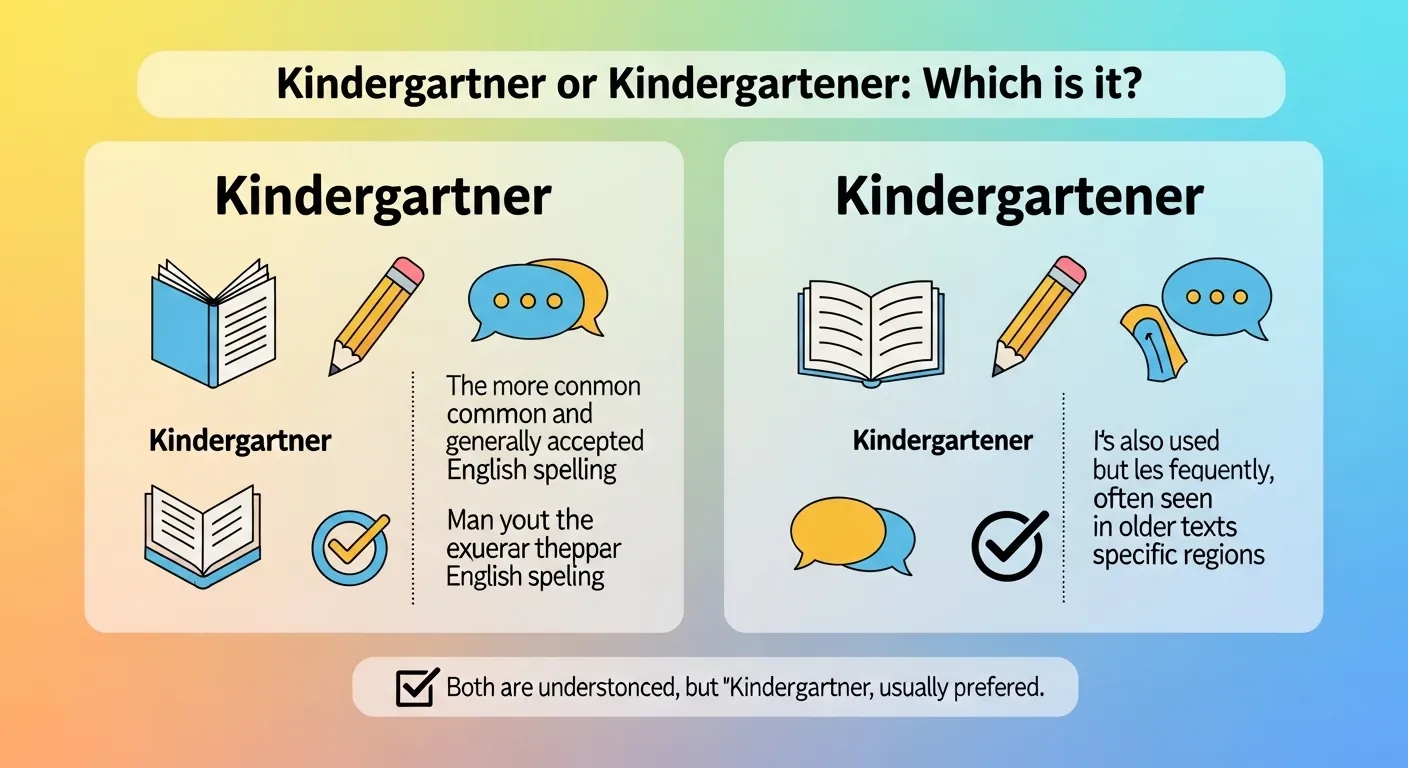
Kindergartner and kindergartener are both correct, but usage depends mostly on regional preference and style choice.
Many people search for kindergartner or kindergartener because both spellings appear in school documents, parenting blogs, teaching materials, and news articles.
The extra “e” creates uncertainty, especially for learners and writers who want consistency. Since the word refers to young children starting school, it is used often in education contexts, making clarity important.
This guide explains the difference in simple language. You will learn the origin of the word, regional patterns, common mistakes, real life examples, and helpful tips so you can confidently choose the right spelling in any situation.
Kindergartner or Kindergartener: Quick Answer
- Kindergartner is more common in American English.
- Kindergartener is also correct and widely accepted, especially in informal or conversational writing.
Both words refer to a child who attends kindergarten.
Examples:
- My daughter is a kindergartner this year.
- Every kindergartener received a welcome pack.
Quick tip: choose one spelling and stay consistent throughout your writing.
The Origin of Kindergartner or Kindergartener
The word kindergarten comes from German, meaning “children’s garden.” The term was introduced by educator Friedrich Fröbel in the 19th century to describe early childhood education focused on play and learning.
When English adopted the word, it needed a way to describe students attending kindergarten. English often adds endings like -er to create nouns for people (teacher, runner, painter). This produced kindergartner.
Later, some writers added an extra vowel sound, creating kindergartener, which feels more natural in spoken English because the original word is long. Over time, both forms became accepted, even though kindergartner remains slightly more common in formal usage.
British English vs American English Spelling
This pair does not follow the usual British vs American spelling differences like colour/color. However, usage trends vary slightly.
Comparison Table
| Aspect | American English | British English | Example |
| Preferred form | kindergartner | less commonly used term overall | My son is a kindergartner |
| Alternative form | kindergartener | accepted | Every kindergartener joined the activity |
| Meaning | Same | Same | Child in kindergarten |
In British education systems, the word “kindergarten” itself is less common, so both spellings appear less frequently compared to American usage.
Which Spelling Should You Use?
Your audience and tone help you decide.
- United States:
Use kindergartner in formal or educational contexts. Both forms are understood. - Canada and Australia:
Both spellings appear, though education systems may use different terms for early schooling. - United Kingdom:
The word may appear mainly in international or American-focused content. Either form is understandable. - Global audience:
Pick one spelling and stay consistent. Consistency improves readability.
Common Mistakes with Kindergartner or Kindergartener
Mistake 1: Thinking one spelling is incorrect
Both are acceptable in standard English.
Mistake 2: Mixing both forms in the same article
- ❌ Every kindergartner received a book, and each kindergartener joined an activity.
- ✅ Every kindergartner received a book, and each kindergartner joined an activity.
3: Misspelling due to word length
Because the word is long, typing errors are common. Double-check spelling carefully.
Kindergartner or Kindergartener in Everyday Examples
Emails
- My child is starting as a kindergartner next week.
- Each kindergartener must bring school supplies.
News Writing
- Local schools welcomed hundreds of new kindergartners.
- The program helps every kindergartener learn basic skills.
Social Media
- Proud parent of a new kindergartner!
- First day photos of my little kindergartener.
Formal Writing
- The study observed classroom behavior among kindergartners.
- Teachers developed activities for each kindergartener.
Kindergartner or Kindergartener: Google Trends & Usage Data
Search patterns show that many users compare these spellings because both appear in educational resources.
General usage trends include:
- Kindergartner appears slightly more often in school publications and formal educational writing.
- Kindergartener appears frequently in parenting blogs and conversational contexts.
Interest increases during school enrollment seasons, when parents and teachers write about early education experiences.
Comparison Table: Kindergartner vs Kindergartener
| Feature | Kindergartner | Kindergartener |
| Meaning | Child attending kindergarten | Same meaning |
| Regional usage | More common in US formal contexts | Also accepted |
| Length | Shorter | Slightly longer |
| Correctness | Correct | Correct |
| Example | New kindergartner joined class | New kindergartener joined class |
This table shows that both spellings work, with only minor stylistic differences.
FAQs: Kindergartner or Kindergartener
1. Are kindergartner and kindergartener the same?
Yes. Both refer to a child who attends kindergarten.
2. Is one spelling wrong?
No. Both forms are accepted in modern English.
3. Which spelling is more common?
Kindergartner is slightly more common in formal American usage.
4. Can I use kindergartener in professional writing?
Yes. It is widely understood and acceptable.
5. Why do two spellings exist?
English adapted a German word and created different endings that both became standard.
6. Does pronunciation change?
No. Both words are pronounced similarly.
7. Should I change spelling for different audiences?
You can adjust based on regional expectations, but consistency is most important.
Conclusion
The difference between kindergartner or kindergartener is mainly about preference rather than correctness. Both spellings describe a child attending kindergarten and carry the same meaning.
The shorter form, kindergartner, appears slightly more often in American educational contexts, while kindergartener feels more conversational and is also widely accepted.
Since the word comes from German origins, English adapted it in multiple ways, which explains why both versions exist today. Writers should focus on consistency and audience expectations rather than worrying about right or wrong choices.
Once you pick one spelling, use it throughout your writing to maintain clarity and professionalism. Understanding this small distinction helps you communicate more confidently when discussing early childhood education.
Related More Posts!
Fridays or Friday’s: Which One Is Correct? With In 30 Seconds

My name is James Whitmore.I am a language research writer. I explore the history and evolution of English words. I write detailed comparisons explaining why spellings change over time and how British and American English diverged. My articles add depth and credibility to grammar comparison topics.