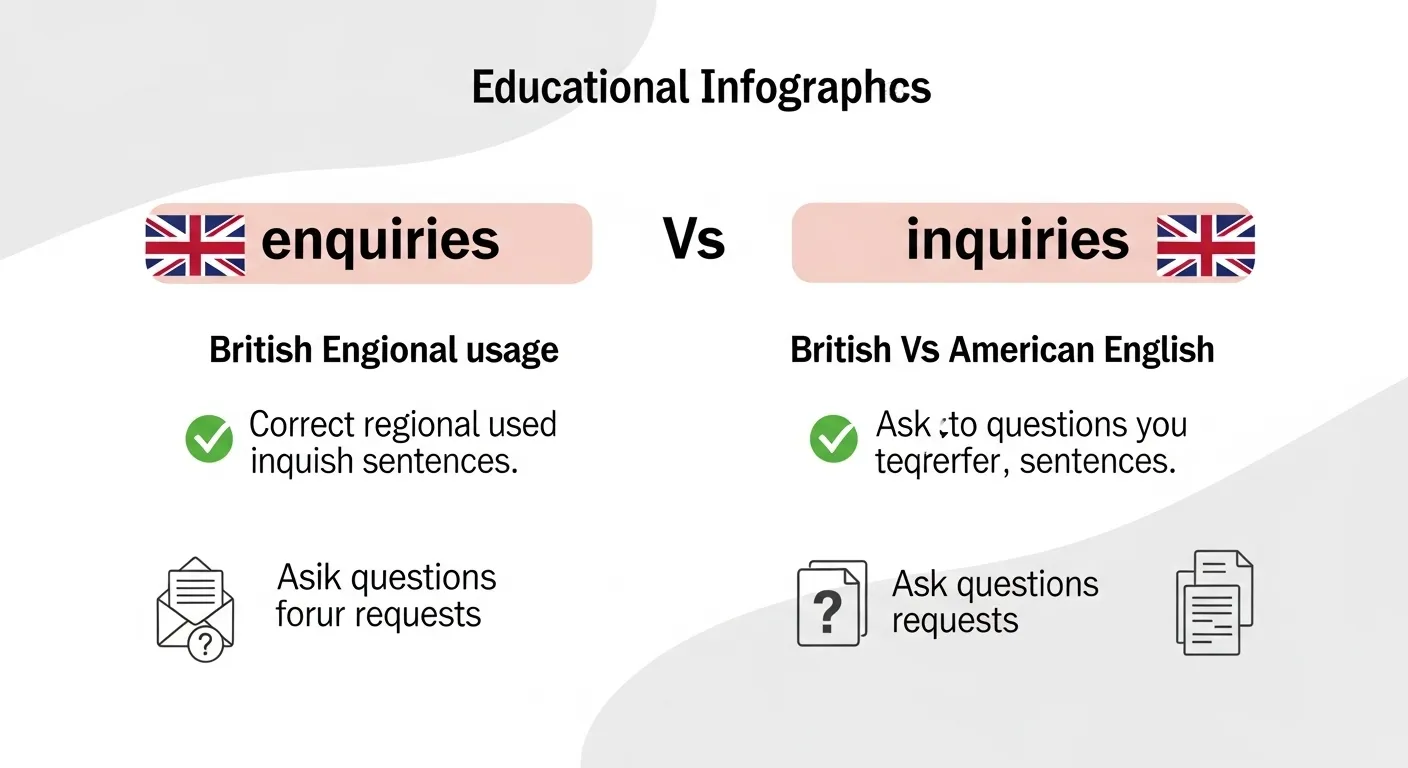
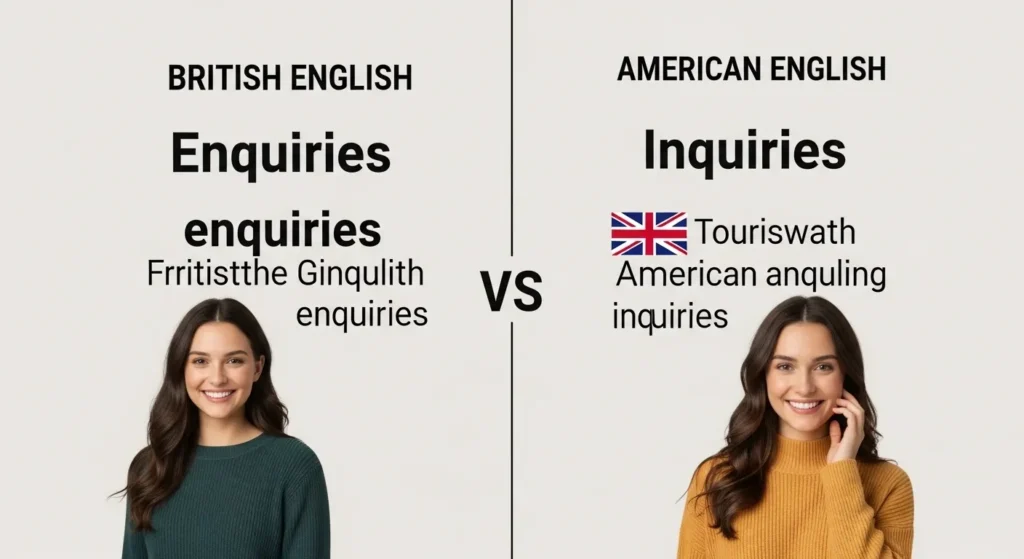
Both enquiries and inquiries are correct, but “enquiries” is British English and “inquiries” is American English. Many people feel confused when they see these two spellings online, in emails, or in official writing.
The words look almost the same, but the spelling changes based on location and language style. Writers often stop and wonder which version fits their situation. T
his confusion happens because English has different spelling traditions across countries. Some readers expect British spelling, while others expect American spelling.
Understanding the difference helps you avoid mistakes and communicate clearly. This guide explains the meaning, history, usage rules, and examples so you can choose the right form with confidence.
Enquiries or Inquiries: Quick Answer
Both words mean the same thing: asking a question or requesting information.
- Enquiries → Common in British English and many Commonwealth countries.
- Inquiries → Common in American English.
Examples:
- “For general enquiries, contact our support team.” (UK style)
- “Customer inquiries are handled by email.” (US style)
In simple terms:
| Spelling | Region | Meaning |
| Enquiries | UK, Australia, New Zealand | Asking questions |
| Inquiries | United States | Asking questions |
There is no difference in meaning. Only the spelling changes.
The Origin of Enquiries or Inquiries
The words come from the verb inquire, which has roots in Latin. The Latin word inquirere means “to seek,” “to search,” or “to ask about.” Over time, the word entered Old French as enquerre and later moved into Middle English.
During early English history, spelling was not fixed. Writers used both “enquire” and “inquire.” As English spread across regions, spelling habits began to change.
British writers often kept older forms like “enquire” and “enquiry.” American writers later simplified many spellings, choosing “inquire” and “inquiry” more often.
Language changes happen slowly. Printing presses, dictionaries, and education systems helped standardize spelling in different regions. British publishers kept “enquiry,” while American style guides promoted “inquiry.”
Even today, some British contexts use both forms:
- Enquiry for general questions.
- Inquiry for formal investigations.
However, modern usage often treats them as interchangeable in many situations.
Understanding this history helps explain why two spellings exist today. It is not a mistake; it reflects language evolution.
British English vs American English Spelling
English spelling varies between countries. Many words have two accepted forms. The difference between enquiries and inquiries follows this pattern.
British English often keeps traditional spellings, while American English prefers simplified forms.
Examples:
- Colour vs Color
- Centre vs Center
- Organise vs Organize
- Enquiry vs Inquiry
In British usage:
- “Enquiry” and “enquiries” appear in everyday writing.
- Some formal investigations may use “inquiry.”
In American usage:
- “Inquiry” and “inquiries” are standard for both casual and formal situations.
Comparison Table
| Feature | British English | American English |
| Main spelling | Enquiries | Inquiries |
| Everyday questions | Enquiries | Inquiries |
| Formal investigation | Inquiry (sometimes) | Inquiry |
| Common regions | UK, Ireland, Australia | USA |
| Style guides | Oxford, Cambridge | Chicago, AP |
These spelling differences reflect regional habits, not differences in meaning.
Which Spelling Should You Use?
Choosing the right spelling depends on your audience.
If your audience is American
Use inquiries.
American readers expect this form. It appears in business writing, education, and media across the United States.
Example:
- “Send your inquiries to our customer service department.”
If your audience is British or Commonwealth
Use enquiries.
This form feels natural for readers in the UK, Australia, New Zealand, and similar regions.
Example:
- “For booking enquiries, please call our office.”
If your audience is global
Pick one style and stay consistent.
Many international companies choose American spelling because it is widely recognized online. Others follow British spelling based on company origin.
Consistency matters more than the choice itself. Mixing both spellings in one document can look unprofessional.
Common Mistakes with Enquiries or Inquiries
Even experienced writers make errors with these words. Here are common problems and how to avoid them.
1. Mixing spellings in one document
Wrong:
- “Customer enquiries are welcome. All inquiries will be answered.”
Correct:
- Choose one style and use it everywhere.
2. Thinking they have different meanings
Some believe “enquiry” means casual questions and “inquiry” means formal investigation. This idea exists in some British contexts, but in everyday usage, both often mean simply asking questions.
3. Spelling errors
Common mistakes include:
- enquirys
- inquirys
- enquires (used as noun instead of verb form)
Correct plural forms:
- enquiries
- inquiries
4. Using regional spelling for the wrong audience
If writing for American readers, “enquiries” may look unusual.
5. Overthinking the choice
The meaning stays the same. Focus on audience and consistency.
Enquiries or Inquiries in Everyday Examples
Understanding real examples makes usage easier.
Emails
UK style:
- “Thank you for your enquiries. We will reply soon.”
US style:
- “We appreciate your inquiries and will respond shortly.”
Business Writing
- “Customer inquiries help us improve our service.”
- “Sales enquiries increased this month.”
News Writing
- “Police launched an inquiry into the incident.”
- “The company received many enquiries after the announcement.”
Social Media
- “DM us for booking enquiries.”
- “Send inquiries through our website form.”
Academic Writing
- “Further inquiries are needed to understand the results.”
Customer Service Pages
Many websites include sections like:
- General enquiries
- Media inquiries
- Support inquiries
Seeing these examples helps you recognize the spelling used by different regions.
Enquiries or Inquiries: Google Trends & Usage Data
Usage patterns differ across countries.
United States
“Inquiries” is dominant. American media, education, and business writing strongly prefer this spelling.
United Kingdom
“Enquiries” appears frequently in customer service pages, official documents, and local communication. “Inquiry” may still appear for legal investigations.
Australia and New Zealand
British-style spelling remains common. “Enquiries” appears often in government and company communication.
Canada
Mixed usage exists. Many organizations use American spelling, while others follow British tradition.
Global Online Content
American spelling appears widely due to global media influence and technology platforms. Still, regional audiences recognize and expect their local spelling.
Understanding popularity trends helps writers match audience expectations.
Comparison Table: Keyword Variations Side by Side
| Variation | Region | Usage Context | Example |
| Enquiry | British | Singular noun | Booking enquiry |
| Enquiries | British plural | Multiple questions | Customer enquiries |
| Inquiry | American | Singular noun | Formal inquiry |
| Inquiries | American plural | Questions or requests | Media inquiries |
FAQs About Enquiries or Inquiries
1. Are enquiries and inquiries interchangeable?
Yes. Both mean asking questions or requesting information. The difference comes from regional spelling.
2. Which spelling is more formal?
Both can be formal. Some British contexts use “inquiry” for official investigations, but this rule is not strict.
3. Is enquiries incorrect in American English?
It is not wrong, but it looks unusual to American readers. “Inquiries” is the expected spelling.
4. Can I use inquiries in British English?
Yes. Some British institutions use it, especially for investigations.
5. Why does English have two spellings?
English evolved across regions. Different countries developed their own spelling preferences.
6. Which spelling is better for international communication?
Many writers choose American spelling for wider recognition, but consistency is most important.
7. Do pronunciation differences exist?
No. Both spellings are pronounced the same.
Conclusion
Enquiries and inquiries may look different, but they share the same meaning. The real difference comes from regional spelling traditions. British English commonly uses enquiries, while American English prefers inquiries.
Knowing your audience makes the decision easier. If writing for UK or Commonwealth readers, enquiries will feel natural. For American audiences, inquiries fits better.
Global writers can choose one style but should stay consistent throughout their content.
Understanding spelling variations helps avoid confusion and improves clarity. Language changes over time, and English includes many pairs of words with similar differences.
Instead of worrying too much about choosing the “perfect” spelling, focus on matching your readers’ expectations and keeping your writing clear.
By learning the history, examples, and common mistakes, you can use either form confidently and communicate professionally in any context.
Related More Posts!
Addendums or Addenda: Which One Is Correct?

I am Sophia Martinez.I am an ESL grammar coach. I specialize in teaching English to non native speakers. My content focuses on commonly confused words like affect vs effect, their vs there, and verb tense comparisons. Sophia writes in a friendly, supportive tone designed to build confidence in learners.