Small punctuation marks can cause big confusion. One of the most common grammar questions people search online is “don’ts or dont’s.” At first glance, both look similar.
Both use an apostrophe. Both appear in emails, blogs, school work, and even professional writing. Yet only one form is correct in standard English.
People search for don’ts or dont’s because apostrophes are tricky. English uses apostrophes for contractions and possession, but not usually for plural forms.
This creates doubt, especially when words end in -n’t, like don’t, can’t, or won’t. When writers want to make these words plural, they often guess and guessing leads to mistakes.
This confusion matters more than you think. Using the wrong form can make writing look careless, lower trust, and hurt clarity.
For professionals, it can affect credibility. For bloggers and website owners, it can even impact on reader confidence.
This article clears everything up. You’ll get a clear answer, simple rules, real examples, and practical advice. By the end, you’ll know exactly when to use don’ts, why dont’s is wrong, and how to avoid this mistake forever.
Don’ts or Dont’s: Quick Answer
The correct form is don’ts.
Dont’s is incorrect in standard English.
Why?
- Don’t is a contraction of do not.
- To make it plural, you add -s at the end.
- You do not add an apostrophe before the s.
Examples:
- ✅ Learn the do’s and don’ts of email writing.
- ❌ Learn the do’s and dont’s of email writing.
Don’ts = correct
Dont’s = wrong
The Origin of Don’ts or Dont’s
To understand the confusion, we need to look at how the word don’t came into English.
Origin of “don’t”
- Do not → shortened in speech
- Became don’t in written English
- Apostrophe replaces the missing o in not
This type of word is called a contraction.
Why spelling differences exist
The problem starts when people try to make don’t plural.
In English:
- Apostrophes show missing letters → don’t
- Apostrophes show possession → John’s book
- Apostrophes do not usually show plurals
People mistakenly think:
- “Plural means apostrophe + s”
But that rule is wrong.
Correct pattern
- Singular: don’t
- Plural: don’ts
The apostrophe stays where it already is. You only add s.
British English vs American English Spelling
This is one area where British English and American English agree completely.
Both use:
- ✅ don’ts
Both reject:
- ❌ dont’s
Comparison Table
| Form | British English | American English | Status |
| don’ts | ✅ Correct | ✅ Correct | Standard |
| dont’s | ❌ Incorrect | ❌ Incorrect | Error |
There is no regional difference here. If you see dont’s, it is a mistake in both systems.
Which Spelling Should You Use?
For US audiences
Always use don’ts. It follows standard grammar rules.
For UK and Commonwealth audiences
Use don’ts. British style guides agree.
For global or ESL audiences
Use don’ts. It is the only accepted form worldwide.
Professional advice
If you write:
- blogs
- academic papers
- emails
- reports
- marketing content
Using dont’s can hurt your credibility. Editors and grammar checkers flag it as an error.
Rule to remember:
Never use an apostrophe to make a word plural.
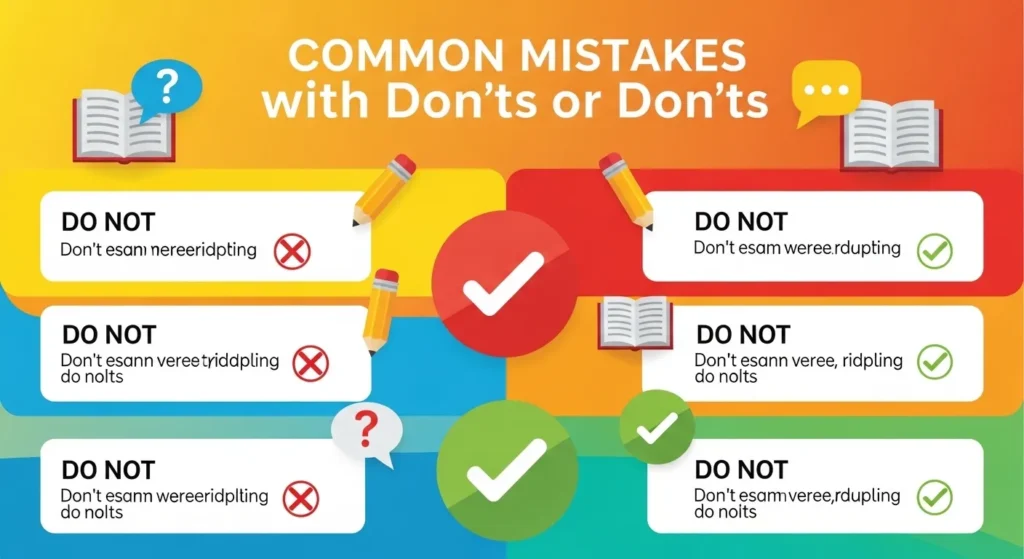
Common Mistakes with Don’ts or Dont’s
Let’s look at the most frequent errors people make.
1. Adding an apostrophe before the plural “s”
- ❌ dont’s
- ✅ don’ts
2. Removing the apostrophe completely
- ❌ donts
- ✅ don’ts
The apostrophe is still needed because don’t is a contraction.
3. Mixing possession with plural
People think:
- “Don’t’s rules”
Correct:
- “The rules of don’ts”
4. Overcorrecting
Some writers avoid the word completely because they fear mistakes. That’s not needed. Just use don’ts correctly.
Don’ts or Dont’s in Everyday Examples
Emails
- ✅ Please read the do’s and don’ts before replying.
- ❌ Please read the do’s and dont’s before replying.
News
- ✅ The article listed safety do’s and don’ts for drivers.
Social Media
- ✅ Here are the skincare do’s and don’ts 💡
- ❌ Skincare do’s and dont’s ❌
Formal Writing
- ✅ This guide outlines workplace do’s and don’ts.
Correct usage works in every tone and format.
Don’ts or Dont’s: Google Trends & Usage Data
Search behavior shows something interesting.
What people search
- “don’ts or dont’s”
- “dont’s correct or not”
- “plural of don’t”
This shows high confusion, not equal usage.
Actual usage online
- Don’ts appears in:
- books
- academic papers
- news websites
- style guides
- Dont’s appears mostly in:
- questions
- spelling mistakes
- informal posts
By country
- US, UK, Canada, Australia: don’ts dominates
- ESL regions: higher search volume for “dont’s” due to learning errors
This confirms one thing: dont’s is searched, not used correctly.
Comparison Table: Keyword Variations
| Form | Meaning | Correct? | Notes |
| don’t | do not | ✅ Yes | Singular contraction |
| don’ts | plural of don’t | ✅ Yes | Correct plural |
| dont’s | incorrect form | ❌ No | Common mistake |
| donts | missing apostrophe | ❌ No | Incorrect |
FAQs: Don’ts or Dont’s
1. Is “dont’s” ever correct?
No. It is always wrong in standard English.
2. Why is “don’ts” correct?
Because it keeps the contraction apostrophe and adds s for plural.
3. Can I write “donts” without an apostrophe?
No. The apostrophe in don’t must stay.
4. What about “do’s and don’ts”?
That phrase is correct as written: do’s and don’ts.
5. Is this rule the same for other contractions?
Yes.
Examples:
- can’ts (plural of can’t)
- won’ts (plural of won’t)
6. Do style guides agree on this?
Yes. Major English style guides accept don’ts only.
7. Can I avoid the issue?
Yes. You can say “things not to do,” but don’ts is still correct and common.
Conclusion
The debate around don’ts or dont’s may seem small, but it highlights a bigger issue: apostrophes are often misunderstood. The correct form is don’ts, with the apostrophe staying in the contraction and the s added for plural. The form dont’s is simply incorrect and should be avoided in all types of writing.
This rule does not change between British and American English. It applies everywhere. Writers make this mistake because they confuse plural forms with possession, or because apostrophes feel optional. They are not. Correct punctuation improves clarity, trust, and professionalism.
If you remember one thing, remember this: apostrophes do not make words plural. Once you understand that rule, not only will don’ts make sense, but many other grammar questions will become easier too.
Clear writing starts with small choices. Choosing don’ts over dont’s is one of them and now, you’ll never get it wrong again.
Related More Posts!
Tires or Tyres: Examples and Correct Usage 📝

My name is James Whitmore.I am a language research writer. I explore the history and evolution of English words. I write detailed comparisons explaining why spellings change over time and how British and American English diverged. My articles add depth and credibility to grammar comparison topics.