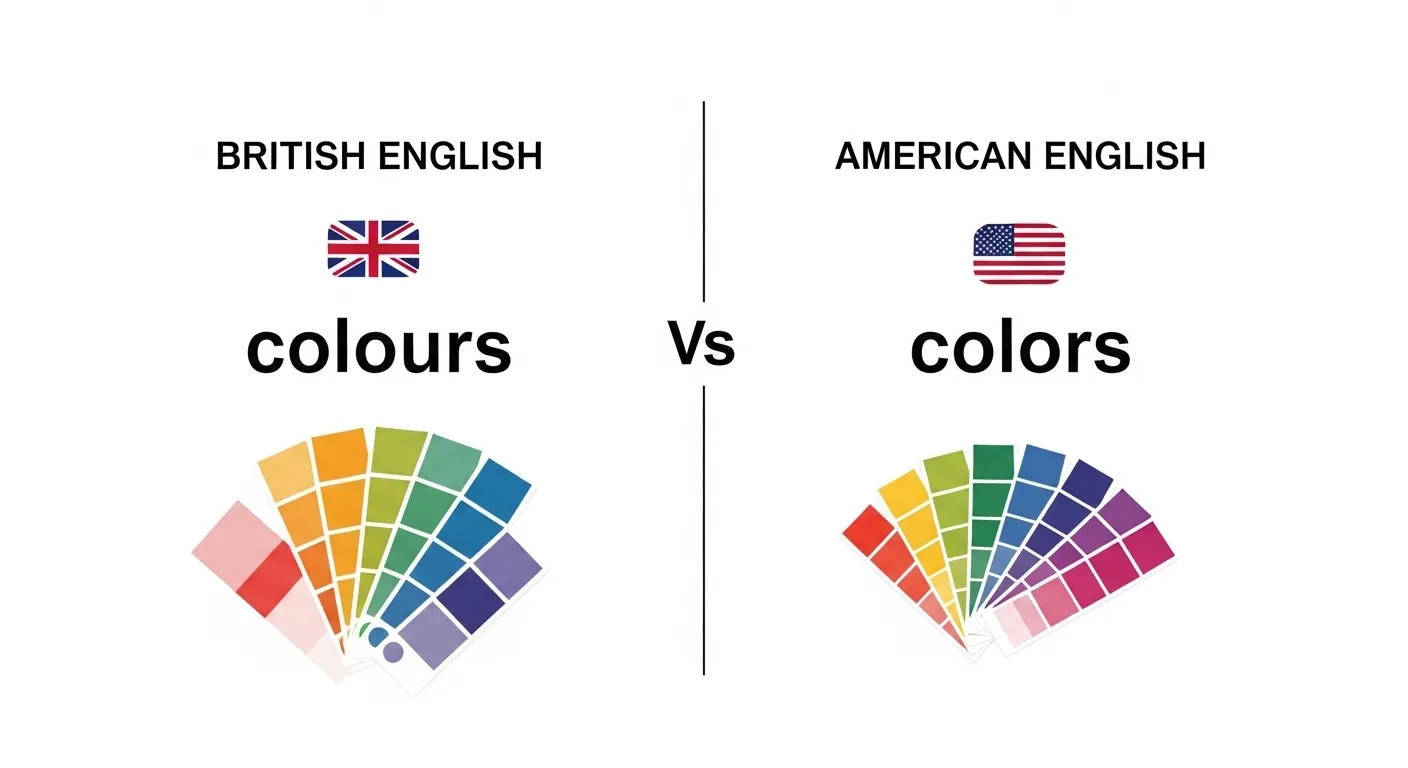
Both “colours” and “colors” are correct spellings; the difference depends on regional English usage.
Many people feel unsure when writing this word because both forms appear online, in books, and in daily communication.
Students, bloggers, writers, and professionals often ask which spelling looks more natural or professional.
The confusion comes from British English and American English spelling traditions that developed differently over time.
Knowing the right form helps you write clearly and match your audience’s expectations.
This guide explains the meaning common mistakes, and real world examples so you can confidently choose between colours and colors in any situation.
Colours or Colors: Quick Answer
The words colours and colors have the same meaning. Both refer to shades, hues, or visual appearances created by light, such as red, blue, green, or yellow.
The only difference is regional spelling:
- Colours → Used in British English and many Commonwealth countries like the UK, Australia, Pakistan, and Canada (in many contexts).
- Colors → Used in American English.
Examples:
- British style: “The artist used bright colours in her painting.”
- American style: “The artist used bright colors in her painting.”
The pronunciation stays the same. The meaning also stays the same. Only the spelling changes based on language style.
The Origin of Colours or Colors
The history of these spellings goes back to Latin and French influences. The Latin word color entered Old French as colour.
When English adopted many French words after the Norman Conquest, spellings with “-our” became common in Britain.
Later, language reformers in the United States, especially Noah Webster, aimed to simplify spelling.
Webster promoted shorter forms like “color,” “honor,” and “favor.” His dictionaries helped standardize American spelling patterns.
Over time:
- British English kept the traditional “-our” endings.
- American English simplified many words by removing the “u.”
This change affected many words:
- colour → color
- favour → favor
- honour → honor
- neighbour → neighbor
These differences are not about correctness or quality. They reflect historical development and regional language identity.
British English vs American English Spelling
British and American English follow different spelling patterns for many words ending in “-our” or “-or.” Understanding this pattern makes it easier to remember which form to use.
Key Pattern
- British English: retains “u” (colour)
- American English: removes “u” (color)
Examples:
- colour / color
- flavour / flavor
- labour / labor
- humour / humor
Comparison Table
| British English | American English | Meaning |
| colours | colors | visual shades |
| flavour | flavor | taste |
| honour | honor | respect |
| labour | labor | work |
| neighbour | neighbor | person living nearby |
British spelling often appears in UK publications, Commonwealth media, and traditional academic writing. American spelling dominates US media, technology platforms, and international business writing.
Both forms remain standard English.
Which Spelling Should You Use?
Choosing between colours and colors depends on your audience and context.
For American readers
Use colors. This spelling looks natural to US audiences and aligns with American dictionaries, schools, and media standards.
For British or Commonwealth audiences
Use colours. Countries influenced by British English commonly prefer this spelling.
For global communication
Pick one style and stay consistent. Mixing spellings in the same text can confuse readers and reduce clarity. Many international writers choose one standard based on their main audience or platform.
For students and professionals
Follow the style guide used by your school, workplace, or publisher. Consistency matters more than personal preference.
Common Mistakes with Colours or Colors
Many writers make simple mistakes when switching between spelling styles.
1. Mixing spellings in one sentence
Incorrect:
- “The colors of the painting show vibrant colours.”
Correct:
- Use only one style in the same piece of writing.
2. Assuming one form is wrong
Both spellings are correct. They simply belong to different English standards.
3. Changing spelling randomly
Switching between styles can make writing look unpolished. Decide your style before you begin writing.
4. Forgetting related words
If you use British spelling, remember similar words:
- colour, favourite, neighbour
If you use American spelling:
- color, favorite, neighbor
5. Copy-paste inconsistencies
When editing text from different sources, spelling variations may appear. Always check for consistency.
Colours or Colors in Everyday Examples
Understanding how these words appear in real communication helps you use them naturally.
Emails
- British style: “Please update the brand colours in the design.”
- American style: “Please update the brand colors in the design.”
News Articles
UK media often writes:
- “Autumn colours transform the countryside.”
US media often writes:
- “Fall colors brighten the landscape.”
Social Media
People often follow their regional style:
- UK creators: “Love these pastel colours.”
- US creators: “Love these pastel colors.”
Formal Writing
Academic and professional writing requires consistency. Always follow the chosen language standard.
Colours or Colors: Google Trends & Usage Data
Search popularity shows clear regional preferences.
- Colors is widely used in the United States and appears frequently in American websites and technology content.
- Colours appears more often in the United Kingdom, Australia, New Zealand, and many Commonwealth countries.
Global internet usage shows strong presence of both forms. American spelling sometimes dominates online platforms due to large US-based companies and audiences. Still, British spelling remains common and widely accepted worldwide.
Writers should consider location, audience expectations, and publication style when choosing between the two spellings.
Keyword Comparison Table
| Feature | Colours | Colors |
| Language style | British English | American English |
| Regions | UK, Australia, Commonwealth | United States |
| Meaning | Same | Same |
| Pronunciation | Same | Same |
| Formal acceptance | Yes | Yes |
| Common contexts | British publications | US media and business |
FAQs
1. Is colours or colors correct?
Both are correct. Colours belongs to British English. Colors belongs to American English.
2. Why do Americans spell it as colors?
American spelling reforms simplified many words by removing the letter “u.”
3. Which spelling should students use?
Follow the style required by your school or region.
4. Can I mix colours and colors in one article?
It is better not to mix them. Choose one spelling and stay consistent.
5. Do colours and colors have different meanings?
No. The meaning and pronunciation are identical.
6. Is colours more formal than colors?
Neither is more formal. Each matches its regional language style.
7. Which spelling is used in Pakistan?
Many writers in Pakistan follow British English, so “colours” appears frequently, though both forms are understood.
Conclusion
The difference between colours and colors comes from regional English traditions, not from correctness or meaning.
British English keeps the traditional “-our” ending, while American English uses a simplified “-or” spelling.
Both forms represent the same concept: visual shades created by light. Understanding this distinction helps writers choose the spelling that fits their audience and communication style.
When writing for British or Commonwealth readers, colours often feels natural. When writing for American audiences, colors usually matches expectations.
For global communication, consistency remains the key principle. Decide your language style before writing and maintain it throughout your text.
This simple step improves clarity and helps readers follow your message without distraction. By learning the history and you can confidently use colours or colors in articles, social posts, and formal writing.
Related More Posts!
Addendums or Addenda: Which One Is Correct?

My name is James Whitmore.I am a language research writer. I explore the history and evolution of English words. I write detailed comparisons explaining why spellings change over time and how British and American English diverged. My articles add depth and credibility to grammar comparison topics.