Bear means carry, tolerate, or the animal; bare means uncovered or empty. Many learners mix these two words because they sound the same.
This confusion happens often in writing, emails, and online posts. A small spelling change creates a big meaning difference.
People search for “bear or bare” to avoid mistakes and write clearly. Using the wrong word can change the message completely.
For example, “bear with me” and “bare with me” are not the same. This guide explains both words in a simple way.
You will learn meanings, origins, common mistakes, and real-life examples. By the end, you will know exactly when to use each word with confidence.
Bear or Bare: Quick Answer
Both words sound alike but have different meanings.
Bear
- Means to carry, hold, tolerate, or produce.
- Also refers to the animal (a large mammal).
Examples:
- Please bear with me for a moment.
- She cannot bear loud noise.
- The tree will bear fruit next year.
- A bear walked through the forest.
Bare
- Means uncovered, empty, or without something.
Examples:
- He walked with bare feet.
- The room looked bare after moving furniture.
- She told the bare truth.
Quick tip:
If you talk about carrying or tolerating, use bear.
If you talk about something uncovered or empty, use bare.
The Origin of Bear or Bare
Understanding word history helps you remember usage.
Origin of “Bear”
The word “bear” comes from Old English “beran.” It meant to carry or support. Over time, it gained many meanings.
It started to describe emotional endurance. That is why we say “bear pain” or “bear responsibility.”
The animal name also has ancient roots. Early Germanic languages used similar sounds for the animal.
The meaning expanded through literature and daily speech. Today, “bear” works as both a noun and a verb. Context decides the meaning.
Origin of “Bare”
“Bare” comes from Old English “bær.” It described something uncovered or exposed. People used it to talk about empty spaces or uncovered skin. The meaning stayed mostly the same over centuries.
The spelling difference exists because the words developed from different roots. They sound alike now, but their origins are separate. English keeps both spellings because each word serves a unique purpose.
British English vs American English Spelling
Unlike many English word pairs, “bear” and “bare” do not change spelling between British and American English. Both regions use the same forms. The difference lies only in meaning, not spelling style.
However, usage frequency may vary slightly based on context or culture.
Key Comparison
| Word | British English | American English | Meaning | Example |
| Bear | Same spelling | Same spelling | Carry, tolerate, animal | Bear with me |
| Bare | Same spelling | Same spelling | Uncovered or empty | Bare hands |
Even though spelling stays the same, phrases may appear more often in certain regions. For example, formal writing often uses “bear responsibility” globally.
Which Spelling Should You Use?
Choose based on meaning, not location.
For US audience
Use “bear” when describing endurance, carrying, or emotional strength. Use “bare” for exposure or emptiness.
For UK and Commonwealth readers
Rules stay identical. Context matters more than regional style.
For global audiences
Keep sentences simple. Think about the message. Ask yourself:
- Are you talking about carrying or tolerating? → Bear
- Are you describing something uncovered? → Bare
If unsure, replace the word with a synonym in your mind. If “empty” fits, choose bare.
Common Mistakes with Bear or Bare
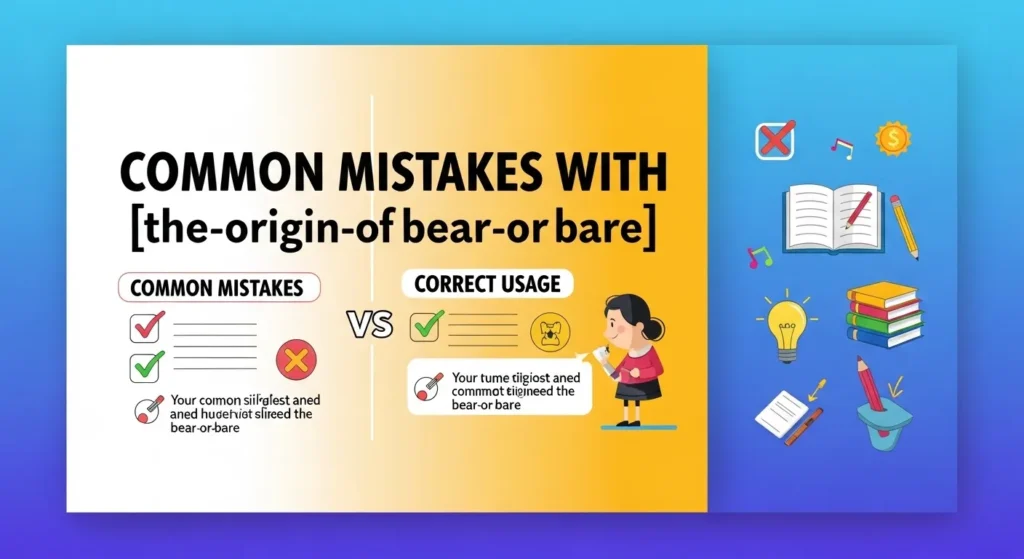
Many errors happen because both words sound identical.
Mistake 1: “Bare with me”
Incorrect.
Correct: “Bear with me.”
Reason: You are asking someone to be patient.
Mistake 2: Using “bear” for physical exposure
Incorrect: “He walked with bear feet.”
Correct: “He walked with bare feet.”
Mistake 3: Confusing emotional meaning
Incorrect: “I cannot bare this pain.”
Correct: “I cannot bear this pain.”
Mistake 4: Overthinking spelling rules
Some learners assume regional spelling changes. This is not true for these words.
Quick memory trick
- Bear = Carry or endure.
- Bare = Empty or uncovered.
Bear or Bare in Everyday Examples
Learning through real-life examples helps you remember faster.
Emails
- Please bear with me while I check the report.
- The document looks bare without images.
News writing
- Citizens must bear the cost of inflation.
- The hills looked bare after the storm.
Social media posts
- Bear with me, new video coming soon!
- I love walking on the beach with bare feet.
Formal writing
- Companies must bear responsibility for safety.
- The facts were presented in bare detail.
Casual conversations
- I cannot bear waiting longer.
- The room feels bare without decorations.
Bear or Bare: Google Trends & Usage Data
Search interest shows that many users struggle with this pair. Queries often come from students, writers, and non native speakers. High search volume appears in English-learning countries.
Common search contexts include:
- Grammar help
- Writing correction
- Email phrasing
- Common expressions like “bear with me”
Usage patterns:
- “Bear” appears more in professional or emotional contexts.
- “Bare” appears more in descriptive writing.
Countries with strong interest include India, Pakistan, the United Kingdom, the United States, and the Philippines. This shows the confusion exists worldwide.
Many users search after seeing the phrase “bear with me.” They want to confirm spelling before publishing content.
Bear vs Bare Comparison Table
| Feature | Bear | Bare |
| Word Type | Verb or noun | Adjective or verb |
| Main Meaning | Carry, endure, animal | Uncovered, empty |
| Emotional Context | Yes | No |
| Physical Description | Sometimes | Often |
| Example Sentence | Bear the burden | Bare walls |
| Common Phrase | Bear with me | Bare minimum |
FAQs About Bear or Bare
1. What is the main difference between bear and bare?
Bear relates to carrying, enduring, or the animal. Bare describes something uncovered or empty.
2. Why do people confuse these words?
They sound the same when spoken. These are homophones. Spelling decides meaning.
3. Is “bare with me” ever correct?
No. The correct phrase is “bear with me.”
4. Can bear be both noun and verb?
Yes. It can describe an animal or an action like carrying or tolerating.
5. Is bare only an adjective?
Mostly yes, but it can also be a verb meaning reveal or expose.
6. Do British and American English use different spellings?
No. Both forms stay the same across regions.
7. How can I remember the difference quickly?
Think: Bear carries. Bare shows.
Conclusion
Bear and bare look similar in sound but differ strongly in meaning. Bear connects to carrying, enduring, or the animal. Bare describes something uncovered, empty, or exposed.
Many mistakes happen because learners rely on pronunciation instead of meaning. A simple check solves most problems. Ask yourself what idea you want to express.
If patience, responsibility, or emotional strength fits, choose bear. If exposure or emptiness fits, choose bare. Practice with short sentences to build confidence.
Read examples often. Notice common phrases like “bear with me” and “bare minimum.” Over time, the difference becomes natural. Clear writing depends on correct word choice.
When you understand these two words, your communication becomes stronger and easier to understand for readers everywhere.
Related More Posts!
Lie or Lye: Meaning, Differences and Complete Grammar Guide✨
Hybrid or Gas: Which Car Should You Choose?
Colum or Column: How Should You Use It?

My name is James Whitmore.I am a language research writer. I explore the history and evolution of English words. I write detailed comparisons explaining why spellings change over time and how British and American English diverged. My articles add depth and credibility to grammar comparison topics.